
Military transport aircraft / C-2
Kawasaki C-2
The Kawasaki C-2 is a Japanese jet transport designed as a longer-range, more capable successor to the C-1.
Development
History
The Kawasaki C-2 is a Japanese jet transport developed to replace the C-1 and broaden the Japan Air Self-Defense Force's airlift capability. The older type served domestic routes well, but newer missions required more range and carrying capacity. Japan chose a domestic design to obtain the required combination of features and retain national aerospace expertise. The XC-2 prototype first flew in January 2010, and production C-2 aircraft began joining units later in the decade.
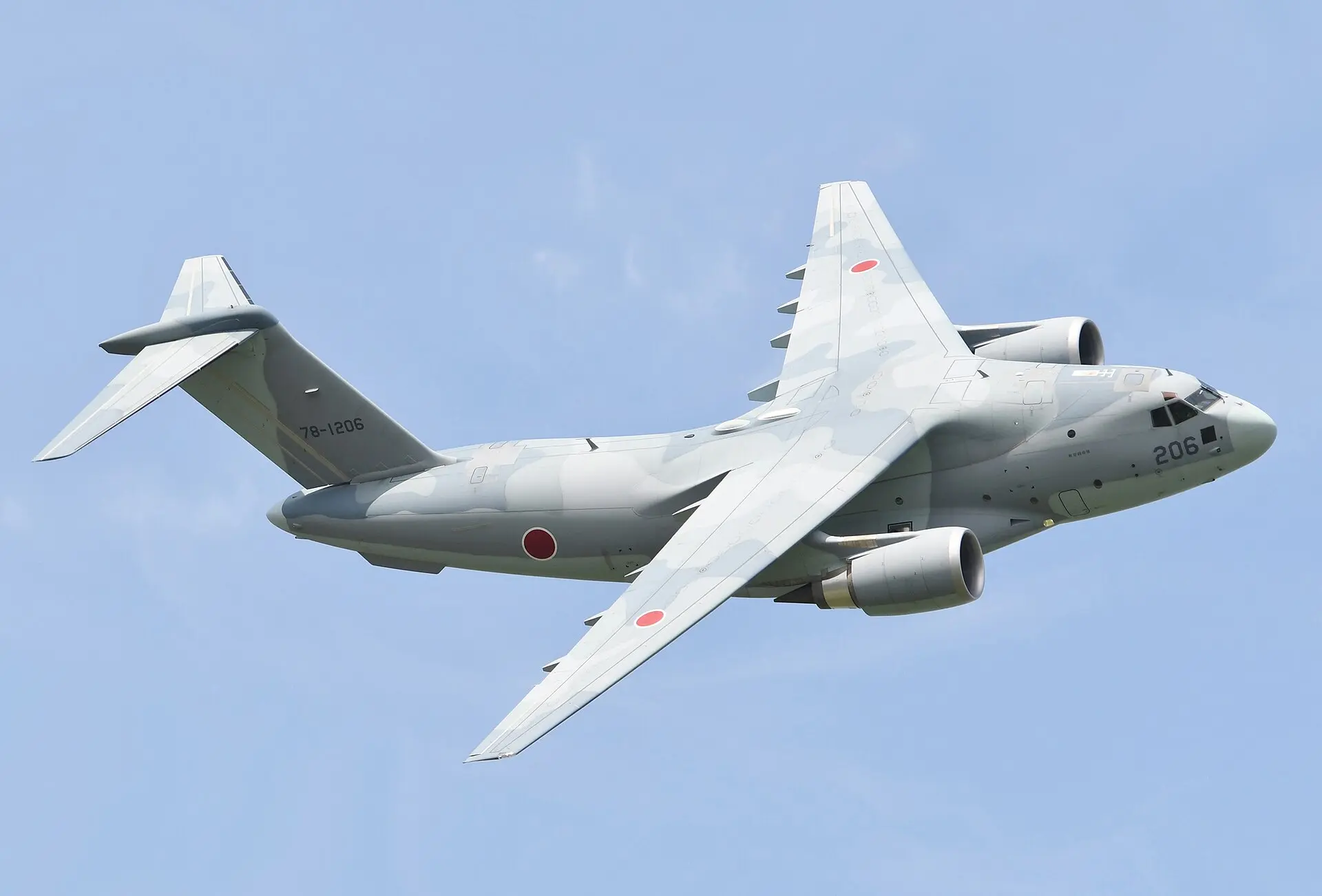
The aircraft follows a familiar modern freighter layout: a high wing, two large engines, T-tail and rear loading ramp. Its hold accepts equipment, pallets, personnel and supplies for different operations. The rear opening supports ground loading and airborne delivery. Compared with the C-1, the newer aircraft can cover longer routes and carry larger loads. No performance figure exists separately from conditions, however. Range with a heavy payload is different from the distance of an empty ferry flight.
The C-2 is intended for more than routine supply. Japanese defense material describes rapid deployment, international cooperation and disaster response among its missions. In an emergency, it can bring people or supplies where time is particularly important. Planners still need to check airfield access, cargo dimensions and the ability of ground teams to receive the load. A large transport is most useful when the whole delivery chain can support it.
A specialist RC-2 electronic-intelligence version has also been developed from the platform. Its equipment and purpose differ from those of the cargo aircraft, so the two should not be described as identical. The early XC-2 test aircraft and production C-2 likewise belong to different stages of the programme. Development proceeded through testing of structure and systems before production and operational training.
The Kawasaki C-2 marks a shift in Japanese airlift from relatively short national routes toward more flexible long-distance logistics. It did more than enlarge the C-1; it combined speed, cargo volume and range in a different balance. The model's significance rests on its ability to move people and equipment in real operations, including disaster assistance and international missions, rather than on any single brochure figure.