
Military transport helicopters / ALH
HAL Dhruv
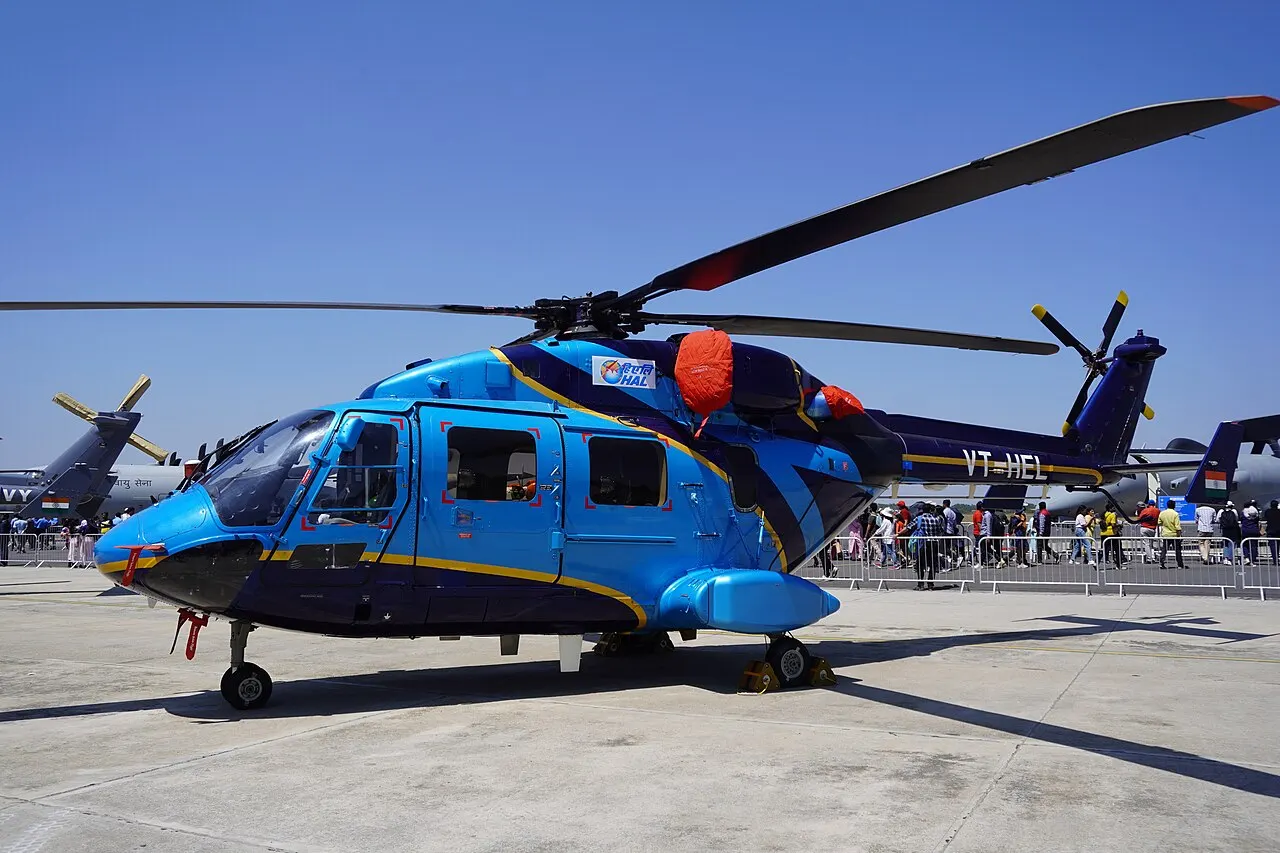
HAL Dhruv is an Indian twin-engine light utility helicopter used for transport, rescue, and military missions.
Development
History
The HAL Dhruv is an Indian light utility helicopter developed by Hindustan Aeronautics Limited. The company places it in a class with a maximum takeoff weight of about 5.5 tonnes and describes a twin-engine platform. It was designed for different public users, including the armed forces. Its transport role must be distinguished from the armed derivative, because the family name covers more than one configuration.
HAL reports that production deliveries began in the early 2000s and that the military utility variant was certified in 2002. Those milestones are not the prototype's first-flight date. The program evolved gradually, with later aircraft receiving different instruments and engines. Anyone reading a performance figure should establish whether it belongs to the early Mk I, improved Mk III, or armed Mk IV.
In transport form, Dhruv can move passengers and supplies, help deploy personnel quickly, and perform search and rescue. The manufacturer separately lists casualty evacuation and carriage of an external sling load. Each task requires cabin and crew preparation. A suspended load also changes handling and operational limits compared with a passenger flight.
India's geography makes high-altitude capability particularly relevant. Flights at elevation need power reserves and careful load planning because thin air reduces rotor effectiveness. HAL associates the Mk III with the Shakti engine and equipment suited to these conditions. That does not mean earlier versions had the same systems. A profile of a particular aircraft should identify its modification.
The family contains civil, military, and armed aircraft. The Mk IV is known for weapons and mission sensors, whereas basic utility variants undertake a broader range of transport work. Armament on one family member is not standard equipment on every Dhruv. Similarly, an available medical kit does not describe the permanent layout of every cabin.
Dhruv matters as a major Indian helicopter program with a series of domestic variants. For a transport catalogue, its utility nature, actual missions, and differences between standards are most important. This approach presents a working platform for moving people and freight instead of merely reproducing maximum figures from a promotional chart.