
Military transport helicopters / KV-107
Kawasaki KV-107
The Kawasaki KV-107 is a Japanese tandem-rotor transport helicopter produced through cooperation with Vertol.
Development
History
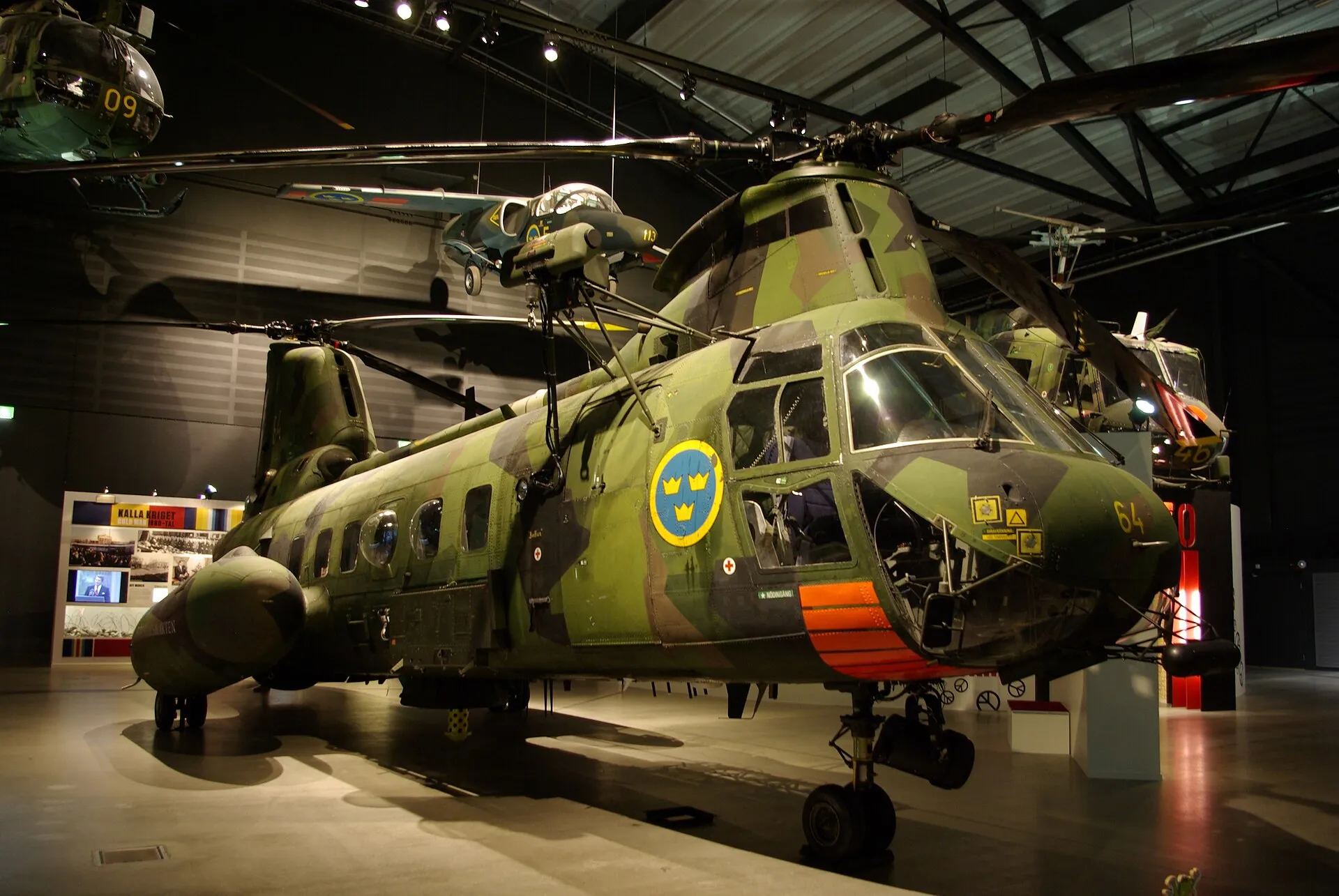
The Kawasaki KV-107 was a Japanese member of the Vertol 107 transport-helicopter family, with two main rotors arranged in tandem. Kawasaki began manufacture through technical cooperation with the American company Vertol. Its corporate history places completion of the first large KV-107 II helicopter in 1962. The aircraft was neither a wholly independent Japanese design nor merely a foreign machine with no domestic production.
The tandem-rotor arrangement provides a long cabin and useful options for carrying freight. The absence of a conventional tail rotor changes its appearance and the organization of loading operations. For land forces, the aircraft could move people and equipment between bases and forward landing areas. Actual capacity still depends on variant, fuel, altitude, and weather, so a universal figure for the entire family would mislead.
Japanese services used KV-107 variants for several assignments. Besides transport, there were specialist versions for rescue and maritime work. Their equipment and operators differed. A rescue aircraft needs suitable search and recovery gear, while a naval machine needs systems for shipboard service. A transport profile should not automatically include every device carried by other versions.
Licensed manufacture mattered to Japanese industry. Mastering a large helicopter involved more than assembly: documentation, quality control, personnel training, and a spare-parts system were essential. Kawasaki continued to expand aviation production and later built newer types. The KV-107 story illustrates how international technical cooperation contributed to the postwar rebuilding of that industry.
Kawasaki notes that later CH-47J and CH-47JA helicopters gradually replaced the older V-107 transport aircraft in the Ground Self-Defense Force. Renewal reflected changing requirements for lifting ability and operations. Replacement does not make the earlier helicopter a failure: it performed transport work for years within the limits of its generation.
KV-107 deserves a separate page as the Japanese manufacturing and service history of the Vertol 107 family. It should not be conflated with the American CH-46, although the silhouette is similar and the designs are related. A precise account needs the Japanese variant designation, operator, and service period. That shows technical continuity without losing national context.