
Business aviation
Bombardier acquires Velocity Maintenance Solutions
The Velocity Maintenance Solutions acquisition adds a Wilmington hangar and mobile support. How diagnostics, parts and logistics affect aircraft availability.
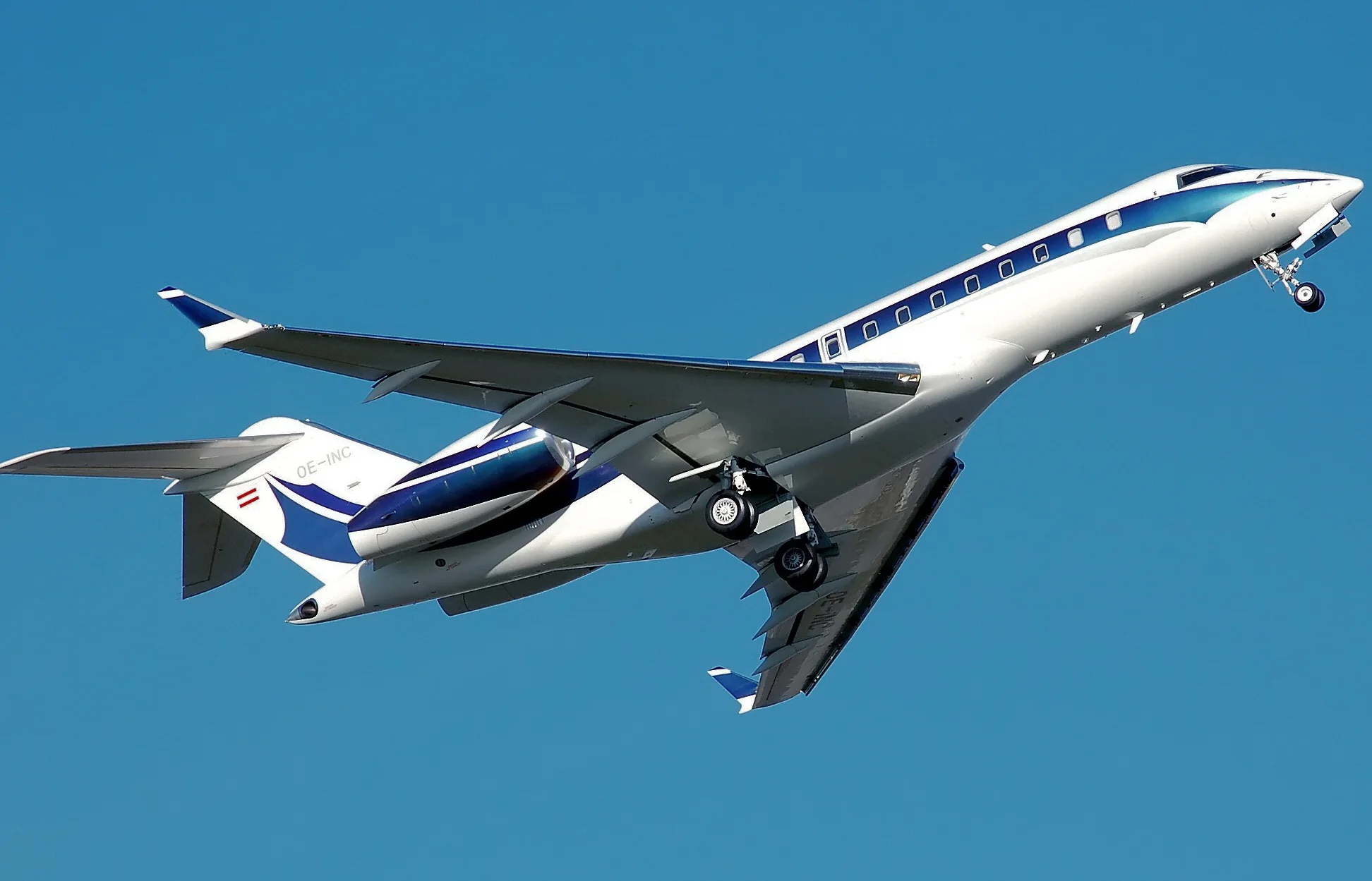
Bombardier Global 5000 OE-INC in Luton, 2007. Archival illustration of business aviation.
On February 9, 2026, Bombardier announced the acquisition of the American company Velocity Maintenance Solutions through its subsidiary Learjet Inc. The deal expands maintenance and assistance capabilities for aircraft that are temporarily unable to remain in service. The parties did not disclose its financial terms.
The acquired resources included a team, a 35,000-square-foot hangar at the Wilmington, Delaware airport, and fourteen mobile service vehicles in the United States. These two support formats solve different problems. A fixed base provides permanent infrastructure, and a field team can carry out suitable work close to the aircraft location. The possibility of such a solution depends on the specific malfunction and conditions.
Why mobile assistance complements the hangar
The plane does not choose a convenient location for a technical event. The question may arise far from the main base, after completing the flight in another city. If field technicians and equipment are available for the job required, on-site service can sometimes be arranged. However, the mobile format does not mean that every task is performed without a fixed infrastructure.
Some jobs require certain conditions, tools, access or long-term placement of the aircraft. In other cases, it is more important to quickly deliver a specialist and a suitable part. Therefore, the decision begins with an assessment of the event. The choice between an offsite and a hangar is a technical and organizational task in which convenience is taken into account along with the established requirements and capabilities of the site.
Service vehicles provide a means of moving people and equipment, but their number does not establish an arrival time at every location in the country. The nature of the fault, distance, staffing and availability all influence the response. The size of the mobile fleet indicates resources, rather than a universal guarantee of aircraft recovery time.
What does AOG status mean?
Aircraft on Ground is usually used for a situation where a technical reason prevents the aircraft from continuing its intended operation. Various events may be hidden behind a short designation. Sometimes the problem is with a small component, sometimes with a more complex system. Part size and schedule impact are not necessarily proportional to each other.
Consider a failed component that is relatively simple to replace but whose replacement is far away. Logistics becomes the main constraint. Another case may need detailed diagnosis even when a spare is already available. These examples explain why return-to-service support cannot be assessed solely by how quickly a vehicle reaches the aircraft.
When determining further actions, documentation, actual status and powers of participants are taken into account. The mere desire to maintain the schedule does not make the plane ready for departure. Support helps determine the cause, perform acceptable work, and confirm the result. It is useful for the passenger to understand that readiness is determined by the completion of the necessary actions, and not by one message about the arrival of specialists on site.
Information affects the speed of preparation
Before travelling to the aircraft, the team needs to identify the aircraft and the configuration needing attention. An accurate symptom description, current status and records of previous work help. Incomplete or contradictory information takes time to clarify. A good handover helps technicians prepare the right tools and possible solutions.
However, the description of the symptom should not replace a confirmed diagnosis. A similar message on different aircraft may have different reasons. Therefore, the technical team compares observations with documentation and inspection results. This approach reduces the risk of sending the wrong part just because a previous case looked similar and was memorable to participants.
It is also important to accompany changes in status. After additional testing, the initial assumption may be refined, and along with it the plan and required resources change. If all participants continue to work on the old version of information, unnecessary transportation and waiting occur. Therefore, coordinated communication is part of technical support, and not just an administrative addition to the work of engineers.
The spare part must be suitable for the specific aircraft
In aviation, it is not enough to find an object of a similar shape. Correct applicability, required documents and known condition of the product are required. Within the same aircraft family, different versions of equipment are possible. Therefore, the model name helps to start the search, but the exact solution is based on the specific installation data and current technical information.
Logistics includes several steps: determining the need, confirming availability, organizing delivery and ensuring transfer to the contractor. Each of them can affect the overall period. If the component quickly arrived in the city, but is not available for work at the airfield, the task has not yet been completed. The real chain ends where the product can be correctly used in the agreed project.
It is useful for the operator to understand in advance what information accompanies the shipment and who is responsible for coordination. This is especially important when multiple organizations are involved. The clearer the roles, the less time is wasted on re-negotiation. A large support network is beneficial when its resources are integrated into a clear workflow for a specific aircraft and event.
Planned maintenance and unscheduled events
The permanent base supports not only urgent restoration, but also pre-prepared work. They can be coordinated with flight schedules, parts requirements and personnel availability. With good planning, some of the uncertainty is removed before the plane arrives. However, an actual inspection may still reveal additional circumstances that will require a separate decision.
Therefore, planned and unplanned tasks should not be contrasted as completely independent worlds. The service history helps to understand the event, and the results of an unscheduled inspection may influence the future calendar. It is important to maintain a connection between the actions performed and the current state of the aircraft. An individual quick recovery is useful, but long-term operation requires consistent consideration of the entire history.
The owner also has the task of backup transport. Even a developed service network does not eliminate all downtime. If a particular trip is particularly important, planning should take into account the possible unavailability of an aircraft and options for continuing the route. This helps separate the technical solution from the organizational pressures that arise from passengers already having an appointment or other fixed event.
How to evaluate network expansion
The acquisition of Velocity adds Bombardier an existing team and infrastructure, not just a new name on the map. For the operator, specific services, geography and the order of interaction are important. It is helpful to determine the applicability to your aircraft and typical routes, as the needs of one aircraft owner may differ significantly from those of another member of the same fleet.
Hangar area, number of vehicles and team experience describe the resource side. The result is manifested in the work performed, the quality of documentation and the readiness of the aircraft after maintenance. A comparison of these aspects allows us to evaluate the expansion in detail. A large network becomes convenient when its capabilities are available in a clear manner and correspond to the tasks of a specific operation.
The February deal therefore reflects the development of the business aviation after-sales infrastructure. After delivery, the aircraft continues to require parts, qualified people and organized support. The combination of the Wilmington hangar and mobile resources expands the way this work can be done. Practical value will be determined by how consistently these capabilities will help operators solve planned and unscheduled technical problems on real routes.
After completion of the work, the result must be clearly communicated to the operator. What actions have been completed, what information has been updated and on what basis is the aircraft returned to service? A clear answer helps the crew continue operation without guesswork. At the next technical event, these records become the source information for another team and maintain the connection between individual calls to the service network.