
Business aviation
Dassault prepares EASy IV for the Falcon 2000 family
Dassault has announced EASy IV for the new Falcon 2000LXS and fleet upgrades with EASy. What changes in the work of the crew and the preparation of the aircraft.
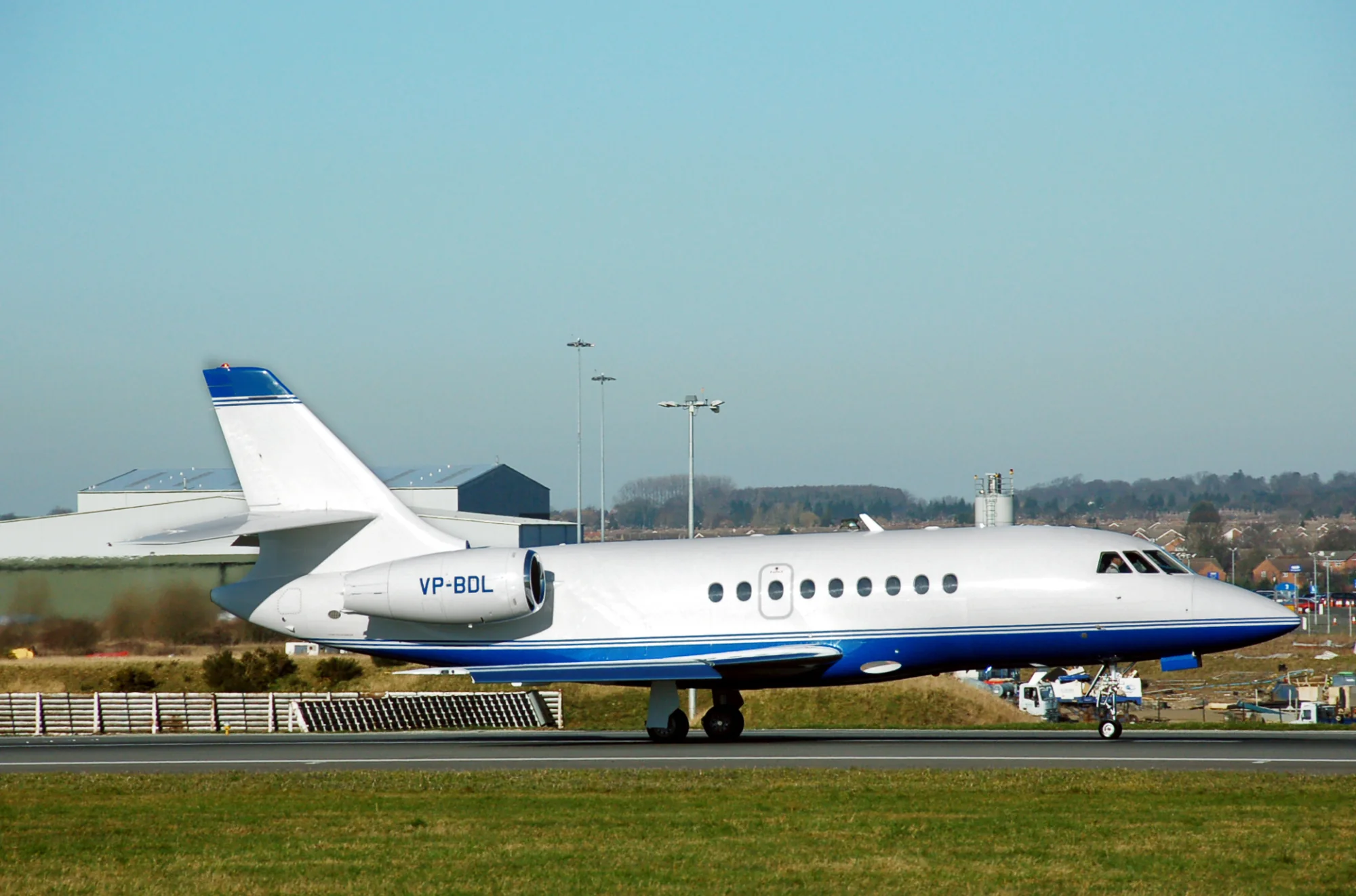
Dassault Falcon 2000 VP-BDL at Luton, 2005. Archive photo; it does not confirm the presence of EASy IV on this aircraft.
On 20 October 2026, Dassault announced plans to offer the EASy IV flight deck on new Falcon 2000LXS aircraft and as an upgrade for eligible EASy-equipped members of the Falcon 2000 family. The announcement describes a cockpit development programme rather than a new passenger cabin. Availability still needs to be assessed for the individual aircraft configuration.
The announced package includes more powerful computing, updated information displays, two- and three-dimensional airport maps, and new charting and flight-management functions. Those changes concern how the crew works with information. They do not mean that every previously built Falcon 2000 has already received the equipment or can have it fitted without an assessment of its configuration.
What's changing beyond the screens
A modern flight deck is a distributed system. Displays show information, while computers process it and exchange data with navigation and aircraft systems. An avionics update therefore cannot be described fully as a sharper picture. Processing performance, data consistency and the functions available for a particular pilot task all matter.
In this case, external continuity can be useful. If familiar elements remain in place, the crew can more easily cope with the changes. But the familiar appearance can also hide differences: a similar page sometimes works according to a new logic. Therefore, the transition requires learning the functions, not just a quick glance at the dashboard after installing the equipment.
A good renewal assessment begins with a question about the person's performance. What information has become more noticeable? Which operations are performed more clearly? What changed when entering a route or exploring an airfield? The answers relate technical characteristics to everyday use. A fast processor is valuable not in itself, but because it supports the necessary functions reliably and predictably.
Airport map as an aid to orientation
At a large airfield, the pilot must simultaneously take into account markings, instructions, aircraft movement and the position of his aircraft. An electronic map can make it easier to compare these elements. It is especially useful when the information is displayed at an understandable scale and allows you to quickly determine where the desired area is. But the map remains one of the sources of information, and not a replacement for observation and following instructions.
Two-dimensional and three-dimensional representations answer different questions. The plan helps you see the relative positions of the paths and lanes. Spatial representation can facilitate recognition of the surrounding environment. At the same time, additional details do not always automatically improve perception: it is important that essential elements are not lost among the secondary ones.
Let's imagine a fictitious airport with several similar intersections. Marking the current position helps to select the desired one, but the pilot must still understand the taxi route and its limitations. If the base is out of date or the surface is temporarily covered, the image does not become permission to continue moving. The practical value of a function depends on the right combination of data, observation, and procedures.
Route on the computer and route in the air
The flight management system organises navigation information and the sequence of route segments. After a change, the crew must check how the route has been built, which restrictions are included and which leg comes next. The selected sequence must match the flight plan and instructions received. Automation makes the work easier without removing that substantive check.
Errors can occur not only due to the wrong letter. Sometimes the correct point is in the wrong sequence or the wrong procedure is used. Therefore, it is important to look at the route as a whole, and not limit yourself to confirming each individual field. The data presentation should help spot inconsistencies before they affect the aircraft's movement.
The new navigation feature also does not mean equal access to every approach. Equipment capabilities, crew training and operational approvals are considered together. The mention of RNP in the characteristics of the complex describes a certain direction of capabilities, but does not serve as a universal pass to all published procedures without additional conditions.
Why is mode information so important?
An automatic system performs different tasks according to its selected mode. The pilot needs to understand what it is doing now and what it will do next. If the pilot’s intention and the system’s actual behaviour diverge, functioning automation can still surprise the crew. Clear mode information can therefore matter more than the total number of available functions.
During preparation, it is useful to analyze not only the normal sequence, but also the transitions between tasks. What happens after changing the route? Which settings will be saved and which will need to be checked again? Questions like these help you get away from mechanical memorization of buttons and develop an understanding of the system. It is especially necessary when changing the usual scenario.
In a two-person crew, it is important to treat the displayed status equally. One pilot can enter the change, the second can check the result and continue monitoring the flight. A clear distribution of tasks supports the overall picture. Workplace redesign is more rewarding when training extends to human interaction, not just individual screen time.
Upgrading an existing aircraft
Installing new avionics on an aircraft that is already in use differs from the configuration of the aircraft at the factory. It is necessary to take into account its history, installed equipment and previously completed modifications. Even within the same family, the initial states may differ. Therefore, the scope of work is determined by the applicability of a particular solution, and not just by the year of manufacture or the commercial name of the model.
Planning includes aircraft downtime, the required checks and subsequent crew familiarisation. If other maintenance is performed at the same time, the order of work must be coordinated. The result is an aircraft with a defined configuration, supporting records and people prepared to operate it. Merely having the equipment available for installation does not complete that process.
On the aftermarket, having a modern cabin may be an important differentiator, but it does not describe the entire aircraft. The condition of the structure, engines, interior and service history remain separate characteristics. Therefore, an aircraft with a new complex should not be assessed as if all its systems have been updated and other technical condition issues have disappeared.
How a passenger notices the operation of avionics
Most changes in the cockpit are not directly visible to the passenger. Their importance is manifested through the organization of the crew’s work, the convenience of preparation and the accuracy of understanding the situation. However, it cannot be promised that the new version of the complex will automatically shorten each flight or allow you to always arrive in any weather. Operating limitations remain and are determined by a variety of factors.
It makes more sense for the owner to associate modernization with specific tasks. If an aircraft frequently visits complex or unfamiliar airfields, display and navigation capabilities may be of interest. When crews work on multiple aircraft in a family, configuration consistency is important. This provides clear reasons for the decision that can be verified after implementation.
The announcement of EASy IV continues the development of the Falcon 2000 through an update to the crew workstation. Its purpose is to expand the available functions and support the existing fleet with modern avionics. The next important information will be the availability conditions, applicability to specific aircraft and the organization of the transition. They are the ones who will turn the general announcement into a practical modernization plan for the individual operator.
When reviewing such a plan, it is helpful to determine in advance which changes require crew training, which affect maintenance, and which should be reflected in the aircraft's records. This helps evaluate the upgrade as a single project. The capabilities of the new cockpit are then linked to the people and processes that enable its daily use.
It is also worth checking the order in which navigation data is updated. The new computing platform does not make the databases perpetual: their content must correspond to the cycle used and established procedures. Understanding this difference helps to avoid the common mistake of taking the age of equipment as an indicator of the relevance of all the information it displays during the preparation and execution of the next flight.