
Technology
Automated Cessna Caravan demonstrates flights at Albuquerque Airport
The automated Caravan was tested at the active Albuquerque airport. The role of remote and safety pilots, the operation of automation and cargo logistics.
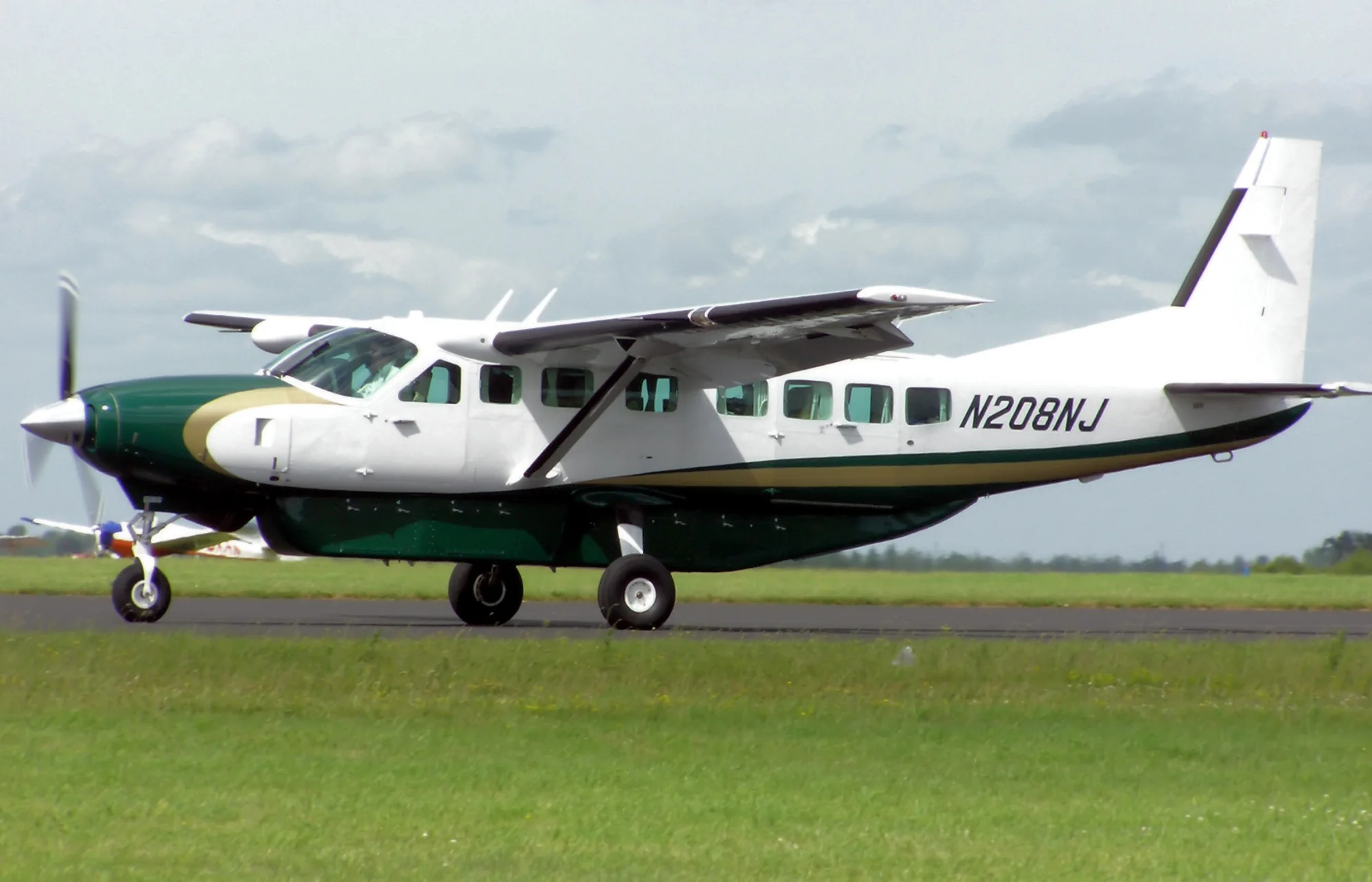
Cessna 208B N208NJ, 2005. Archive photo of an aircraft of this family; the Reliable Robotics test aircraft is not shown here.
Reliable Robotics conducted demonstration flights of a converted Cessna 208B Grand Caravan at Albuquerque International Sunport. The company reported results on October 21, 2026. The tests took place as part of the American advanced air mobility integration program eIPP and were related to the ability to use automated aircraft for regional cargo transportation.
The remote pilot was operating from California, and there was a safety pilot on board. Therefore, it would be inaccurate to describe the display as a normal commercial flight without human intervention. The combination of onboard automation, remote control and the existing airport environment was tested. The choice of location is especially important: Sunport serves regular aviation traffic and is not an isolated experimental site.
How does this automation differ from the usual autopilot?
On many aircraft, the autopilot has long helped maintain a given trajectory. But the separate control function in the air and the organization of flight from stop to stop relate to different scales of the task. Before takeoff, the aircraft must move around the airfield, take the desired position and interact with the surrounding environment. After landing, the work also does not end at the moment of touching.
Automation of a broader cycle requires the coordination of several states. The system must understand which step is being performed, what data is relevant, and what action is allowed next. An error in the sequence can be significant even with working sensors. Therefore, the development of such a complex includes not only actuators, but also testing the logic of transitions between modes.
A useful analogy is the difference between maintaining a car's speed and having a fully organized trip. The first skill is useful, but does not solve the issues of leaving the parking lot, intersections and parking. In aviation, conditions and responsibilities are structured differently, but the principle of comparison itself helps to understand the amount of engineering work. Successfully maintaining the course does not mean the entire transport operation is ready.
Where people remain in the operation
The described demonstration involved two different human components: a remote pilot and a safety pilot inside the aircraft. Their presence must be taken into account when assessing the result. The test configuration allows you to collect data and control risks at a certain stage of development. It does not have to completely coincide with the organization of work that the company expects to use in the future.
The remote workplace changes the way we receive information. The pilot does not directly feel the movement of the aircraft and relies on transmitted information. For such work, clear status display, timely warnings and quality of communication are especially important. The information you need should not just be available somewhere on the screen, but visible at the moment when it influences the decision.
A separate task is the division of powers. Participants must have the same understanding of who is in control of the aircraft now, how control is transferred, and what happens if communication is disrupted. These issues cannot be resolved by improvisation during the flight. They are incorporated into the architecture, procedures, and testing early and then tested under the program's intended conditions.
Why testing at an operational airport is more demanding
At a real airport, the plane turns out to be part of the general flow. Other crews carry out their tasks, ground crews work according to schedule, and air traffic controllers manage the changing situation. Even if the experimental aircraft acts predictably, the environment does not repeat the same scenario indefinitely. Therefore, testing in such an environment provides a different experience than flying over a closed test site.
It is important for an automated aircraft to remain understandable to other traffic participants. The technological design of the system should not create uncertainty regarding its behavior. If the aircraft has received an order, its execution and confirmation must fit into the overall organization of work. Integration here means coordination, not just the ability to physically fly alongside other aircraft.
Imagine a cargo delivery whose initially available runway becomes temporarily unavailable. The aircraft must receive an updated plan and follow the appropriate instruction. The task involves more than moving a line on an electronic map: it requires reassessing the sequence, time margins and coordination with the ground team. This is an illustration of operational integration, rather than a description of a particular test manoeuvre.
The cargo chain begins before engine start
Regional transportation attracts developers with the opportunity to connect a small settlement with a large transport hub. But the aviation section is only part of the cargo route. The shipment must be prepared, checked, loaded and handed over to the recipient. If ground processes are delayed, the benefits of flight automation may not be noticeable to the end customer.
Let's consider a hypothetical package of parts that needs to be delivered by the morning shift. What matters is the time the order is received, the availability of the warehouse, the road to the airfield and the last automobile section. An earlier departure is only useful when subsequent links are ready to receive the cargo. Therefore, a promising route is assessed as a chain with agreed deadlines, and not as a beautiful line between two airports.
Loading an aircraft also requires accurate input data. Weight and cargo placement are related to acceptable centre of gravity and flight characteristics. Automation does not override physics or automatically correct incorrect information about the contents of a shipment. The quality of ground counting remains part of the reliability of transportation, regardless of where the pilot is located.
Communication, data and backup options
For remote work, it is useful to distinguish between the loss of an individual message and the loss of control over a situation. The system can receive a lot of data, but its freshness, reliability and consistency are important. A beautiful, delayed image does not equal up-to-date information. Therefore, when analyzing such projects, attention is paid to the behavior when communication deteriorates and to the restrictions provided.
Possible backup actions depend on the specific design and approved procedures. It is impossible to transfer the rules of one apparatus to another just because both are called autonomous. In one project, a person may remain an obligatory participant in each stage; in another, the developer sets a broader task. Such systems should be compared based on actual functions and established conditions of use.
There is also the issue of software maintenance. After updating, you need to make sure that the changes do not break previously tested functions. Configuration history becomes an important part of understanding test results. The flight of one version of the complex and the flight of another cannot automatically be considered completely identical events, even if the plane looks exactly the same from the outside.
What does the current result mean?
The Sunport demonstration moves testing beyond individual functions and towards interaction with an operating aviation system. That is a meaningful step because a future cargo network must work within established processes. The result still needs to be read with its test conditions: safety arrangements, personnel participation and the specific tasks demonstrated.
Useful next metrics would be repeatability of operations, proven range of environment, and a clear description of the person's role. The number of successful flights matters, but without information about their conditions it does not provide a complete picture. It is equally important to know which situations have been verified, which restrictions remain, and which clearance steps remain to be completed.
For smaller regions, such developments potentially expand delivery options. Practical value will appear when the air leg becomes a reliable part of everyday logistics. So far, the news from Albuquerque shows test progress: the converted Caravan has demonstrated automated operations with remote pilot participation and an onboard safety pilot, in a live commercial airport environment.
During further monitoring of the program, it is worth separately assessing the technical readiness of the aircraft and the readiness of the organization to carry out transportation. The first requires proven equipment capabilities, the second requires people, maintenance, scheduling and coordinated work on the ground. Both parts are necessary for the test result to turn into a transport service useful to the sender.