
Airports
Western Sydney Airport opens to passenger flights
Western Sydney International began passenger operations on 25 October 2026. New airport, gradual launch of routes and ground transport at the start.
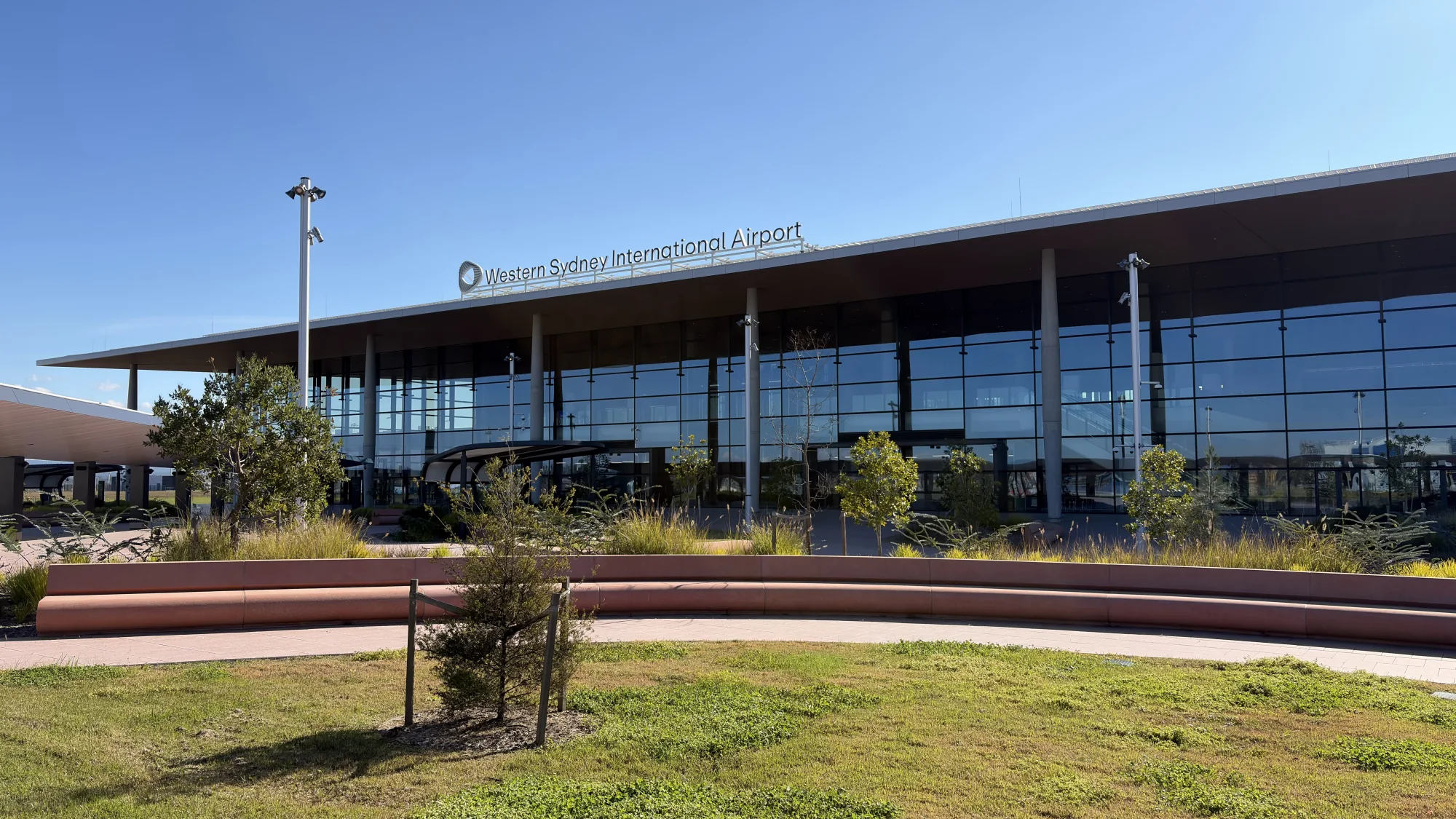
Western Sydney International terminal, July 2026, before passenger flights began.
Western Sydney International, named after Nancy-Bird Walton, commenced passenger operations on 25 October 2026. The first commercial passenger flight departed for the Gold Coast; it was carried out by Jetstar. The new airport is located in Badgerys Creek and complements Sydney's aviation infrastructure. Cargo operations here began earlier, in July. The opening of the passenger terminal became a separate stage of the project, after which the route program will expand gradually.
For the traveler, the main change is the emergence of another departure and arrival airport in the region. This is not a new terminal for the existing Kingsford Smith: Western Sydney International has its own WSI code, ground access and timetables. Therefore, it is now especially important to supplement the usual indication of the city “Sydney” with the exact airport. An error when choosing transport or a meeting place can be more significant than the difference in the time of two flights.
The new airport begins operation in stages
The first passenger flight does not mean the simultaneous appearance of the entire future route network. At the start, Jetstar announced domestic directions, and the international program is developing in separate stages. The first international passenger service to Auckland began on 26 October. Other carriers have announced subsequent launch dates for their lines. This sequence makes it possible to gradually introduce a schedule, distribute the work of ground services and accumulate practical experience in servicing the passenger flows of the new airport.
For the passenger, this means the need to distinguish a flight already in progress from a planned one. The general announcement of the airport's opening does not confirm the availability of every destination on its future program. When choosing a trip, it is important to see the specific date and the actual offer of the carrier. This especially applies to the first months of operation, when different airlines enter the schedule at different times. A map of potential routes shows the future, and a valid reservation shows the opportunity to use a certain flight now.
Design capacity describes the infrastructure
The initial infrastructure is designed to serve up to ten million passengers per year with the possibility of further expansion. This value shows the project size of the airport, not the expected number of people in the first twelve months. Between terminal capacity and actual passenger traffic lies airline schedules, demand and the pace of network development. Therefore, it is not enough to compare a new airport with one that has been operating for a long time only in terms of design capacity: they may be at different stages of infrastructure loading.
The same applies to individual areas of the terminal. A large check-in hall in itself does not guarantee the absence of queues if several flights depart close in time. The actual work depends on coordinating the counter, security, baggage system and gate. The strip and terminal provide the physical framework, while scheduling and maintenance transform it into a transportation service. That is why the period after opening is no less important than construction: the system begins to work with real passengers and their varied routes.
A 3.7-kilometre runway is part of a larger system
The new airport project includes a 3.7-kilometer runway, taxiways, a passenger terminal and a cargo area. But the suitability of an airport for a particular flight is not determined by runway size alone. Aircraft characteristics, flight conditions, available maintenance and air traffic management are also important. Therefore, the impressive length explains the scale of the object, but does not mean that any aircraft can perform any task here without additional conditions.
From the passenger's point of view, the runway usually remains outside of immediate experience. He notices the ease of arrival at the terminal, the clarity of navigation, the processing time and the operation of luggage. However, all these elements are related to the airfield part: the aircraft must occupy the parking lot on time, receive service and release it for the next flight. The new airport operates as a chain of interconnected operations. The strength of one site does not automatically compensate for the delay in another if the sequence is not consistent.
24/7 operation expands scheduling options
Western Sydney International is designed to operate without a night curfew. For carriers, this provides additional options for placing departures and arrivals in the daily schedule. The ability to coordinate timing with long-distance international routes and freight transport is especially important. At the same time, the airport's 24-hour operation does not mean that every passenger service or every ground route is available at any hour to the same extent. These parts of the trip have their own schedules.
Late arrivals may be convenient from an airfare perspective, but require separate travel planning from the terminal. An early departure, on the contrary, forces you to check in advance how to get to the airport before check-in begins. Therefore, the potential benefit of a night schedule must be considered in conjunction with the ground portion. For the airline, this is the freedom to build a network; for the passenger, this is a specific choice between flight time, cost of travel and convenience of arrival at the final address.
At the start, public transport relies on buses
At the time of opening, direct rail connections to the terminal are not yet operational: the metro line is under construction. A temporary free WSI Link bus connects the airport to St Marys station, where it can connect to the existing rail network. The stated interval is thirty minutes. Additionally, the airport is connected by bus routes to other centers in the western part of the agglomeration. This information describes the starting access pattern; Before traveling, it is useful to check the current operating hours of a particular route.
Transferring between train and bus adds another step to the overland journey. When calculating time, you need to take into account not only the movement of traffic, but also waiting, moving with luggage and possible changes in the road situation. Therefore, the distance to the station on the map does not replace a full plan of arrival at the terminal. For a regular passenger, the route will become familiar over time, and when visiting a new airport for the first time, it is wiser to understand in advance the sequence and point of boarding the desired bus.
Meeting and departure must be at the same airport
In an agglomeration with several airports, the same city name often hides different ground routes. A passenger can fly into WSI and buy a return ticket from another Sydney airport. This combination in itself is acceptable, but requires conscious planning. It is important to check not only the date and flight number, but also the three-letter airport code in each direction. This is especially useful when purchasing individual tickets or communicating information to the person who will meet the traveler.
Similar care is needed when choosing a hotel, parking or car rental. A service designed for one airport does not automatically become convenient for another. When first impressions of a new flight, it's easy to focus on the price and time in the air, leaving the ground part for later. But it is precisely this that determines how suitable the new option is for a particular area of the city. An additional airport increases choice especially when its location is consistent with the rest of the trip.
What will the first months of operation show?
After the opening, the most significant indicators are the regularity of work, the increase in the number of destinations operated and the consistency of passenger procedures. The gradual development of the network must be accompanied by the readiness of ground services and understandable information for people. To evaluate the result, it is useful to look at actual indicators, and not mix them with design capabilities. An airport can have significant headroom for expansion and still start with a limited program—different stages of one long-term project.
Western Sydney International has already moved from construction and preparation to passenger operations. There is a new aviation hub for western Sydney, and additional infrastructure for the entire metropolitan area. The benefit to a particular traveler is determined by a combination of destination, date and route to the terminal. Therefore, the main practical guidelines at the start are simple: the exact WSI code, a confirmed flight and a clear ground route in advance. It's these details that turn a major infrastructure event into a comfortable everyday ride.