
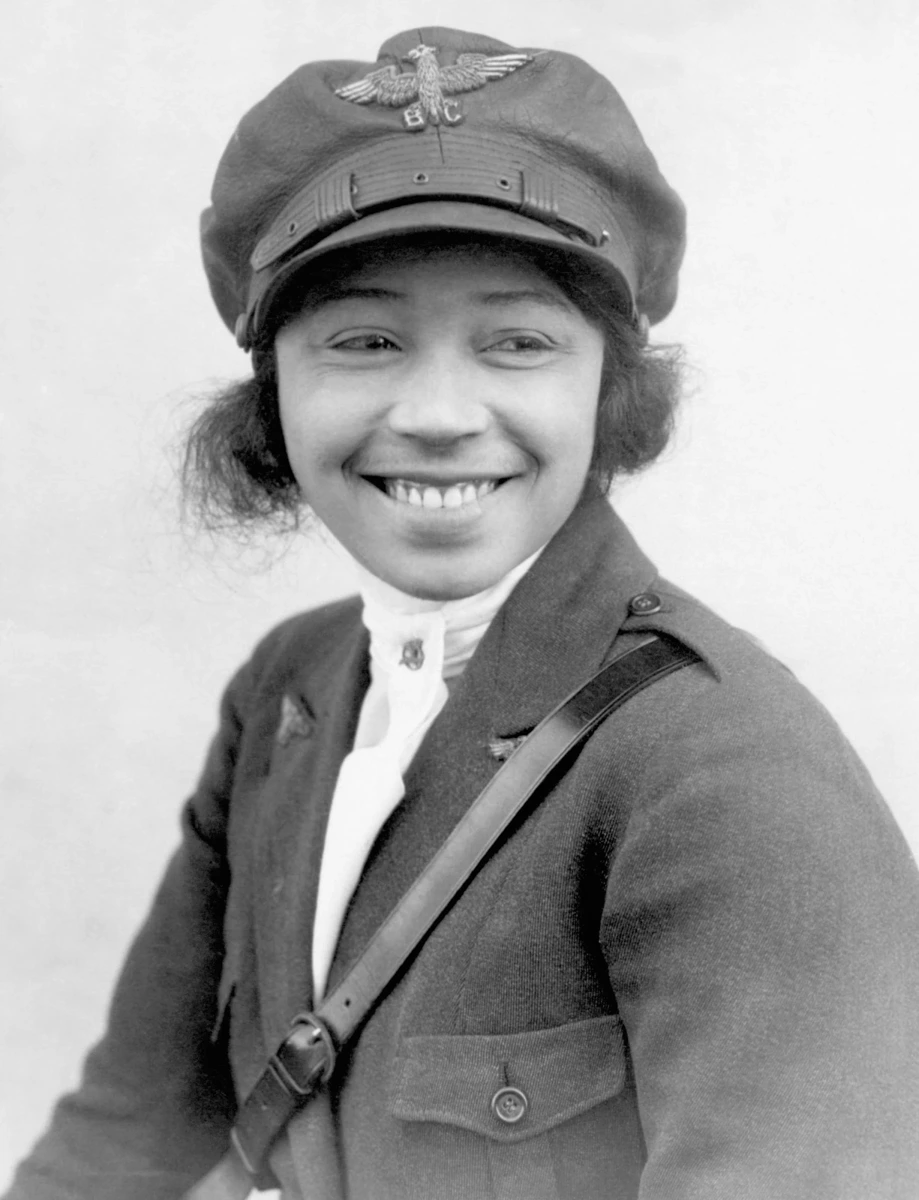
Life and work in aviation
Bessie Coleman was born in Texas in 1892 and later moved to Chicago. Interest in flying faced restrictions: in the United States, access to aviation training for a black woman was extremely difficult. She began to look for training opportunities in France.
Coleman studied French and raised funds for the trip. She was accepted into the Codron brothers' aviation school. The training took place on a two-seater Nieuport 82. On June 15, 1921, she received a certificate from the International Aviation Federation, becoming the first African American woman with such a document.
Back in the United States, Coleman realized that more practice was needed for demonstration flights and future teaching. She went to Europe again and trained with experienced pilots in France and Germany. Then she spoke at aviation events, where the audience got acquainted with the flight through demonstrations and air numbers.
Its goal was to open a school accessible to future pilots, who were hampered by existing barriers. Coleman did not have time to realize this idea, but her career became an important example of expanding access to aviation. The story of her testimony should be linked to a specific training and date, separating real achievements from later legends.
Why training had to be sought overseas
Coleman faced racial and gender barriers in access to flight training in the United States. Moving to France was a practical decision: to find a school that will give you the opportunity to undergo training and get a pilot’s document. The path required the preparation of the language, the means and the willingness to live in a different educational environment.
Such a story expands the idea of aviation achievement. Sometimes the main obstacle is not in the device of the aircraft, but in the person’s access to knowledge and practice. Coleman’s testimony is important as a confirmation of the mastered profession and as an example of overcoming the limitations of society of its time.
Evidence and further practice
The pilot's certificate, issued on June 15, 1921, was an important stage, but not the end of preparation. Public demonstration flights had their own skills requirements. Coleman continued to improve to perform and develop a professional career.
This distinction is also useful for the modern reader: obtaining an initial qualification does not make a person equally ready for any type of flight. Learning creates a foundation, and the next task requires appropriate practice. In Coleman’s biography, the document and work in the air are related, but do not replace each other.
Aviation Performances of the 1920s
Demonstration flights introduced the public to airplanes in an era when regular air travel was not yet the everyday experience of most people. Pilots demonstrated the capabilities of technology and at the same time were looking for a way to earn on their qualifications. It was a special environment of early aviation.
Coleman's career developed in this environment and was of public importance. The audience saw a woman who independently operated the plane contrary to existing stereotypes. Therefore, her influence can not be reduced only to the popularity of performances: the professional role itself was an important part of her example.
The School and the Importance of Heritage
Coleman wanted to open a school for future pilots facing limited access to training. She did not have time to implement this plan. It is important to distinguish between the idea and the implemented project, while maintaining the value of the goal that it has set.
Her story helps to discuss aviation as a profession where talent should be given the opportunity to develop. Real training, confirmed qualifications and further practice make the biography meaningful. It is these elements that explain why Coleman holds an important place in the history of increasing human participation in aviation.
Major achievements
- FAI pilot certificate 15 June 1921
- Demonstration flights and popularization of aviation training
- Promoting the idea of an aviation school accessible to pilots facing racial barriers
Aircraft and flying machines
- Nieuport 82
Organisations and events
Codron Brothers School of Aviation, FAI
- June 15, 1921 - pilot certificate issued
Questions about this biography
Where did Coleman learn to fly?
In France, the Codron brothers' school.
When did she get the certificate?
15 June 1921.
Which organization issued the document?
International Aviation Federation, FAI.
What plane was the training on?
At Nieuport 82.
What school did she want to establish?
A flying school that offers training to future pilots facing access barriers.
Coleman opened her own school?
She tried to create a school, but did not have time to implement this project. This is an important goal of its activity, which should be distinguished from the training already completed and the certificate obtained.
Why is her achievement important for the history of the profession?
It shows how access to training affects the ability to become a pilot. Coleman qualified despite societal barriers and made such a career visible to other people.