
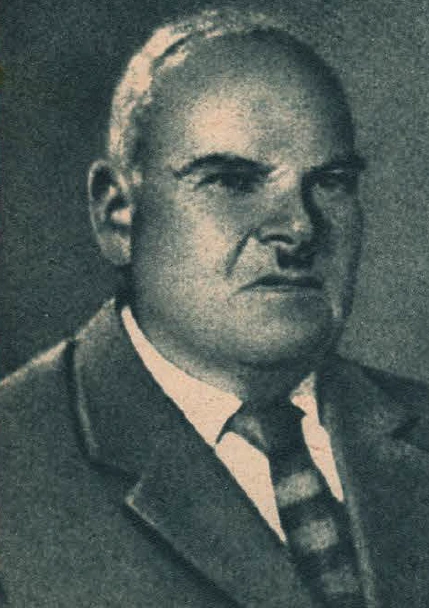
Life and work in aviation
Nikolay Ilyich Kamov (1902–1973) was a Soviet designer of autogyros and helicopters. His school became known for coaxial rotors: two main rotors sharing an axis and turning in opposite directions. The layout served compact aircraft and naval aviation. His biography shows that helicopter layouts vary according to space, control and operating requirements.
Autogyro to the helicopter
Kamov, together with Nikolai Skrinsky, created KASKR, which first flew in 1929. Autogyro differs from a helicopter in the way the rotor works: in normal flight, its rotation is supported by an air flow, and moving forward creates a separate power plant. These experiments were an independent direction of early rotorcraft aviation and gave Kamov practical experience in the layout, calculation and testing of an unusual apparatus.
Ka-8 and compact machine
The Ka-8 was a small experimental coaxial helicopter. Its open design allowed it to focus on the basic performance of the circuit. In 1948, a separate Kamov bureau was established. The transition to more practical devices required the refinement of the engine, control and conditions of placement of a person. Compactness by itself did not solve all problems: it had to be combined with stable behavior and the necessary operational capabilities.
Coaxial scheme for naval aviation
Ka-15 and Ka-25 developed the use of helicopters on ships. When placed on a limited site, the size of the device and the absence of a long tail rotor are important. Two opposite rotating rotors resolve the issue of reactive moment compensation, but complicate the screw system. Kamov’s work shows a choice of technical compromise: the advantage in one condition is accompanied by new requirements for mechanics and maintenance.
Ka-26 and brand continuity
The multipurpose Ka-26 was used for civil works, including agricultural tasks. Subsequent families of the Kamov school developed after the founder's death in 1973. Therefore, the well-known late devices "Ka" can not automatically be considered his personal development. Kamov's contribution consists in the formation of a separate engineering school and the proven practical suitability of coaxial helicopters operating next to machines of other schemes.
The rotor and helicopter scheme
The helicopter receives lift from a rotating rotor. The blade works in the air stream, but its conditions change as the machine rotates and moves. The designer needs to coordinate aerodynamics with strength, vibrations and control mechanisms. The ability to hang is an important feature, but it does not remove the limitations of mass and power. In practice, the payload depends on the flight conditions and the capabilities of a specific power plant.
A single-rotor circuitry typically uses a tail rotor to compensate for reactive moment and directional control. In the coaxial scheme, the two rotors rotate in opposite directions, solving the compensation problem differently. The choice of scheme is related to the purpose of the machine, layout and maintenance. It does not allow you to declare any helicopter of one type better than another. For specific work, the dimensions, management, cargo and available operating conditions are important.
The tilting machine changes the installation of the blades, allowing you to control the direction and magnitude of the resulting force of the screw. The history of this mechanism is a separate part of the development of the helicopter. The practical machine also requires an engine, transmission and a reliable carrier unit. The invention of one important principle is not equal to the creation of the entire serial apparatus. Between the scheme on the drawing and regular operation lie calculations, manufacture and long-term ground and flight tests.
The helicopter is used where the possibility of vertical start, hover and work from a small site is valuable. In this case, the site must meet the requirements of a particular machine; the free plot of land does not become suitable automatically. Transportation, rescue tasks and external suspension present different conditions. The designer’s biography helps to understand the origin of the technical direction, and further models show how the team adapted it to new engines, loads and operational tasks.
Major achievements
- Participated in the creation of autogyro KASKR
- He founded the design school of coaxial helicopters
- He led the development of Ka-15, Ka-25 and civil Ka-26
Aircraft and flying machines
- KASKR
- Ka-8
- Ka-15
- Ka-25
- Ka-26
Organisations and events
Kamov Design Bureau
- The first flight of KASKR in 1929
- Establishment of Kamov bureau in 1948
- Development of ship and civil helicopters
Questions about this biography
Why is Nikolai Kamov included in the history of aviation?
Participated in the creation of autogyro KASKR. He founded the design school of coaxial helicopters. He led the development of the Ka-15, Ka-25 and civilian Ka-26.
With what field of aviation is this biography connected?
Nikolai Ilyich Kamov (1902-1973) was a Soviet designer who developed autogyres and helicopters.
What aircraft are involved in this work?
Related to the biography: KASKR, Ka-8, Ka-15, Ka-25, Ka-26. Their role and period are described in the main sections.
What events help to understand the professional path?
Main historical episodes: The first flight of KASKR in 1929; Creation of Kamov bureau in 1948; Development of ship and civil helicopters.
What organizations are mentioned in the biography?
The professional path is connected with organizations and communities: OKB Kamova.
Why does a coaxial helicopter have two screws?
They rotate in opposite directions and help compensate for the reactive moment without a separate tail rotor. Such a scheme has its advantages and design requirements.
What is the technical context of this story?
The helicopter receives lift from a rotating rotor. The blade works in the air stream, but its conditions change as the machine rotates and moves. The designer needs to coordinate aerodynamics with strength, vibrations and control mechanisms. The ability to hang is an important feature, but it does not remove the limitations of mass and power. In practice, the payload depends on the flight conditions and the capabilities of a specific power plant.