
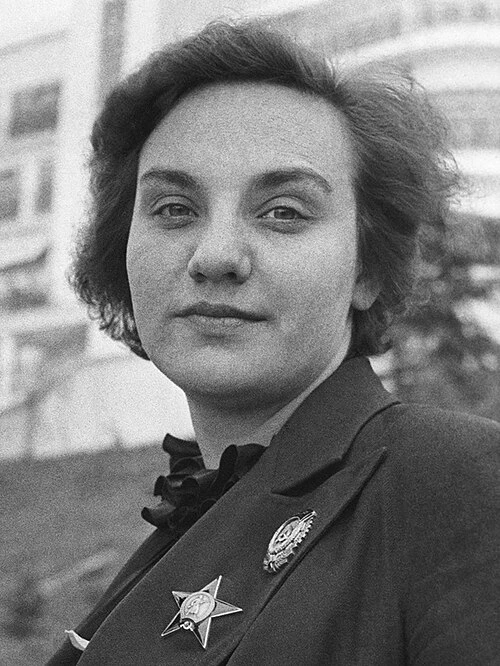
Life and work in aviation
Valentina Grizodubova (1909–1993) was a Soviet aviator, record-holder and aviation regiment commander. She commanded Rodina’s long-distance flight in 1938, with Polina Osipenko as co-pilot and Marina Raskova as navigator. Her later wartime transport aviation work drew on experience of civil routes and working with people.
Aviation family and training
Grizodubov grew up in the family of aviation enthusiast Stepan Grizodubov in Kharkiv. Early familiarity with the technique was supplemented by independent flight training. She worked as an instructor and flew different types of aircraft. Such a path required not only the ability to control the machine, but also the ability to explain the sequence of actions to another person, notice a mistake and form stable skills.
Commander of the aircraft "Homeland"
In September 1938, the crew of the ANT-37bis "Rodina" performed a non-stop route from Moscow to the Far East. Grizodubova led the flight and coordinated the actions of the crew. The long-distance route depended on the weather, fuel consumption and navigation. This was a common achievement of three specialists: command work, control of the aircraft by the second pilot and navigator calculations complemented each other.
Transport Aviation During the War
During the Great Patriotic War Grizodubova commanded an aviation regiment that used transport aircraft. Its tasks included transporting people and goods, including liaising with guerrilla areas. Work on such routes differed from the record flight: the repetition of flights, the organization of crews and the ability to deliver cargo to a specific site became more important.
After the record
In the postwar years Grizodubova continued to work in aviation, participating in research and testing activities. Her biography combines several professional roles: pilot, instructor, commander and organizer. Through this sequence, you can see how personal experience turns into the work of a team. The history of Homeland remains a prominent part of her career, but does not exhaust her long-term contribution to the industry.
How to understand the aviation record
Aviation achievements are recorded on a specific task and category. Speed on a short section, speed on a closed route and range require different conditions. The result with a useful load is not equal to the indicator of an empty machine. Therefore, the comparison begins with a description of the task, the type of device and the registration rules. A simple number without this context can create a false impression, even if the date and surname of the pilot are correct.
For a long-distance route, fuel, mass, and equipment must correspond to the intended stages. Additional tanks can increase the stock, but change the load and interior space. Wind affects the speed relative to the ground and the time of passage of the site. The ocean route also limits the choice of landing sites. Training includes ground stations and communications, so a successful flight is the result of the work not only of the person behind the controls, but also of the organization’s team.
Single flight means one pilot in a flight crew, not lack of assistance on the ground. The non-stop route excludes intermediate landings, but the possibility of refueling in the air requires a separate clarification. The round-the-world journey with stops refers to a different type of achievement than continuous flight. Keeping these differences allows you to honestly describe records of different eras and not attribute to one crew what the other performed under different conditions.
Long-term work affects a person: attention and the ability to make decisions must be maintained throughout the program. In a multi-seat aircraft, duties are shared among participants, and in a single route, training provides affordable ways to reduce the load. The historical record shows the possibilities of a particular project. It does not become a ready-made instruction for modern flight and does not cancel the requirements for equipment, qualifications and planning of normal operation.
Major achievements
- Commanded the crew of the aircraft "Rodina" in 1938
- Worked as a flight instructor
- the Transport Aviation Regiment
Aircraft and flying machines
- ANT-37bis "Rodina"
- Li-2
Organisations and events
Soviet civil aviation, long-range aviation
- Flight to the Far East in 1938
- Wartime transport operations
Questions about this biography
Why is Valentina Grizodubova included in the history of aviation?
She commanded the crew of the Rodina in 1938. She worked as a flight instructor. He commanded a transport aviation regiment.
With what field of aviation is this biography connected?
Valentina Grizodubova (1909-1993) - Soviet pilot, record holder and commander of the aviation regiment.
What aircraft are involved in this work?
Related to the biography: ANT-37bis "Rodina", Li-2. Their role and period are described in the main sections.
What events help to understand the professional path?
Main historical episodes: Flight to the Far East in 1938; Wartime transport operations.
What organizations are mentioned in the biography?
The professional path is connected with organizations and communities: Soviet civil aviation, long-range aviation.
Grizodubova was a navigator of the Motherland?
Oh, no. She commanded the crew; Marina Raskova performed navigator duties.
What is the technical context of this story?
Aviation achievements are recorded on a specific task and category. Speed on a short section, speed on a closed route and range require different conditions. The result with a useful load is not equal to the indicator of an empty machine. Therefore, the comparison begins with a description of the task, the type of device and the registration rules. A simple number without this context can create a false impression, even if the date and surname of the pilot are correct.