
Life and work in aviation
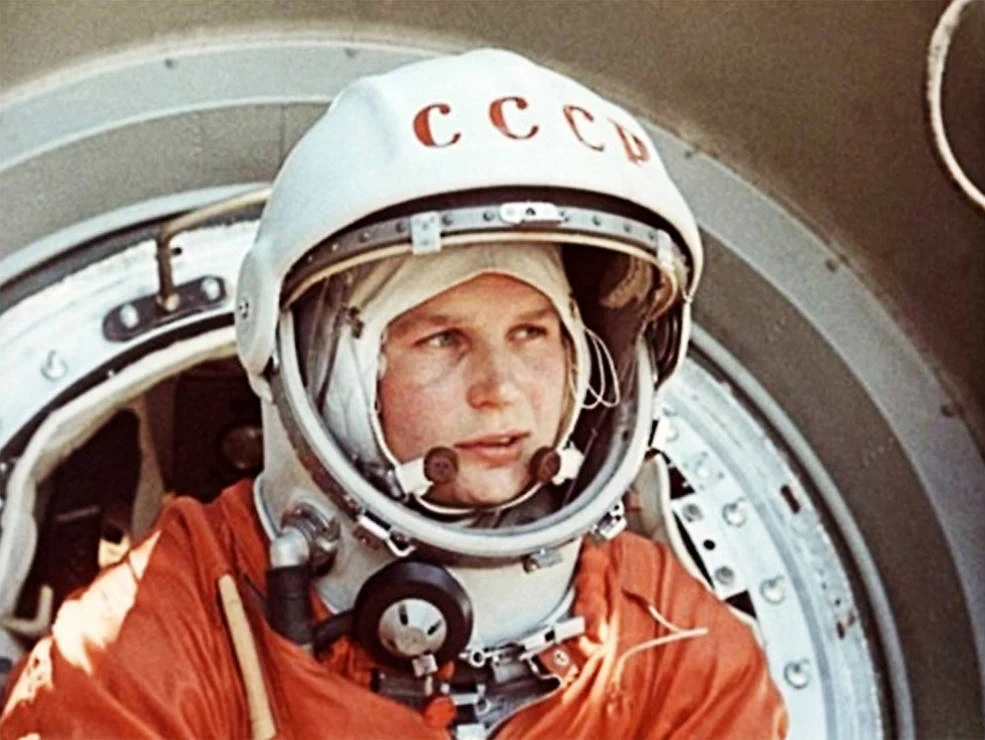
Valentina Tereshkova, born in 1937, was the first woman in space. In June 1963, she flew alone aboard Vostok 6 while Valery Bykovsky’s Vostok 5 was also in orbit. She practised parachuting before selection. Her achievement belongs to crewed spaceflight and the preparation of the first women’s cosmonaut group.
Parachute experience
Tereshkova grew up in the Yaroslavl region, worked in manufacturing and was engaged in parachuting. This experience was important for selection: in the Vostok ships, the cosmonaut completed the return with a separate parachute descent. The training included many other areas. It was necessary to master the ship's systems, communication, physical training and actions under different scenarios of the program.
Women ' s Group
In the early 1960s, a group of women were selected for training. Tereshkova was trained along with other candidates. The final choice of the crew does not mean the absence of work of other participants. The program included classes and tests aimed at a new task for the industry. The trained specialist had to perform the established sequence of work in the single cabin of the ship.
"East-6"
On June 16, 1963, Tereshkova went into orbit at Vostok-6. The flight continued until June 19. Her nickname was "The Seagull". Bykovsky was on another ship, so we are talking about parallel flights, not a joint crew. There was one in the ship Tereshkova; the program included communication and provided observations throughout the orbital route.
The first female flight
Tereshkova’s achievement opened the history of women’s participation in manned space flights. Later programs were performed by other cosmonauts and astronauts with other tasks. This biography deals with aerospace training and flight in 1963. Its subsequent social and political activity is a separate topic and does not replace the description of a specific historical result.
Aviation and manned space flight
The aviation experience helped the first cosmonauts and astronauts to work with technology and perform complex procedures. However, the spacecraft is not just a plane at a higher altitude. For orbital motion, an appropriate speed is required, and return is associated with braking and heating protection. Therefore, training programs added new disciplines. The pilot had to understand the ship, the conditions of weightlessness and the operation of the ground support system, which differed from the usual aviation departure.
The suborbital route lifts the device into the cosmic region without a complete orbit around the Earth. Orbital expedition involves movement around the planet. Length alone is not the only difference: the speed and sequence of return change. These concepts help accurately describe the first flights of different countries. The achievement of one participant should not be substituted for another, even when the events occurred close in time and belonged to one generation of space technology.
The ship depends on communication, power, control, and systems supporting human conditions. A separate node can be developed by another organization, so the authorship of the program is collective. The commander, flight engineer and scientific specialist perform different duties, and the composition of the crew changes between missions. The history of a particular flight should preserve these roles. It shows what tasks the participant actually solved, and not just lists the names of people who were near the ship.
Ground training includes the study of equipment and the development of the envisaged actions. Astronauts are trained as a crew, agreeing on the distribution of work. With the development of stations and reusable ships, scientific programs and the duration of stay have expanded. The biography of the participant allows you to compare generations of technology, but does not make him the author of all subsequent missions. To understand the heritage, specific flights, duties and transfer of experience to those who prepared and performed the following expeditions are important.
Major achievements
- The first woman to make a space flight
- Training of the first women's squad
- Performed a solo expedition to Vostok-6
Aircraft and flying machines
- "East-6"
Organisations and events
Cosmonaut Training Centre
- Flight 16-19 June 1963
Questions about this biography
Why is Valentina Tereshkova included in the history of aviation?
She was the first woman to make a space flight. The first women's squad was trained. She made a solo expedition to Vostok-6.
With what field of aviation is this biography connected?
Valentina Tereshkova (born 1937) is the first woman to make a space flight.
What aircraft are involved in this work?
Related to the biography: "Vostok-6". Their role and period are described in the main sections.
What events help to understand the professional path?
Main historical episodes: Flight 16-19 June 1963.
What organizations are mentioned in the biography?
The professional path is connected with organizations and communities: Cosmonaut Training Center.
Tereshkova flew with Bykovsky in the same ship?
Oh, no. It was on Vostok-6, Bykovsky - on Vostok-5.
What is the technical context of this story?
The aviation experience helped the first cosmonauts and astronauts to work with technology and perform complex procedures. However, the spacecraft is not just a plane at a higher altitude. For orbital motion, an appropriate speed is required, and return is associated with braking and heating protection. Therefore, training programs added new disciplines. The pilot had to understand the ship, the conditions of weightlessness and the operation of the ground support system, which differed from the usual aviation departure.