
Fighter aircraft / J-20
Chengdu J-20
The Chengdu J-20 is China's programme for a new-generation low-observable fighter.
Development
History
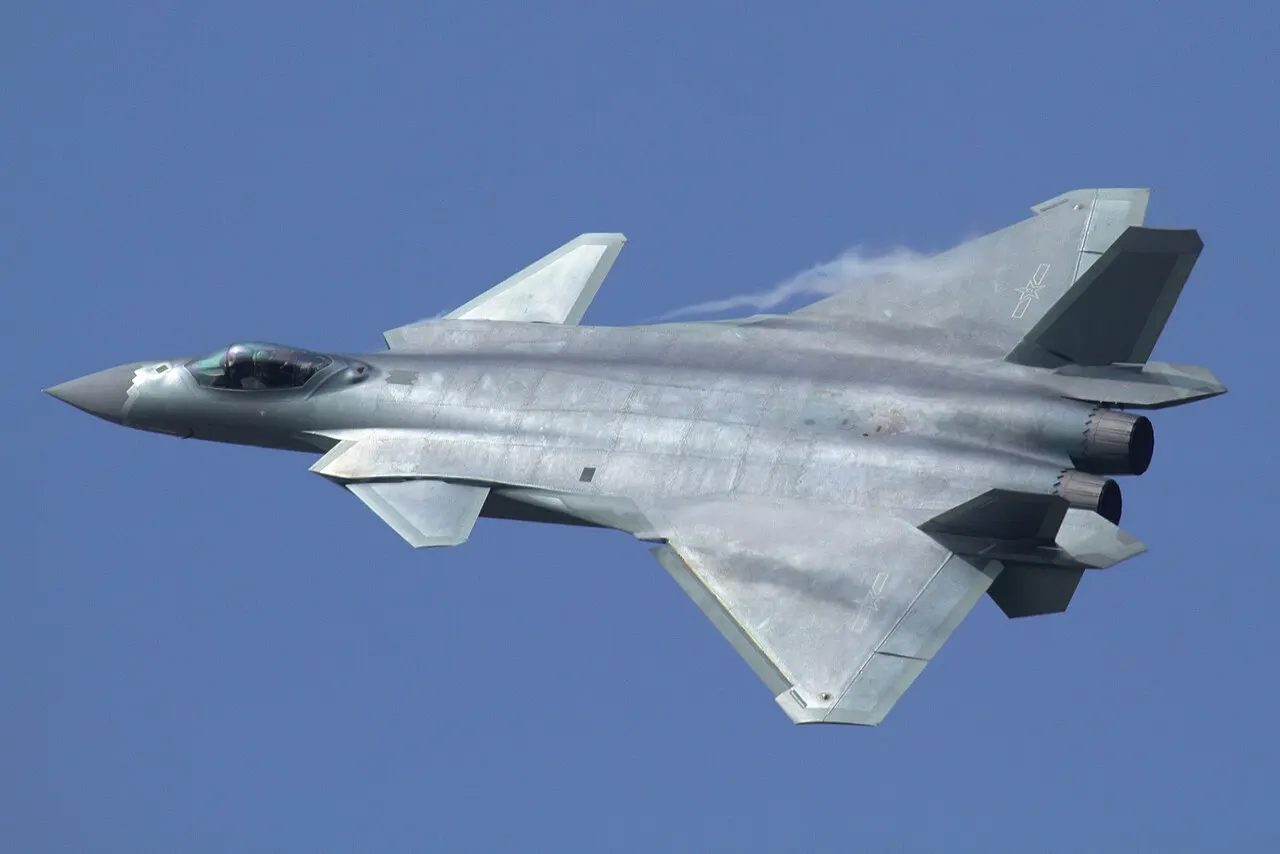
The Chengdu J-20 is China's programme for a new-generation low-observable fighter. Its first prototype flew at Chengdu on 11 January 2011. Several years later, the aircraft was shown publicly at the Zhuhai airshow, and examples were subsequently delivered to the Chinese air force for testing, training, and operational service. Moving from a prototype to routine use took time. Flight testing, production, and preparation of personnel are distinct stages of an aircraft programme.
The J-20 has two engines, forward canards, and an airframe shaped with reduced radar observability in mind. Stealth cannot be described by one universal number. Detection depends on viewing direction, radar frequency, the condition of the aircraft, and the equipment it carries. The ability to use weapons while maintaining a particular configuration also matters. Public photographs show the broad layout, but they do not verify every detail of the radar, software, or actual tactical capability.
Development continued after the first aircraft flew. Initial prototypes were followed by machines used for service trials and later production batches. The type made its public flying debut in 2016. Chinese announcements about combat-unit service refer to later stages. Different reports use the phrase entered service for different milestones, so dates should be connected to the event being described. Engine development also continued, meaning that early and later aircraft were not identical in every respect.
The People's Liberation Army Air Force is the principal known operator. Pilot training, ground support, communications, and information exchange with other sensors are all relevant to its employment. Several newer versions have been discussed, including the two-seat J-20S, but their equipment cannot simply be assigned to the original single-seat aircraft. Public estimates of fleet size and weapons may vary. When they are used, they should be identified as estimates rather than presented as established specifications.
The J-20 is historically significant because China moved from research on a low-observable fighter to production and operational use of its own aircraft in that class. The visible shape is only one part of a system involving engines, sensors, weapons, and trained people. Comparing the J-20 with another fighter without reliable test conditions is misleading. A sound description separates established programme milestones from unverified performance claims and accounts for changes between production series.