
Fighter aircraft / МиГ-23
Mikoyan-Gurevich MiG-23
The MiG-23 was developed in the 1960s as Soviet tactical fighter aviation moved toward higher speed, better takeoff and landing behaviour, and improved target detection.
Development
History
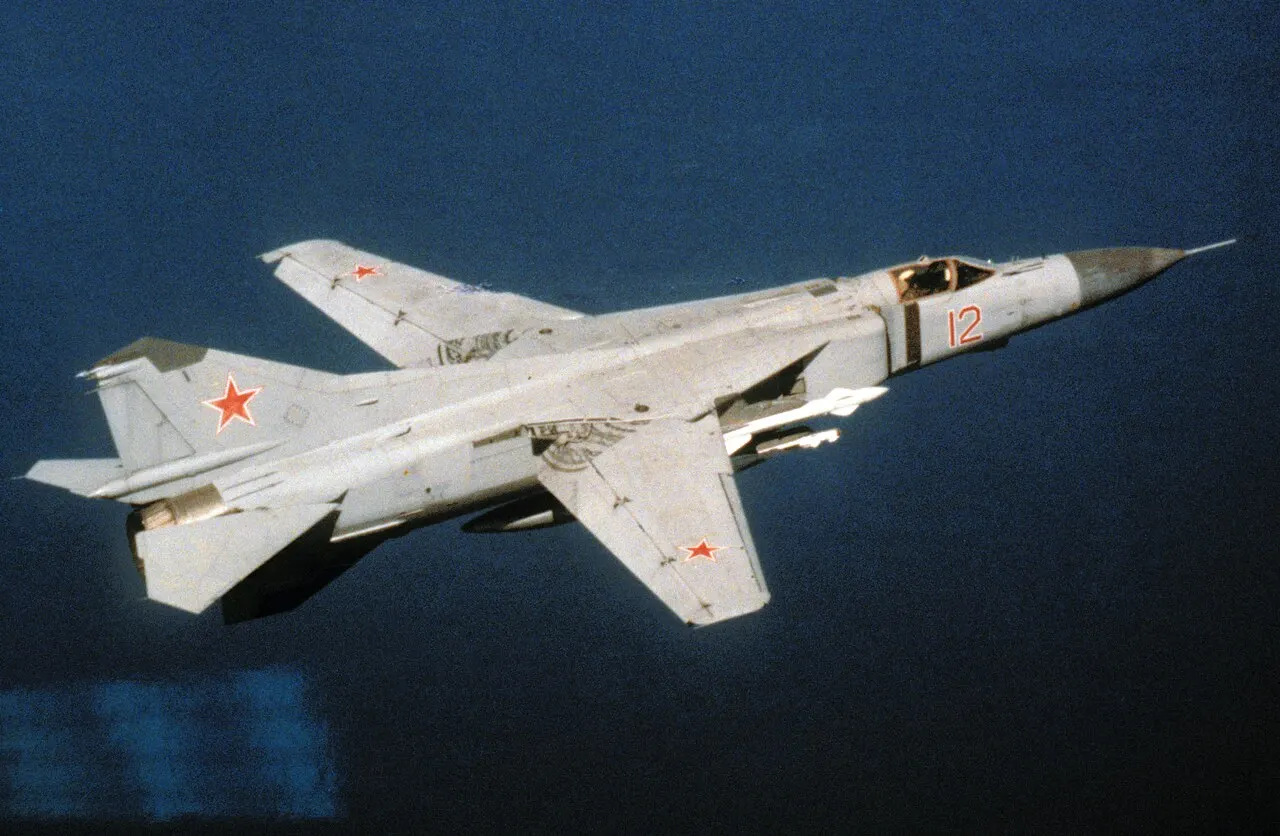
The MiG-23 was developed in the 1960s as Soviet tactical fighter aviation moved toward higher speed, better takeoff and landing behaviour, and improved target detection. A variable-sweep prototype first flew in June 1967. Engineers also tested a different experimental arrangement with lift engines, but the pivoting-wing aircraft became the production design. Initial series aircraft appeared near the end of the decade, while refinement of the type continued for several years.
The wing could change its sweep angle in flight. A smaller angle helped during takeoff, landing, and some manoeuvres; greater sweep reduced drag at high speed. This compromise required a complex mechanism and careful maintenance. The single-engine layout also differed from many heavy fighters of the period. As development progressed, the wing, engine, radar, and cockpit equipment changed. Consequently, an early MiG-23S and a later MiG-23MLD should not be described as if their characteristics were identical.
Radar and medium-range missiles widened interception possibilities compared with earlier lightweight fighters. Actual results still depended on ground guidance, electronic interference, crew training, and reliable identification. The aircraft could also carry weapons against surface targets, but the related MiG-27 was developed around a different principal mission. Combining the combat roles of the two types, or of every MiG-23 version, into one simple description would obscure important distinctions.
The MiG-23 was exported widely. It served in Warsaw Pact states and in parts of the Middle East, Africa, and Asia. Export aircraft often had different avionics and missile options from Soviet examples. MiG-23s fought in several conflicts and performed strike missions, yet their records cannot be assessed without considering the specific variant, pilot preparation, air-defence support, and the opponent. Some countries continued operating the type after the Soviet Union dissolved despite more difficult supply arrangements.
The MiG-23 illustrates both the benefits and the cost of variable geometry. The wing helped one aircraft meet different speed requirements, but added weight, moving parts, and work for maintainers. The type stood between comparatively simple fighters such as the MiG-21 and later multirole aircraft. Its long service reflected large production numbers and continuing modifications; without those changes the original design would have become outdated more quickly.