
Fighter aircraft / JA 37
Saab 37 Viggen
Saab 37 Viggen became Sweden's next major combat aircraft after the Draken.
Development
History
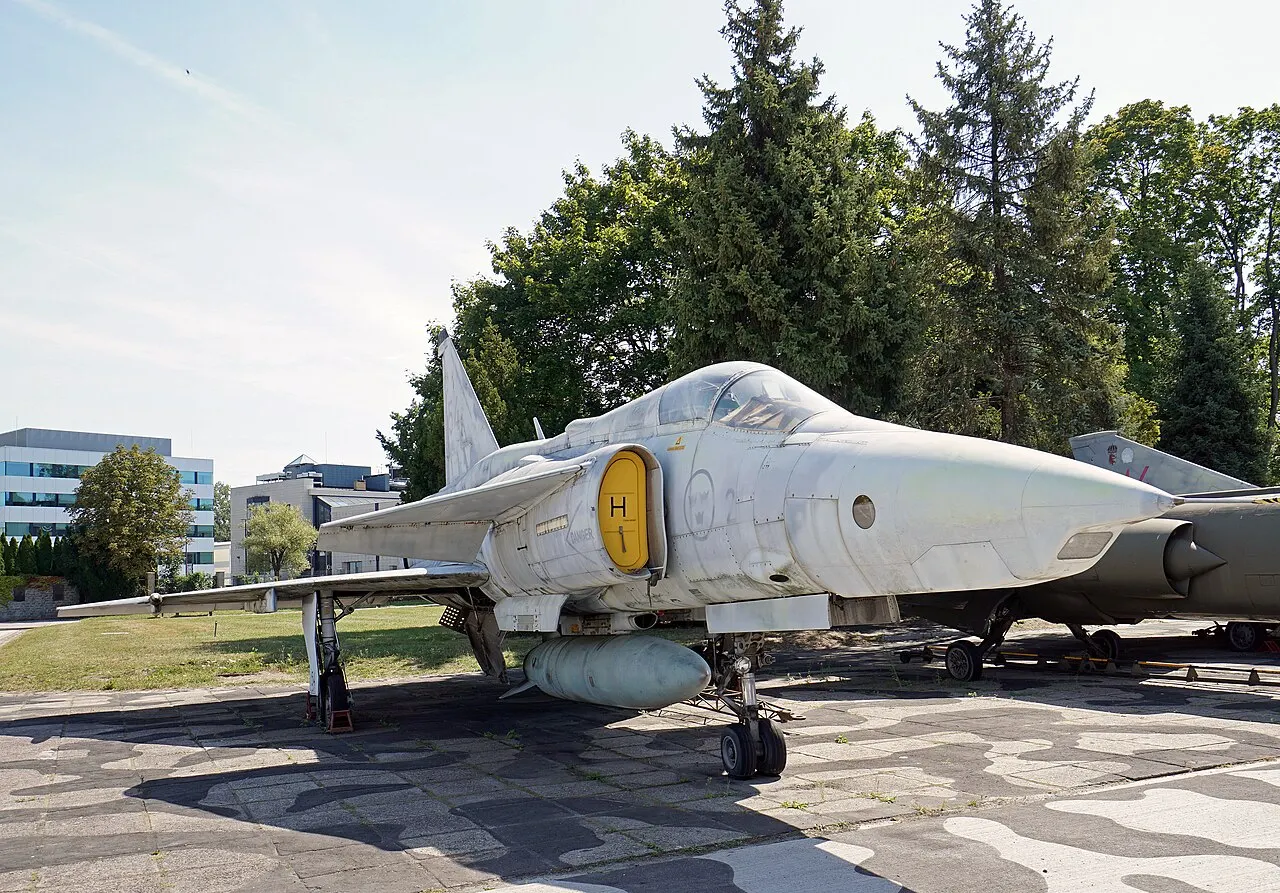
Saab 37 Viggen became Sweden's next major combat aircraft after the Draken. The armed forces wanted an aircraft that could serve a defence system built around dispersed operations. Its first prototype flew on 8 February 1967, and production aircraft began reaching units in the early 1970s. Viggen was never a single unchanging configuration. Attack, reconnaissance, training, and fighter variants carried different equipment and were developed for different tasks.
The aircraft's shape combines a large delta wing with forward canards. It used a powerful engine and a thrust reverser to shorten the landing run. These features supported the Swedish concept of operating from short prepared surfaces, including stretches of road. A short landing distance, however, was only one element of the system. Sustained operations still needed technicians, fuel, weapons, reliable communications, and an organised supply chain reaching dispersed sites.
The early AJ 37 was chiefly an attack aircraft. Separate SF 37 and SH 37 variants carried equipment for photographic and maritime reconnaissance, while the two-seat SK 37 trained crews. The later JA 37 fighter differed in engine, electronics, and armament. Calling the family multirole should therefore not suggest that any individual Viggen could perform all these missions without modification. The designation and the period of service matter when describing its radar or compatible weapons.
Swedish defence requirements shaped the project, and the Swedish Air Force remained its principal operator. Aircraft and ground infrastructure developed together. During service, newer communications, radar improvements, and modern air-to-air missiles became available on upgraded fighters. Changes inside the cockpit could be as important as engine or wing performance. An interception relied on target information, pilot training, and coordination with ground-based systems, rather than on the aircraft's maximum speed alone.
Production eventually ended as Swedish industry turned to the Gripen programme. Some Viggen variants remained in service into the twenty-first century. The aircraft remains significant for its combination of high performance, unusual configuration, and demanding short-base requirement. It is best understood as one component of a national defence network. Bases, crews, maintenance, and communications all contributed to what the Viggen could achieve in practice. Comparing it with the earlier Draken or later Gripen also reveals how Sweden's requirements and available electronics changed across generations.