
Military helicopters / UH-60
Sikorsky UH-60 Black Hawk
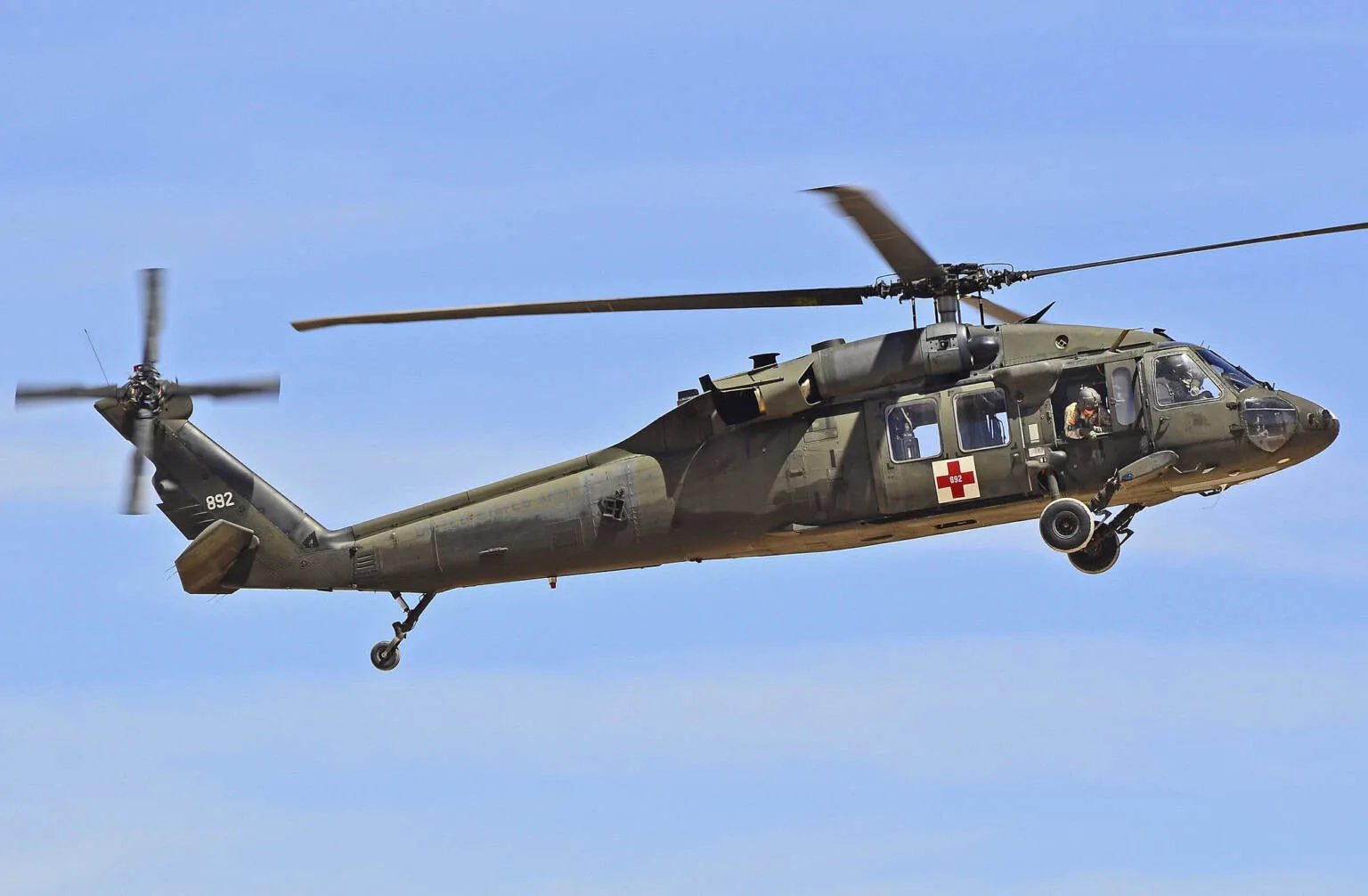
The UH-60 Black Hawk is a twin-engine Sikorsky utility helicopter developed for troop movement, supply transport, and medical evacuation.
Development
History
The Sikorsky UH-60 Black Hawk is a utility helicopter designed to move Army personnel and cargo. Its program grew out of a US requirement for a new tactical transport helicopter that would take over part of the UH-1 Huey's work. The designers had to address survivability, maintainability, and operation in demanding conditions as well as speed and payload. Black Hawk became a large family, so any specific performance figure belongs to a particular version.
The UTTAS competition brought together several proposals. Sikorsky's YUH-60A prototype, designated S-70 by the company, first flew on October 17, 1974. Testing was more than a formality for a finished design: engineers changed parts of the rotor and tail arrangement to deal with vibration and handling problems. The Army selected Sikorsky's proposal in December 1976, allowing the transition from experimental aircraft to the production UH-60A.
The helicopter has two turboshaft engines, a four-bladed main rotor, and a cabin larger than that of its predecessor. It can carry a group of soldiers or support supply, medical evacuation, and other missions. Some cargo can be carried externally when conditions and aircraft limits allow. Survivability and crashworthiness requirements influenced the original design, although that does not make the helicopter invulnerable.
The first production UH-60As reached the Army in the late 1970s. Operators valued the ability to move people rapidly and to fit the helicopter into a wider ground operation. Nevertheless, range, cargo mass, and hovering capability change with altitude, temperature, fuel load, and installed equipment. A published maximum figure does not automatically describe every sortie in the field.
Development continued after the basic version entered service. The UH-60L introduced changes involving engines and transmission, while later standards added digital systems and further improvements. Specialized configurations supported medical and other missions. Related Seahawk naval aircraft shared the wider platform but incorporated their own equipment and changes for shipboard service. They should not be described simply as identical UH-60s with a new name.
Black Hawks have served with many military operators in transport and support roles. Their history shows how one Army utility requirement became a long-lived family with several equipment standards. When comparing photographs or specification tables, the variant and modernization date matter. A UH-60A, an L-model, and later aircraft retain a recognizable layout, but they are not the same helicopter in every important detail.