
Military transport aircraft / DHC-5
de Havilland Canada DHC-5 Buffalo
The DHC-5 Buffalo was a Canadian short-field turboprop transport also used for search and rescue.
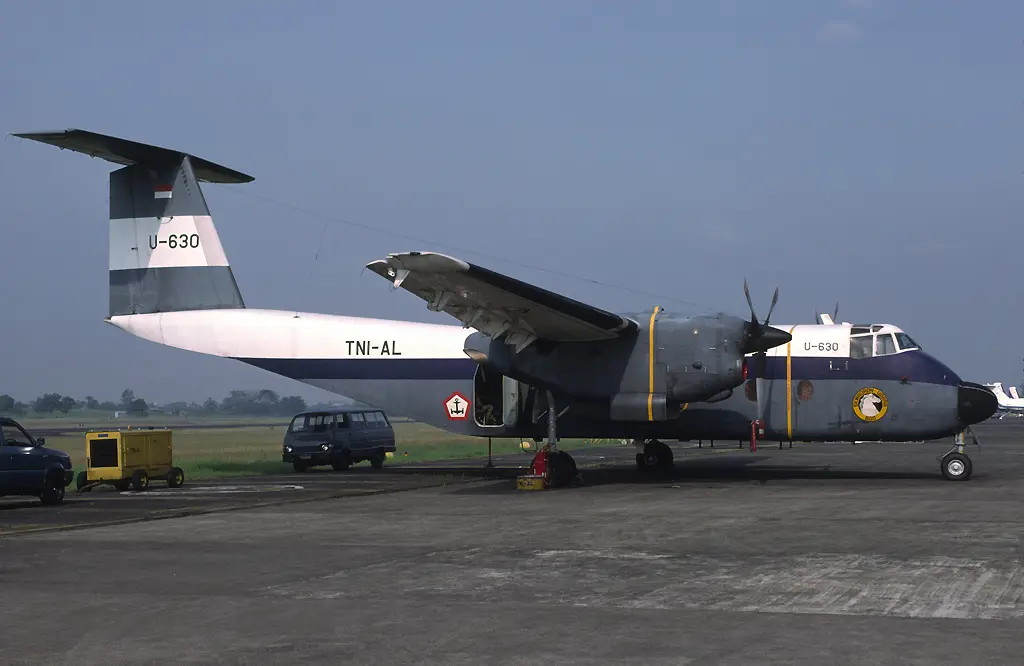
Development
History
The de Havilland Canada DHC-5 Buffalo was a Canadian turboprop transport designed for short takeoffs and landings. It grew from experience with the piston-powered DHC-4 Caribou but became a larger and more powerful aircraft. Military operators wanted to deliver useful loads to airfields with little runway length. The designers retained the earlier type's access to remote strips while introducing turboprop engines. The prototype first flew on 9 April 1964.
The Buffalo has a high wing, two engines, extensive wing high-lift devices and a rear cargo ramp. These features combine a practical freight cabin with strong short-field performance. The aircraft can carry people and supplies and support airborne delivery. Weight, temperature, wind and surface condition still matter at every strip. In particular, a short landing run does not guarantee an equally easy departure after taking on another load. Crews must plan both halves of a mission.
Early Buffalos joined military organizations in Canada and other countries. Canadian aircraft served as tactical transports, while parts of the fleet later supported search and rescue. That mission requires more than payload and range. Crews must work over a search area, communicate with ground teams and deliver rescue equipment. In suitable configurations the aircraft could also move people needing assistance. Multipurpose service became an important characteristic of the type.
Early United States aircraft received a military designation different from the Canadian one. Export versions could also have different equipment. It would therefore be inaccurate to describe every Buffalo using a single photograph or specification table. The Buffalo and Caribou share a design concept, but their engines, size and operating capabilities differ. Comparison with a helicopter needs care as well: an airplane may carry cargo quickly to a short runway, but it cannot land vertically in any clearing.
The DHC-5's history shows how developing an established idea can produce a distinct transport. It was not intended to replace heavy strategic aircraft. Its task was to move people and supplies into constrained airfields and support specialist work, including rescue operations. In military aviation the Buffalo represents a practical balance among payload, airfield access and the demands of maintaining a rugged transport.