
Helicopters
Bell 429 air ambulance announced for AMTC 2026 in Fort Worth
Bell announced that a UnityPoint LifeFlight Bell 429 air ambulance would appear at AMTC 2026. We examine the confirmed details and the role of equipment in aeromedical operations.
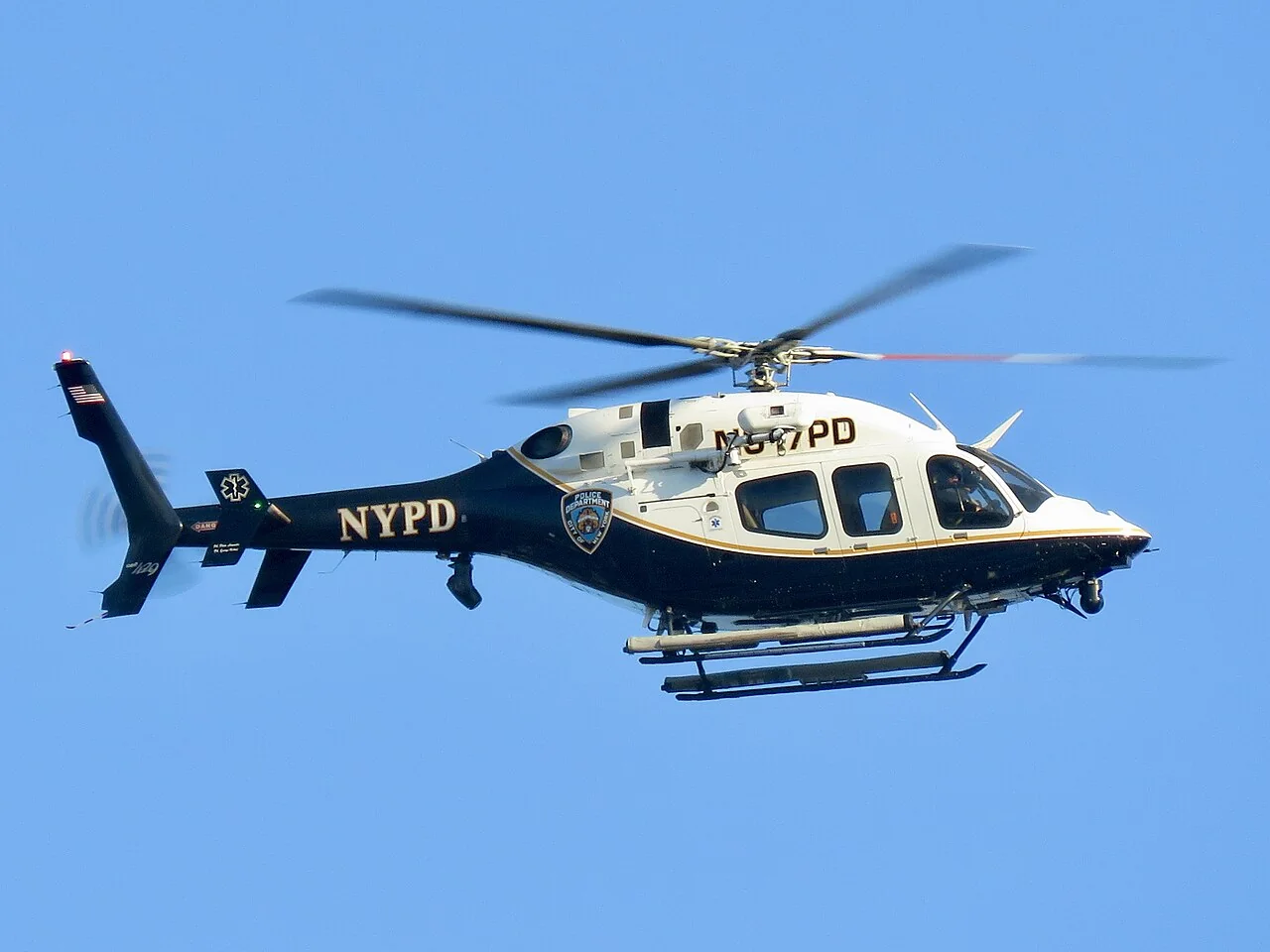
A Bell 429 in police configuration. The photograph illustrates the model; it does not show the LifeFlight aircraft scheduled for the exhibition.
Bell has announced that Air Methods' Bell 429 air ambulance, used by the UnityPoint LifeFlight program, will be on display at the Air Medical Transport Conference 2026. The event is scheduled for October 26-28 in Fort Worth, Texas. The manufacturer's October 21 announcement focused on civil medical aviation, focusing on cockpit organization, operational support, and training of specialists who operate helicopters to transport patients and perform emergency missions.
This is a message about the exhibition program and not an announcement of a new order or individual delivery. It allows us to consider a practical question: what distinguishes a medical helicopter from a passenger aircraft of the same model. The example of the Bell 429 shows that the choice of platform is not only related to speed. Equipment placement, patient access, ground crew performance, and the ability to keep the aircraft ready to perform missions as part of a medical transport system are all important.
What has been announced for the exhibition
The manufacturer indicated the participation of Bell 429 in the medical configuration and the work of operation support specialists at the company's stand. The event program also included a discussion on the state of the helicopter air ambulance industry. Such events bring together manufacturers, operators and the professional community around specific equipment and work organization issues. For visitors, the value of the demonstration is the opportunity to examine the configuration used in real operation and discuss its features with program participants.
Exhibition display should be distinguished from reporting operational results. The presence of a helicopter in a program does not in itself provide data on response times, number of flights completed, or medical outcomes. Such conclusions require separate information and a clear assessment methodology. Therefore, it is correct to perceive this news as a demonstration of the solution used and a reason to understand its structure. It does not establish a universal advantage of the model over all other ambulance helicopters.
How the LifeFlight program relates to the Bell 429
In July 2026, Air Methods announced an upgrade to UnityPoint Health - Des Moines LifeFlight helicopters in Iowa. Then there were three Bell 429s in question: the first arrived at Audubon, with two more planned for the Fort Dodge and Des Moines areas in the fourth quarter. An October Bell report already described the program as using three aircraft of this type. This information shows the development of a particular civilian medical program over time.
At the same time, the July delivery plan and the manufacturer’s October formulation do not replace a detailed report on the commissioning of each aircraft. Therefore, they should not be used to invent exact dates for the start of duty of individual aircraft. For news, the confirmed scale of the program and the named organizations are sufficient. Fleet changes are important because they affect training, maintenance and the way teams work. Aircraft type renewal is an organizational process that goes beyond the transfer of the helicopter itself.
Inside an air ambulance helicopter
The passenger capacity from the general catalog does not describe the medical configuration well. The space inside is occupied by the patient, accompanying specialists, equipment and the necessary means for working in flight. Therefore, the number of regular seats is not the main characteristic of such a cabin. What matters is how people are positioned relative to the patient, whether they can use the equipment, and how conveniently the loading is organized. These issues are considered in conjunction with the specific medical equipment, its mountings and established weight limits.
For the Bell 429, the manufacturer highlights a flat floor and the ability to adapt the cabin to different missions. These features have practical value in aeromedical service, but the chosen equipment installation determines the final result. Two helicopters of the same model can have different interiors. A photograph of a standard passenger cabin therefore cannot establish how a medical aircraft is arranged. Assessing a specific installation requires its layout, equipment list and details of how the team works during transport.
Patient loading and transfer
The flight is only one part of medical transport. Before take-off and after landing, air and ground teams must coordinate, position equipment and transfer the patient. Door design, stretcher position and available space affect those processes. Specialists from the relevant services assess the arrangement. For a general reader, this explains why discussions of an air ambulance cabin can be more meaningful than a comparison of two helicopters’ maximum speeds.
For a transport system, the consistency of all stages is important. Rapid air travel does not eliminate preparation time, travel to the site, or interaction with the host organization. Therefore, assessing effectiveness only by minutes in the air is not enough. A picture of the entire operation is needed, with equally defined starting and ending points. Without such a technique, a separate advertising promise about speed does not allow one to draw a reasonable conclusion about the operation of the program as a whole or its results.
Why does a medical aircraft need flexibility in equipment?
The composition of the equipment depends on the objectives of the program and the selected medical configuration. Its installation must take into account operator accessibility, power supply, mounting and compatibility with the aircraft. This makes outfitting the cabin a technical task rather than simply placing portable instruments within a free space. Each additional device takes up space and weight. Therefore, the capabilities of the platform are assessed together with the full equipment, crew composition and the envisaged transportation scenario of a particular operator.
Design flexibility is also useful when upgrading equipment. But changing the configuration requires checking the applicable requirements and the impact on operation, even if the appearance of the helicopter does not change much. For a program with multiple aircraft, consistency of configurations is important: it is easier for specialists to work when the location of the necessary tools is predictable. However, the entire fleet cannot be automatically considered the same. The actual equipment of each aircraft is determined by its documentation and decisions of the organization that is responsible for operation.
Weather and readiness for departure
Modern avionics and two engines expand the capabilities of the platform, but do not turn the helicopter into a transport accessible in any weather. The conditions, equipment, crew training and operational approvals must be suitable for a particular flight. Therefore, phrases about working day and night should be read with the appropriate context. They describe the capabilities of a particular operational system, and do not eliminate the need to assess the situation before departure and during the mission.
Air ambulance particularly demonstrates the importance of prepared solutions in case of restrictions. If air transport is not possible, coordination between services should take into account available assistance and transport options. It cannot be concluded from the news about the purchase or display of a new aircraft that such a problem has disappeared. Technology is part of a system in which dispatch, communications, ground resources and decision rules matter. It is the consistency of these elements that allows the aircraft’s capabilities to be used for their intended purpose.
Technical support and team training
Bell included operational support and training as part of its AMTC participation theme. For a helicopter program, these areas are related to the daily availability of equipment. Parts supplies, scheduled maintenance, and personnel training determine how an aircraft is scheduled and what happens during maintenance. Even a helicopter with suitable characteristics needs technical support. Therefore, the discussion of air ambulance naturally extends beyond the cabin itself and the manufacturer’s specification sheet.
Updating a fleet also requires time to master the equipment and collaborate between teams. Pilots, technicians and medical professionals have different tasks that must be coordinated in one operation. Externally similar helicopters may have different training and maintenance requirements. Therefore, the transition to a new model is assessed as a change in the entire operating program. To the observer, this explains why the message of delivery and the message of full use of the aircraft may refer to different stages.
What does this news show?
The announced display of the Bell 429 at AMTC 2026 reflects the interest of manufacturers and operators in combining an aircraft platform with specific medical equipment. Here it is important to separate the confirmed facts of the event and broader issues of the organization of air ambulance. The participation of the companies, the helicopter model and the selected operating program were confirmed. Effectiveness comparisons, promises of medical results, or precise response rates would require additional data that the exhibition message itself does not provide to a wider audience.
For the reader, the main practical implication is that the ambulance helicopter is valued as part of the transport system. Cockpit, equipment, training, technical support and ground interaction all influence its operation together. The Bell 429 in LifeFlight configuration provides a concrete example of this approach. Further news about this program should be weighed against confirmed fleet, equipment and operational changes, maintaining a distinction between demonstrated capabilities and measured actual performance.