
Aircraft
Civil Air Patrol orders 21 Cessna aircraft for rescue and training missions
The Civil Air Patrol has ordered 21 Cessna piston aircraft for delivery in 2027. Composition of the order and the role of light aviation in search, training and public tasks.
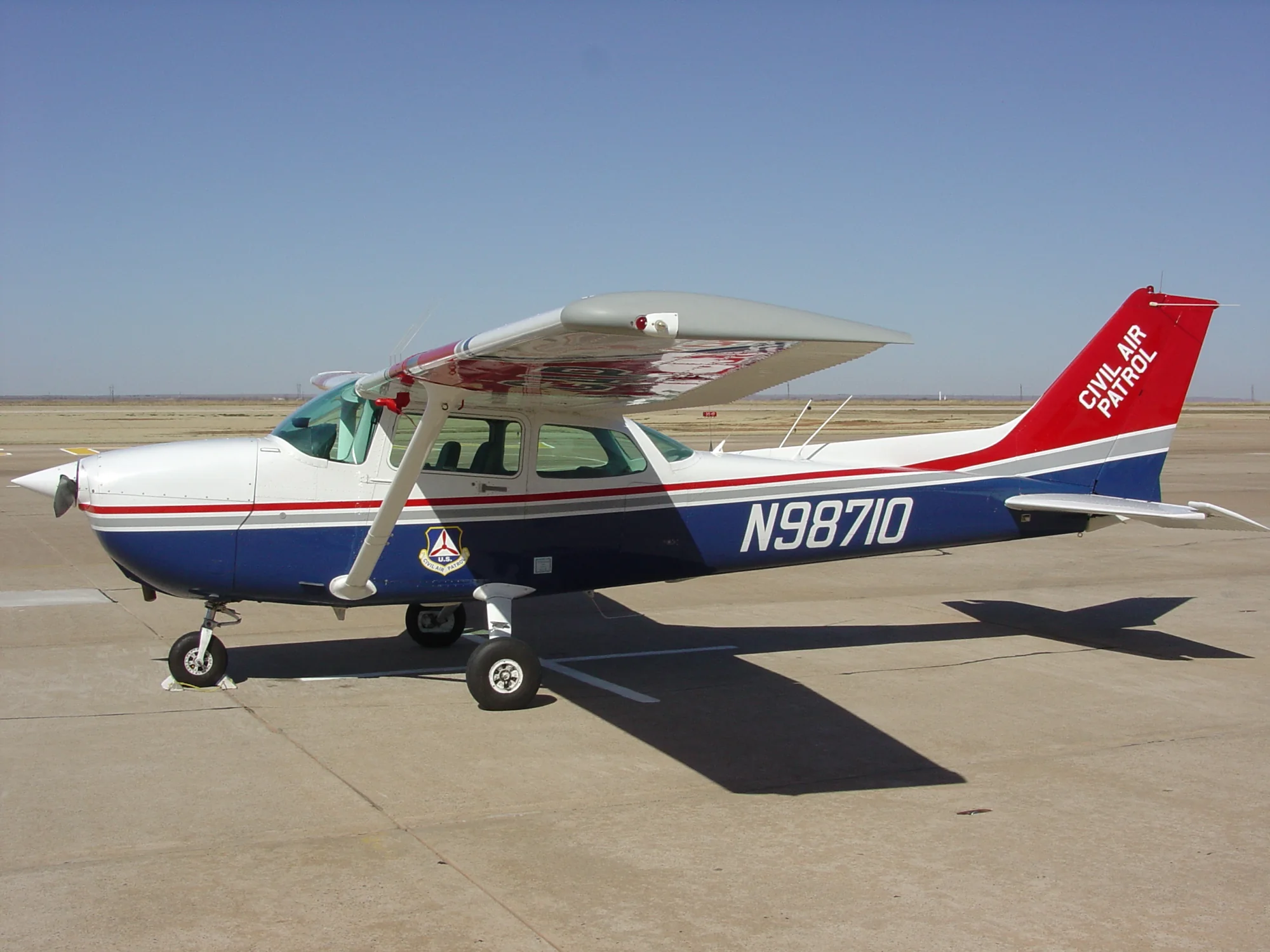
A Civil Air Patrol Cessna 172 at Altus Airport, March 2009. An archival photograph of the operational fleet; it does not show the aircraft ordered in 2026.
Civil Air Patrol expands its fleet of light aircraft: On October 21, 2026, Textron Aviation announced an order for 21 piston Cessnas. Deliveries are scheduled to be completed in 2027. The agreement includes seven Skyhawk 172s, eleven Skylane 182s, two Turbo Skylane T182Ts and one Turbo Stationair HD 206. This is an order for multiple models rather than the delivery of identical aircraft in one configuration. Its purpose is related to emergency response, member training, and community programs.
Civil Air Patrol is a non-profit organization that also performs the functions of a civilian auxiliary unit of the United States Air Force. Its name does not mean that the ordered aircraft are turned into combat aircraft. In this case, searching, observing, training and supporting people on the ground are important. The news of the acquisition helps us look at a less visible side of aviation: how small planes form operational networks and why the same exterior does not mean the same capabilities for every mission.
What does the order composition show?
Slightly more than half of all new aircraft in the announced batch are Skylane 182: eleven out of twenty-one. Skyhawk 172 occupies the second largest position. Two turbocharged Skylanes and one Stationair complete the main groups. This structure confirms the diversity of the selected models, but does not in itself reveal their future geography. From the general list it is impossible to conclude which units will receive a particular aircraft, where it will be based and what additional equipment will be installed on it.
Also, all 21 aircraft cannot be considered a net increase in the number of the existing fleet. Some of the new aircraft can theoretically replace old ones, some can add reserves or expand a separate area. Without a published distribution plan, it is not possible to select one of these options. It is more correct to talk about updating and replenishing the organization’s capabilities within the framework of the declared order. For the real readiness of the fleet, not only the purchased units are important, but also the serviceability, availability of crews, maintenance and availability of the aircraft in the right place.
The search task begins before the engine starts
Air search is often presented as a free flight over a large area. In practice, the usefulness of such a mission is determined primarily by the quality of the initial information and the coordination of the work. You need to understand what area is being surveyed, what exactly they are looking for and how to convey the observation to people on the ground. An aircraft provides visibility and the ability to move between areas, but the result appears only when the noticed object can be described, tied to the area and included in the overall picture of actions.
A hypothetical example shows this connection. The crew found signs of damage after strong winds, but provided only a rough description. The ground team will have to spend time searching again. If the observation is accompanied by an understandable location, time and nature of the damage, it becomes more useful. This is not instructions for conducting a rescue operation, but an explanation of the role of information. The new aircraft itself does not solve the problem of coordination: it becomes one of the tools of an already organized response system.
The observer also needs a workplace
When assessing a light aircraft, it's easy to focus on the pilot's seat and forget about the rest of the flight. However, the person observing or documenting the situation requires visibility, the ability to use equipment, and clear communication with the crew. Even if he is not flying the plane, his workload affects the outcome. Therefore, the number of seats and the quality of observation organization cannot be considered the same indicator. Sitting does not yet describe the conditions for performing a specific task.
On a long flight, everyday details matter as well: boarding access, space for personal items, access to working materials and fatigue. Neither the model name nor a photograph of a new aircraft establishes those conditions. Two members of the same family can have equipment better suited to different teams. A useful comparison starts with the work of the people aboard, then considers cabin dimensions, payload and the chosen configuration.
Payload is distributed among tasks
Every flight has weight limits. Fuel, people and carried equipment all draw on the aircraft’s available capacity. A long flight requires more fuel, while additional equipment or crew reduces the allowance left for other loads. Maximum figures from separate rows in a specification sheet cannot simply be combined into a workable flight plan.
For the reader, this explains why the organization is ordering several types, although all of them are light single-engine aircraft. Their similar purpose does not make them interchangeable under any load. Some missions require a small crew, others will require more equipment or people. At the same time, it is impossible to determine the exact reasons for choosing each model based on the composition of the purchase: this is already the customer’s decision. You can only see that it retains several variants of technology instead of a single universal configuration.
Training and operational missions share one resource
An aircraft that is participating in training cannot be used on another mission at the same time. For a distributed fleet, this is a constant organizational challenge: planning training work while maintaining equipment availability. Additional aircraft potentially provide more scheduling flexibility, but this effect depends on the number of instructors, trained crews, and maintenance personnel. Without them, the purchase will increase the number of aircraft in the parking lot, but not necessarily the number of tasks that can be completed during the week.
A training flight also varies in purpose. Introducing a young participant to aviation, improving pilot skills, and preparing a team for a specific mission require different programs. They should not be combined into an abstract number of hours without explanation of the purpose. To assess the development of an organization, it is useful to look at exactly what opportunities people have. A new aircraft can support the regularity of classes, provide a reserve for the maintenance period, or allow the load to be distributed between departments, but the specific result must be confirmed after the equipment is put into operation.
Why fleet age alone is not enough
A new aircraft is often perceived as automatically being more available for missions. However, operational availability also depends on the support system. We need consumables, documentation, organization of scheduled work and an understanding of the timing of troubleshooting. If an aircraft has to wait a long time for a small part, its recent release date doesn't help the current schedule. This is why equipment procurement and service development should be considered as related parts of the same process, even when only the contract is detailed in the news.
The generality of models also has limits. Familiarity of personnel with one aircraft makes it easier to understand the family, but does not eliminate the differences between variants and installed equipment. A new aircraft may require separate procedures, training and documentation review. Fleet renewal therefore includes a transition period when the organization simultaneously works with already mastered equipment and prepares new ones. The delivery calendar shows only part of this journey; readiness for a specific task occurs after completion of the necessary organizational and technical actions.
What will it mean to complete the order?
The next verified stage is the actual delivery of the aircraft to the customer. Then distribution into departments and the beginning of regular work will become important. It is useful to distinguish between these events: a transferred aircraft may still be in preparation for use, and an aircraft at the disposal of one unit is not necessarily available to the entire organization without restrictions. This consistency helps to read future delivery announcements without exaggerating their immediate impact and without confusing production schedule with operational readiness.
The announced order shows the continued role of light aircraft in civilian missions that require surveillance, training and communications between people over a wide area. Its significance is not limited to the number 21. What is more important is how the new aircraft will be integrated into crew training, maintenance and task distribution. It is this teamwork that turns a set of aircraft into an operational fleet. So far, the composition of the order and the expected completion date of deliveries have been confirmed; the results of its application can be assessed based on subsequent data on the organization’s performance.