
Aircraft
First Kodiak 900 delivered to a European customer
A European customer has taken delivery of a Kodiak 900. How small airfields, equipment and loading shape the choice of a utility aircraft.
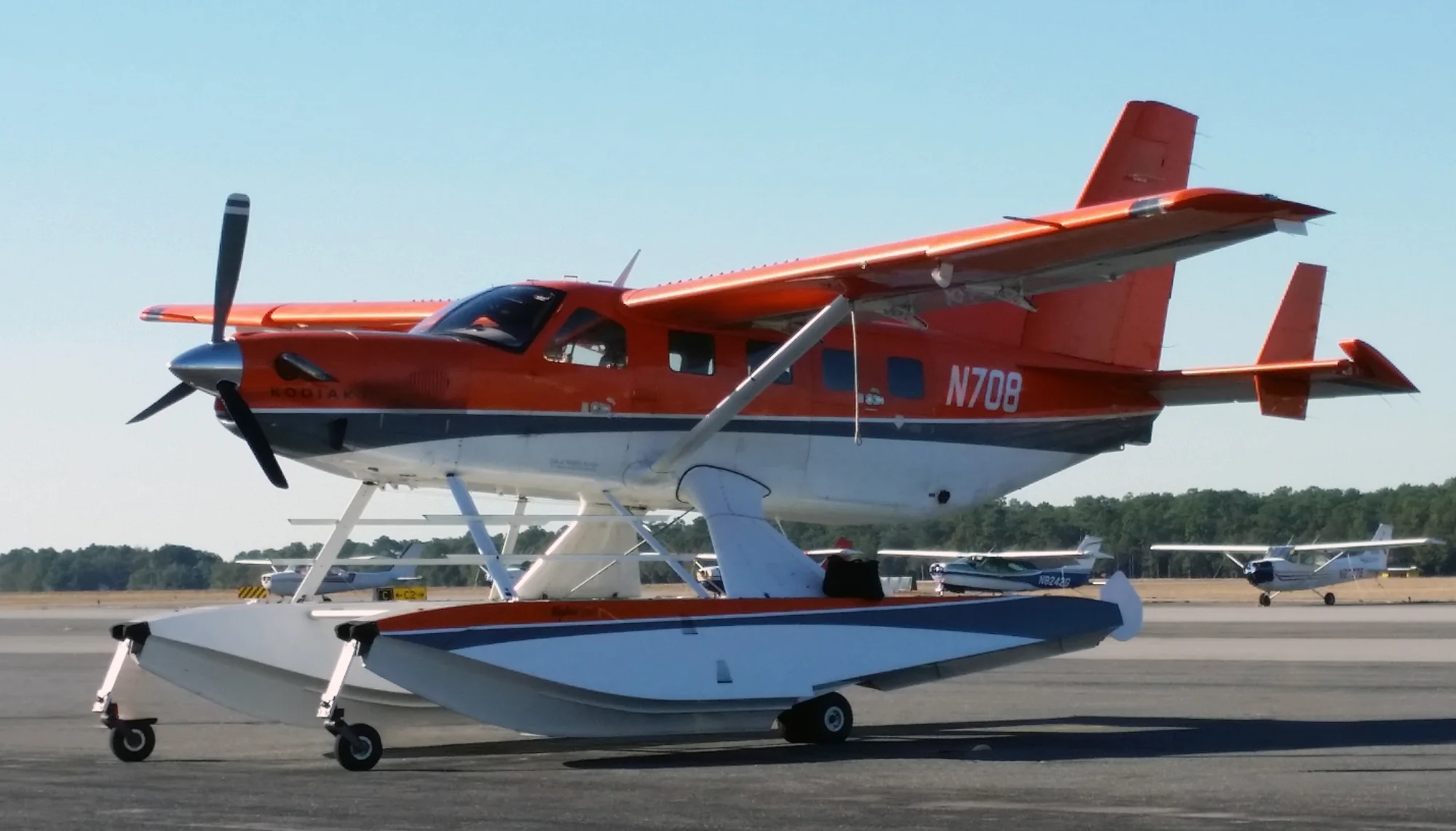
A US Fish and Wildlife Service Kodiak 100 on floats. An archival photograph of the Kodiak family; it does not show the Kodiak 900 delivered to Europe.
Daher has announced the delivery of the first Kodiak 900 to a European customer. The plane was received by Swiss owners Roland and Claudia Primus, who plan to use it for trips to small airfields and outdoor activities. The transfer took place at a facility in Sandpoint, Idaho; The company announced this at NBAA-BACE in October 2026.
The Kodiak 900 evolves the family of utility turboprop aircraft by combining larger cabin space with higher cruising speeds than the Kodiak 100. The importance of the European delivery lies in the emergence of a specific owner and operating scenario. It shows how the capabilities of a small aircraft relate to travel where the final destination is far from a major airport.
Matching a utility aircraft to the owner’s missions
In such aviation, an aircraft is judged not only by its speed. What matters is the accessibility of small airfields, capacity for people and things, organization of loading and the ability to service equipment in the selected region. For traveling with equipment, these properties may be more important than saving a few minutes on a long straight section of the route.
The manufacturer says new owners are upgrading from a Cessna 182 to a Kodiak turboprop. With this transition, not only the size of the aircraft changes. Others are its systems, characteristics, training and technical support. Mastering a new aircraft requires an understanding of its capabilities, even if the general format of the trips remains familiar.
A hypothetical example is a journey of two people with bicycles. One aircraft may provide sufficient payload weight, but an awkwardly shaped baggage space. The other will make it easier to place the equipment, but will require a different organization of the route. Therefore, real suitability is determined by a combination of parameters, and not by a single number from the characteristics table.
What a longer cabin offers
Increasing the cabin expands the options for accommodating people and equipment. But useful volume is not simply the product of length, width and height. The doorway, the accessibility of the desired area, the shape of the objects and the possibility of fastening are important. A long item may occupy a small volume, but require a special layout due to its geometry.
Before traveling with sports equipment, it is useful to describe it more accurately than with "regular luggage." The packaging dimensions, weight and shape features help you understand how it will fit. If a piece of equipment is disassembled, consideration must be given to the time and location for reassembly upon arrival. This is an organizational side that directly affects the convenience of travel.
At the same time, free space does not negate load restrictions on individual zones and fastening requirements. Things must remain in place under the intended impacts. Therefore, a beautiful shot of a spacious interior does not replace data about a specific load. A proven layout is important for flight, not just the ability to physically carry an item through a door.
Short takeoff requires precise conditions
STOL identifies an aircraft designed for short take-offs and landings, but it does not establish a single universal runway requirement. Weight, temperature, elevation, wind and runway condition all affect the calculation. A short strip used by one owner is therefore not a general recommendation for every flight by that type.
Let's imagine a hypothetical airfield, which is dry and cool in the morning, and becomes hot in the afternoon. Even without changing its geometry, the conditions for the aircraft are already different. If the load increases at the same time, the difference becomes stronger. The calculation should take into account the actual set of parameters, and not the memory of a previously successful flight.
You also need to distinguish between running on the ground and the full distance, which takes into account overcoming an obstacle. These quantities answer different questions. Comparing indicators from different columns can create a false impression of a large reserve. Therefore, takeoff and landing numbers are only useful in conjunction with the definition, methodology, and conditions to which they apply.
The mountain route begins with the weather
Travel to small airfields in mountainous areas involves assessing the terrain, weather and possible alternate options. High aircraft performance does not make the atmosphere the same every day. Clouds and wind can change the availability of a route, even if the distance is short and fuel is sufficient.
For the passenger, this means that scheduling flexibility sometimes becomes part of the trip format itself. If the goal is a vacation or an expedition, it is useful to provide in advance the possibility of changing the day, arrival point or land area. This approach helps maintain the meaning of travel as conditions change, without turning the original plan into a commitment at any cost.
During the preparation phase, it is also important to understand the ground accessibility of the site. A small airfield may be close to an area of interest but require prior approval for services or transportation. Saving time in the air only matters in conjunction with what happens after landing. Sometimes it is the last section that determines the convenience of the entire route.
Speed, range and load are linked
A higher cruising speed reduces long-haul flight time, but the resulting trip involves much more. Set-up, passenger boarding, equipment loading, and ground transportation can take up a significant portion of the day. Therefore, a small difference in speed is not always more important than a good airfield location or convenient luggage space.
The range also depends on the accepted conditions. You cannot simultaneously take the maximum load from one characteristic and the maximum range from another if they are calculated for different scenarios. For a specific flight, you need to combine people, things, fuel and the necessary reserves into one coordinated calculation. Individual maxima do not automatically add up to one ideal plane.
A hypothetical trip with additional equipment may require an intermediate landing that is not needed in a lighter configuration. This does not mean that the aircraft does not match the description. The task has simply changed. A proper comparison shows the result for the owner's actual route, not just the best values obtained under different initial assumptions.
Support after aircraft handover
The start of operation in a new region involves service and logistics. You need to understand where scheduled work is performed, how parts are delivered, and who helps with technical issues. This is especially important for traveling far from the main base: even a small downtime can change the entire route and passengers’ plans.
The transfer of the aircraft itself does not complete the development process. The owner and operator refine routine tasks, gain experience, and link the technical calendar to future trips. The better this order is organized in advance, the fewer unexpected restrictions arise during the season of active use. Having the right aircraft and being willing to use it regularly are related but different outcomes.
Technical documentation remains the basis of operation. It reflects the parameters of a particular aircraft and applicable restrictions. The delivery post provides information about the event and the overall role of the model, but does not replace those details. Therefore, even an interesting example of use by another owner should be taken as an illustration of the task, and not as ready-made instructions for your own flight.
The importance of European delivery
For the Kodiak 900, the first European customer becomes a new practical example of the model's application. At the center of the story is a combination of transport functions and outdoor activities: an aircraft is needed to get closer to small points on the map and transport the necessary equipment. It is this set of tasks that explains the interest in utilitarian turboprop aircraft.
Further evaluation will depend on actual user experience and support. The repeatability of trips, ease of loading and compliance of the aircraft with the chosen routes are important. The first delivery can be considered a significant market milestone, but the sustainable value of the product is formed by day-to-day use. It shows how the stated capabilities work together in specific people's lives and their transportation plans.