
Aircraft
Pratt & Whitney starts expanding engine-component production in Rzeszów
Pratt & Whitney’s new Rzeszów facility is due to open in 2028. Why more disc-production and component capacity matters across the engine supply chain.
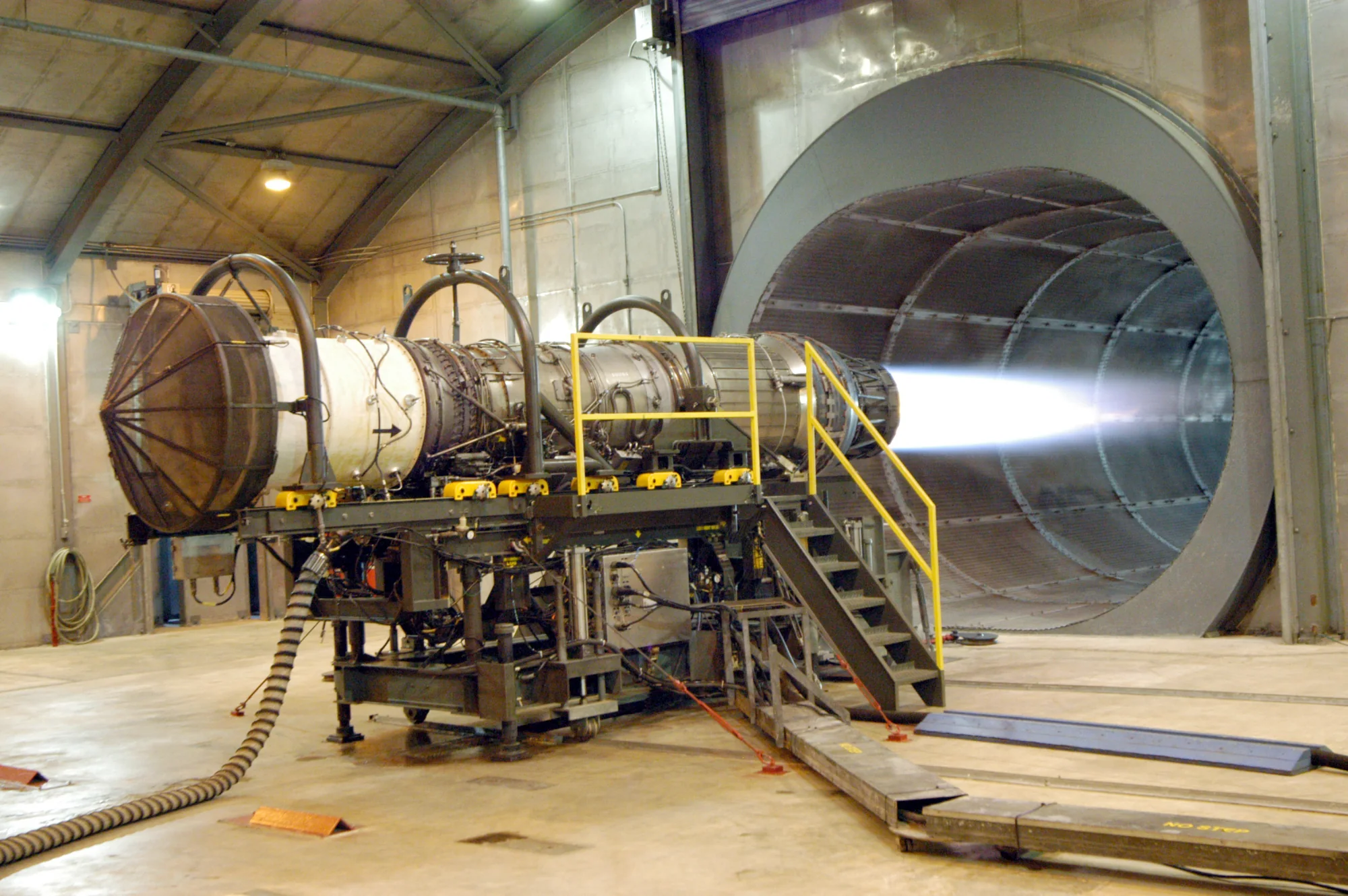
Archival testing of the Pratt & Whitney F100 engine at Robins Air Force Base in the USA. The photograph illustrates one of the programs mentioned; the new facility in Rzeszow is not depicted.
On October 23, 2026, Pratt & Whitney announced the start of construction of a new facility in Rzeszow, Poland. Investments amount to 100 million dollars, or 375 million zlotys. The area of the new building is about 6,500 square metres. Launch expected in 2028; The project is expected to create more than 120 jobs and expand capabilities to produce critical rotating components for civil and military engines, including the GTF, F135 and F100 programs.
Construction continues the previously announced investment plan. It comes as it expands its manufacturing facility in Columbus, Georgia, where the company is investing $200 million in a seventh isothermal forging press. The combined expected outcome of these projects is to increase production of certain critical parts, including compressor and turbine disks, by 30%. This is a forecast after new capacities come online, and not the already achieved growth in production of all the company’s engines.
The production chain is longer than the assembly line
The finished aircraft engine undergoes final assembly, but much of the complexity is concentrated much earlier. The material must obtain the required properties, the workpiece must have the desired shape, and the part must have exact dimensions and confirmed quality. Between the arrival of the metal and the installation of the component in the engine, there are various operations. They can be carried out at several specialized sites connected by a common production program.
Therefore, increasing the area of the assembly hall in itself does not solve any problem of increasing output. If there are not enough parts of a certain type, the assembly will depend on their availability. Conversely, additional blanks are of little help without further processing and control capabilities. The announced connection of the two investment projects shows that the manufacturer is not considering a single building, but a sequence of interdependent production stages.
Why does an engine need discs?
The compressor and turbine include rotating stages. The disk serves as the load-bearing part of such a unit and operates under loads associated with rotation and interaction with other elements. To the reader it may look like a relatively simple round metal object. In fact, the shape, material and surface condition are determined by the operating requirements of the entire assembly, and not just by ease of manufacture.
Conditions vary in different parts of the engine. Compressor and turbine components should not be considered interchangeable parts simply because of a similar name. The design is influenced by loads, temperatures, required performance and location in the aircraft. The quality of a critical rotating part is related to more than just its external dimensions. Material properties, production history and the results of prescribed tests are all important.
What connects the workpiece and the finished part?
Forging shapes a workpiece under force and controlled process conditions. It is followed by operations that bring the part to its specified dimensions and properties. The exact sequence depends on the design and material; it cannot be reconstructed from the press designation or the production building’s size alone.
The April announcement of the Polish project specifically mentioned machining isothermal forgings, heat treatment and inspection. That places the facility within a connected manufacturing chain. The announcements do not, however, provide a detailed process route for every part: the allocation of individual products, operating settings and internal production standards was not disclosed.
Quality checks are part of production
In aircraft manufacturing, it is useful to distinguish between the number of workpieces processed and the number of parts received. Readiness for the next stage must be confirmed by the prescribed checks. Depending on the product, they evaluate dimensions, surface condition and properties that cannot be determined by ordinary eyes. Equipment performance is therefore considered together with measurement and control capabilities, otherwise the queue will simply move to the next section.
One of the approaches used is ultrasonic testing of forgings. It helps to examine the material without destroying the part being tested. However, any method has a range of sensitivity and application conditions. Therefore, the control of critical rotors is considered as a system associated with design, manufacturing and further operation. A good result of an individual test does not negate the requirements for the rest of the production chain and product traceability.
Why is the history of each product important?
Externally identical parts may belong to different batches of material and undergo processing at different times. Documentation links the product to its origin and the operations performed. Thanks to this, if necessary, you can determine which components belong to a particular batch and check information about a specific part. This helps manage quality over the long life cycle of the engine.
Let's imagine a hypothetical situation when a process deviation is detected at one stage. If the history is saved, specialists can identify the affected product group and evaluate the consequences in detail. Without such a connection, much greater uncertainty would have to be assumed. The example does not describe the problem at the Pratt & Whitney facilities; it shows why documentation and production data are of practical importance alongside machines and presses.
What a thirty per cent increase refers to
The percentage of growth always requires determining the initial indicator. Here the manufacturer is talking about the production of critical components, and not about the number of aircraft delivered. An engine requires a set of different parts, so the growth of one group does not automatically translate into the same growth of the finished product. The remaining elements must arrive in the appropriate quantities and at the required time, and assembly and testing must accept an increased flow.
A hypothetical example helps to see the difference. If a line receives more drives but is constrained by the supply of another node, the final output may remain the same for now. In another situation, the expansion of disk production will remove the main limitation. What combination of factors will determine the actual outcome in 2028 cannot be determined from a brief investment announcement. The declared percentage should be read within the boundaries indicated by the company.
New production and maintenance of the operating fleet
The need for parts arises both when assembling new engines and when repairing existing ones. These flows are related by the capabilities of the production system, but are not the same indicator. Increased component production can expand the availability of materials for a variety of applications. The specific distribution between programs and areas is determined by orders and planning, and does not follow directly from the amount of investment.
At the Columbus site, the manufacturer is separately developing the GTF repair business. The February report treated the repair center expansion as a standalone project in addition to the new press. This is a useful example of the differences in manufacturing functions: making a new part, rebuilding an engine, and final assembly require different processes. It would be incorrect to mix the indicators of these objects into one overall growth percentage.
What stages remain before launch?
The start of construction means the transition of the investment plan to the construction of the facility. Next, you need to prepare the premises, place equipment, organize work processes and confirm the ability to consistently obtain the intended result. For complex production, repeatability is important: the same requirements must be met not only on the first sample, but also with the subsequent flow of products. The very fact of completing the building does not exhaust this task.
Personnel training is also included in the organization of work. The equipment operator, measurement specialist and process engineer solve different problems. The declared number of jobs characterizes the scale of expansion, but does not disclose the distribution of professions, shifts and productivity of each site. Such conclusions would require additional information about the future enterprise.
Therefore, the stated year 2028 remains the benchmark for future capacity commissioning. It will be possible to evaluate the implementation of the project based on subsequent messages about the launch, mastered operations and actual release. The start of construction has now been confirmed and the scale of investment, the purpose of the expansion and the expected result have been outlined. For the aviation industry, this is primarily the development of the supply chain, on which the ability to manufacture and support engines for various programs depends.