
Aircraft
TAROM extends PW127M support: why a regional fleet needs a dedicated engine agreement
TAROM has extended PW127M support for its ATR 72 fleet. How engine repair, diagnostics and return-to-service planning fit together.
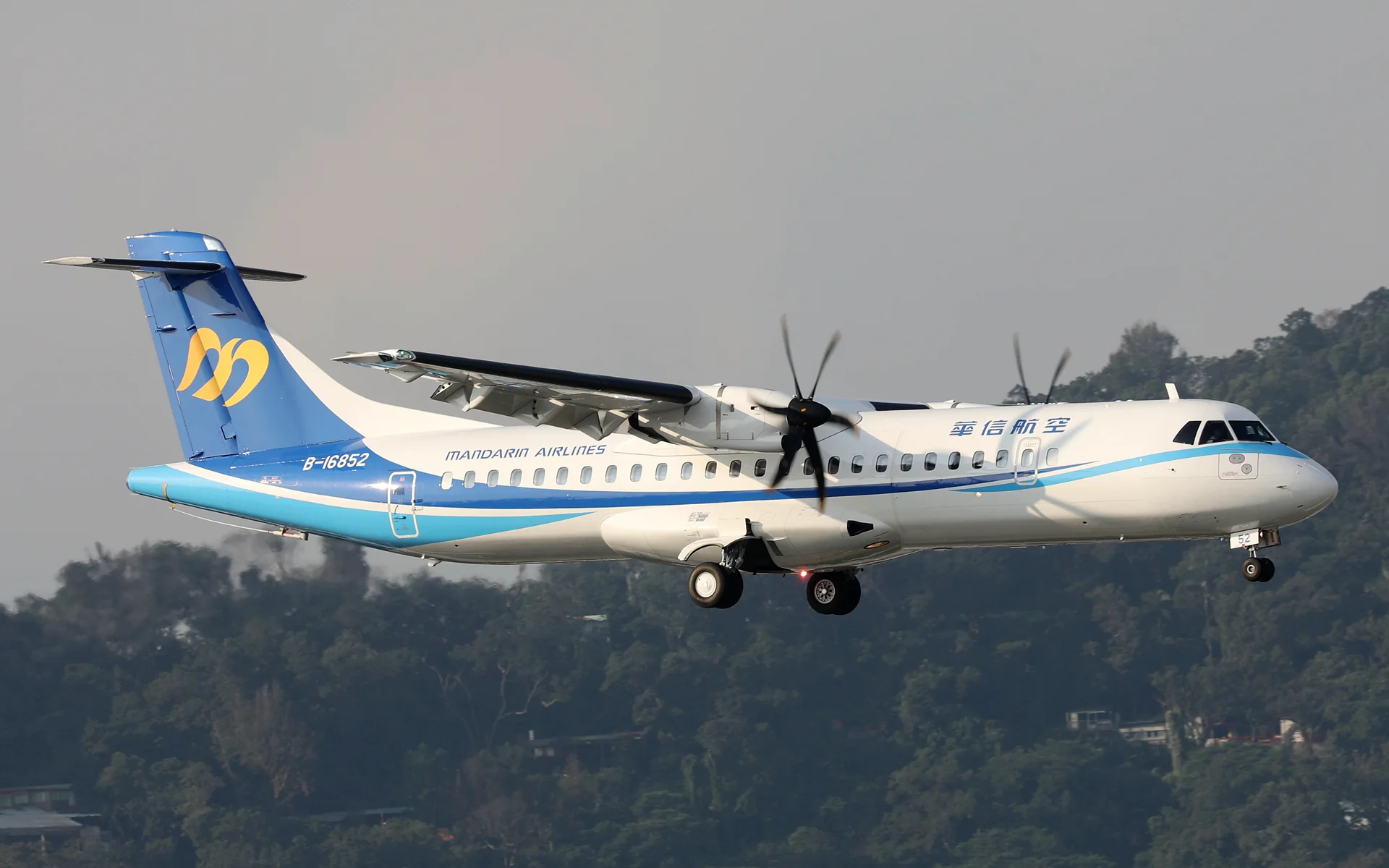
Pictured is an ATR 72-600 of Mandarin Airlines, December 2017. Archival illustration of the model; The TAROM aircraft is not shown in the picture.
On October 26, 2026, StandardAero announced a new multi-year agreement with TAROM. It involves servicing Pratt & Whitney Canada PW127M engines installed on the regional ATR 72-500 and ATR 72-600 of the Romanian carrier. Work will be performed by facilities in Summerside, Canada, and Gonesse, France. The contract is called exclusive; Calculations are organized according to the TEAM model with payment for work and materials. The exact number of years, cost and calendar for sending engines for repairs have not been disclosed.
For passengers, an engine-support agreement is largely invisible: it does not change the aircraft name, seat or route. For the airline, however, it defines part of the maintenance process. The operator needs to know where a removed engine will go, how the work scope will be agreed and how the aircraft will return to service. The explanation below covers those technical arrangements, not the undisclosed commercial terms of TAROM’s contract.
What is serviced separately from the aircraft?
The engine has its own serial number, operating history and a set of technical records. It can be removed from one side, sent to a specialized facility, and after repair installed on a compatible aircraft. Therefore, the age of the engine, its operating hours and service dates do not have to coincide with the corresponding indicators of the aircraft. Planning requires the history of the specific unit, not just the ATR registration number. When sent for repair, information about its configuration and work performed is transmitted along with the engine itself. The completeness of these records helps avoid a situation where serviceable equipment has already been delivered, but its further use is delayed due to an unspecified history.
An installed engine interfaces with the aircraft’s propeller, fuel, electrical and control systems. Engine maintenance, propeller maintenance and inspection of the complete aircraft nevertheless remain distinct work scopes. An agreement with an engine maintenance provider does not automatically transfer every airline maintenance task to that company. Documents, organisational approvals and individual work orders define those responsibilities.
How the PW127M powers the aircraft
The PW127M belongs to the PW100 turboprop family. In such an installation, the main useful work is transferred to the propeller through the shaft and gearbox. Compressors compress the incoming air, fuel burns in the chamber, and the expanding gas rotates the turbines. Part of the power supports the operation of the compressors, the other is transmitted by the free power turbine to the propeller. It is a gas turbine engine, although its appearance is very different from the usual large jet engine under the wing.
In the PW100, the low and high pressure compressors are driven independently, and the power turbine is connected to a separate shaft. The gearbox matches the high rotation speed of the turbine part with the operating mode of the propeller. For the technical service, these are several interconnected nodes with different loads. The condition of the hot end, bearings, gears and control systems is assessed using appropriate methods rather than one general power check.
Why the model designation matters
In the news it is easy to shorten the name of the installation to “ATR engine,” but for repairs such wording is not enough. Families of aircraft and engines develop in parallel: modifications, equipment, installed parts and changes made differ. Even outwardly similar aircraft may have different power plants. The announced agreement specifically names the model PW127M; automatically replacing it with the newer PW127XT would be a mistake.
The required spare parts and applicable work are selected according to the documentation for the specific configuration. The serial number helps link technical records, installed equipment, and revision history. Such attention to designations looks bureaucratic only from the outside. For the engineer, it allows him to distinguish an acceptable replacement from a seemingly similar part that does not fit this engine, and to correctly prepare a task for the repair company.
What does payment for work and materials mean?
Under a time-and-materials model, charges relate to the work performed and materials used. This differs from an arrangement in which the main payment is linked, for example, to flying hours. The label alone does not disclose the whole contract: rates, approval of additional work, included services and limitations remain subject to the agreed terms. TAROM’s future repair bill cannot be calculated from the brief announcement.
The practical reason for this calculation arrangement is clear. Two identical engines may arrive with different operating hours and different inspection results. One will require a limited set of operations, the other will require the replacement of several expensive parts. Before diagnosis, not all differences are visible. Therefore, budget planning is related not only to the number of units, but also to how fully their condition and history are known in advance.
How to monitor the condition of the engine
Diagnostics uses a sequence of observations. Temperatures, speed, fuel consumption and other parameters are considered taking into account the flight mode and conditions. A single value does not always explain the reason for the deviation: what is important is how it changes relative to comparable measurements. Trend analysis helps to notice deterioration in performance and determine the direction of further inspection, but does not replace established serviceability criteria.
For example, the same temperature in two records does not necessarily mean the same condition: the altitude, outside temperature, and power setting could differ. Nor can you automatically declare a fault based on one unusual measurement without checking the context and reliability of the data. A neat history that maps parameter changes to inspections, work performed, and component replacements is useful for technical planning.
Inspection without complete disassembly and repair in the workshop
A borescope allows you to view accessible internal surfaces through the provided openings. The engineer receives images of parts that cannot be seen with normal external inspection. This method helps to assess the condition of the gas path elements, but does not turn the engine into a mechanism completely open for inspection. Each method has a scope of applicability, and the admissibility of detected defects is established by technical documentation.
Sending to the workshop gives another level of access. There, the engine or individual modules can be disassembled, cleaned, measured and inspected using specialized equipment. The scope of operations depends on the reason for removal and the results of the defect. Therefore, the expression “the engine was sent for service” does not mean that a serious breakdown has occurred, and does not automatically mean a complete replacement of all internal parts.
Shop turnaround time and time away from the aircraft
The entire period of unavailability of the unit is relevant for the schedule. It includes preparation for shipment, transportation, acceptance, waiting for the necessary materials, the actual work and return. If you look only at the time of the immediate repair, you may underestimate the duration of the entire chain. The geography of enterprises is important precisely in connection with this logistics and organization of flow, and not in itself.
A replacement engine is capable of separating the duration of repairs from the downtime of a particular aircraft, but its presence cannot be considered automatic. Compatibility, readiness for installation, documents and agreed terms of use are required. StandardAero offers various services for the PW100 family, but the company's overall list of capabilities does not justify the inclusion of every such service in the new contract. The details of specific fleet support remain a separate issue.
What does this change for regional flights?
A regional aircraft is usually used in a chain of flights, so a delay on one plane can affect subsequent parts of its program. In the hypothetical schedule, the morning flight is connected with the afternoon one, and the latter with the evening return. This is not a description of the actual TAROM plan, but an example of why equipment availability is considered throughout the workday, along with aircraft and crew reserves.
A service agreement helps to organize some of the technical work in advance, but does not in itself guarantee that there will be no delays. Flight operations are affected by weather, airport restrictions and other circumstances. The meaning of the news is more specific: the carrier has secured further support for a certain type of engine from a specialized contractor. The actual service time, availability of units and sustainability of operation will allow you to evaluate the practical result, and not just the fact of signing the document.