
Life and work in aviation
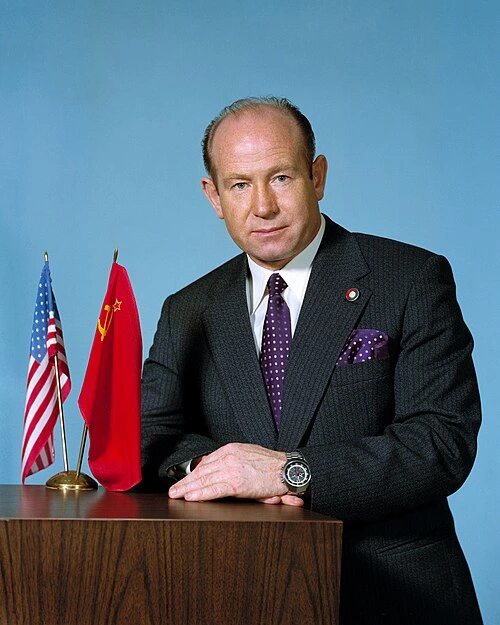
Alexey Leonov (1934–2019) was the Soviet pilot-cosmonaut who made the first spacewalk, on 18 March 1965 during Voskhod 2 with Pavel Belyayev. He later commanded Soyuz 19 in the joint Apollo–Soyuz programme. His career combined military aviation training, work outside a spacecraft and international cooperation in crewed spaceflight.
Pilot of the first set
Before the selection for cosmonauts, Leonov underwent military flight training. In 1960, he joined the first Soviet detachment. The aviation experience helped to work with instruments and procedures, but the space program required new knowledge. It was necessary to study the ship, train in unusual conditions and prepare for tasks that were not previously performed by a person.
First Exit
On March 18, 1965, Leonov left Voskhod-2 via a lock chamber. Pavel Belyaev remained at the work of the ship. The suit and insurance provided an exit and return. Difficulties with return showed that the real behavior of the equipment may differ from ground training. This experience has become an important material for the further development of procedures for out-of-ship activities.
"Soyuz - Apollo"
In July 1975, Leonov and Valery Kubasov participated in the international program on the Soyuz-19. The American crew flew on Apollo. The joint work included docking ships of different countries and the transition between them. This required agreed technical solutions, procedures and preparation. The flight showed that the interaction of the crews begins long before the meeting in orbit.
Training and Art
Leonov worked at the Cosmonaut Training Center and participated in the training of the following crews. He also painted, portraying the cosmos through his own experiences. These roles complemented the flight biography. The transfer of observations is important both in technical training and in the public narrative: the first output was not only an event, but also a source of knowledge for future programs.
What does it mean to work outside a space ship?
Going into outer space involves the work of a person outside the protected volume of a ship or station. The suit supports the necessary conditions and provides communication with the crew. At the same time, movements and available time are limited by equipment and program. Such activities are different from simply being in orbit. Therefore, the first human flight, the first female flight and the first exits are separate historical achievements related to different tasks and training.
The transition between the ship and the external environment requires the envisaged design and procedures. Early machines used solutions that differed from the devices of later stations. Real experience revealed the peculiarities of the behavior of the spacesuit and human actions that were difficult to fully reproduce on earth. The history of the first output shows the exploratory nature of the task. The successful return gave not only a record, but also the information necessary for the subsequent development of equipment and training.
Work outside the station may include installation, inspection and maintenance of equipment. The astronaut needs to simultaneously perform the task and monitor the position regarding the design. The second participant and crew inside help coordination, and ground specialists support the program. This is a general technical work, although one person often gets fame. In the biography, it is important to indicate exit partners and a specific expedition in order to maintain the real composition of the participants of the achievement.
Further development of extravehicular activities was based on new spacesuits, tools and accumulated observations. Early historical output is not equal to modern multi-hour station service, but has become part of its foundation. The comparison helps to see how the tasks of the industry have changed. The story of the astronaut should distinguish personal flight from the results of the next generations, while explaining what knowledge and professional techniques were transferred from one program to another.
Major achievements
- The first to go into outer space
- He commanded Soyuz-19
- Participated in the training of astronauts
Aircraft and flying machines
- "Sunrise-2"
- "Soyuz-19"
Organisations and events
Cosmonaut Training Center, Soyuz-Apollo Program
- Withdrawal 18 March 1965
- Joint flight July 1975
Questions about this biography
Why is Alexei Leonov included in the history of aviation?
He was the first to go into space. He commanded Soyuz-19. Participated in the training of astronauts.
With what field of aviation is this biography connected?
Alexey Leonov (1934-2019) was a Soviet cosmonaut who was the first in the world to go into outer space.
What aircraft are involved in this work?
Related to the biography: "Voskhod-2", "Soyuz-19". Their role and period are described in the main sections.
What events help to understand the professional path?
Main historical episodes: Released 18 March 1965; Joint flight July 1975.
What organizations are mentioned in the biography?
The professional path is associated with organizations and communities: the Cosmonaut Training Center, the Soyuz-Apollo Program.
Was Leonov the first man in space?
Oh, no. The first cosmonaut was Yuri Gagarin. Leonov was the first to leave the ship in outer space.
What is the technical context of this story?
Going into outer space involves the work of a person outside the protected volume of a ship or station. The suit supports the necessary conditions and provides communication with the crew. At the same time, movements and available time are limited by equipment and program. Such activities are different from simply being in orbit. Therefore, the first human flight, the first female flight and the first exits are separate historical achievements related to different tasks and training.