
Life and work in aviation
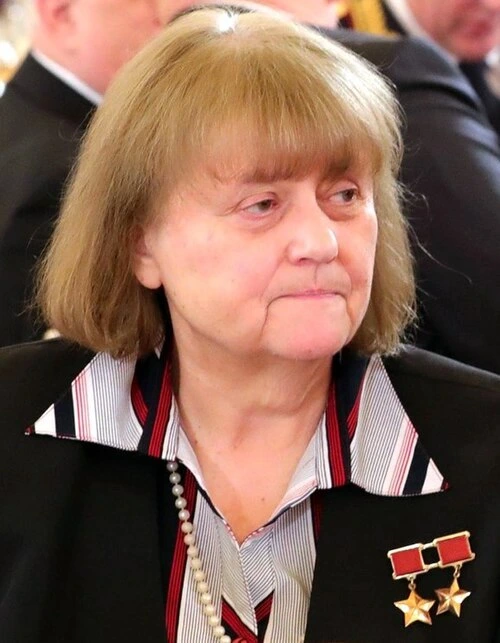
Svetlana Savitskaya, born in 1948, is a Soviet test pilot and cosmonaut, and the first woman to perform a spacewalk. Before orbital missions, she practised aviation sport and test flying. She joined Salyut 7 expeditions in 1982 and 1984. Her career progressed from sport flying through professional testing to space crew work.
Aviation Sports
Savitskaya received flight training and was engaged in higher aerobatics. In 1970, she became the world champion in this type of aviation sport. The competition tests the accuracy of the given figures, and not only the ability to effectively control the machine. The experience of the sport complemented her further training, but the profession of the tester required a separate qualification and systematic technical training.
Test work
Savitskaya mastered the profession of test pilot and worked with various types of aircraft. Verification of equipment requires the execution of a program and the communication of measurable observations to engineers. Aviation skills were useful in space training, but it can not be considered a simple continuation of the usual departure. The station and the ship have their own systems, modes and working conditions of the crew.
Two expeditions
In 1982, Savitskaya made the first space flight and became the second woman in space after Tereshkova. In 1984, she again went to the Salyut-7. Two flights belong to different programs and crews. Work on the station allowed experiments and the use of equipment different from a single ship of the early space age.
Work outside the station
On July 25, 1984, Savitskaya performed a spacewalk with Vladimir Dzhanibekov. She became the first woman to engage in extra-vehicular activities. The tasks included technical operations outside the station. The historical priority refers specifically to the exit: the first person outside the ship was Alexei Leonov, and the first woman in orbit was Valentina Tereshkova.
What does it mean to work outside a space ship?
Going into outer space involves the work of a person outside the protected volume of a ship or station. The suit supports the necessary conditions and provides communication with the crew. At the same time, movements and available time are limited by equipment and program. Such activities are different from simply being in orbit. Therefore, the first human flight, the first female flight and the first exits are separate historical achievements related to different tasks and training.
The transition between the ship and the external environment requires the envisaged design and procedures. Early machines used solutions that differed from the devices of later stations. Real experience revealed the peculiarities of the behavior of the spacesuit and human actions that were difficult to fully reproduce on earth. The history of the first output shows the exploratory nature of the task. The successful return gave not only a record, but also the information necessary for the subsequent development of equipment and training.
Work outside the station may include installation, inspection and maintenance of equipment. The astronaut needs to simultaneously perform the task and monitor the position regarding the design. The second participant and crew inside help coordination, and ground specialists support the program. This is a general technical work, although one person often gets fame. In the biography, it is important to indicate exit partners and a specific expedition in order to maintain the real composition of the participants of the achievement.
Further development of extravehicular activities was based on new spacesuits, tools and accumulated observations. Early historical output is not equal to modern multi-hour station service, but has become part of its foundation. The comparison helps to see how the tasks of the industry have changed. The story of the astronaut should distinguish personal flight from the results of the next generations, while explaining what knowledge and professional techniques were transferred from one program to another.
Major achievements
- Became the world champion in top aerobatics
- Worked as a test pilot
- The first woman to go into outer space
Aircraft and flying machines
- Sports and test aircraft
- "Soyuz T"
- "Salyut-7"
Organisations and events
Cosmonaut Training Center , Soviet Test Aviation
- Space flights in 1982 and 1984
- Withdrawal 25 July 1984
Questions about this biography
Why is Svetlana Savitskaya included in the history of aviation?
She became the world champion in top aerobatics. She worked as a test pilot. She was the first woman to go into space.
With what field of aviation is this biography connected?
Svetlana Savitskaya (born 1948) is a Soviet test pilot and cosmonaut, the first woman to perform a spacewalk.
What aircraft are involved in this work?
Related to the biography: Sports and test aircraft, "Soyuz T", "Salyut-7". Their role and period are described in the main sections.
What events help to understand the professional path?
Main historical episodes: Space flights of 1982 and 1984; Released July 25, 1984.
What organizations are mentioned in the biography?
The professional path is connected with organizations and communities: Cosmonaut Training Center, Soviet Test Aviation.
Was she the first woman in space?
Oh, no. The first was Tereshkova. Savitskaya became the second woman in space and the first woman outside the ship.
What is the technical context of this story?
Going into outer space involves the work of a person outside the protected volume of a ship or station. The suit supports the necessary conditions and provides communication with the crew. At the same time, movements and available time are limited by equipment and program. Such activities are different from simply being in orbit. Therefore, the first human flight, the first female flight and the first exits are separate historical achievements related to different tasks and training.