
Life and work in aviation
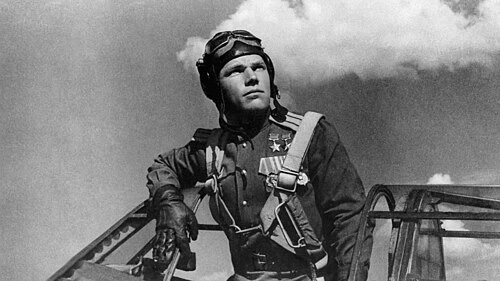
Ivan Kozhedub (1920–1991) was a Soviet fighter pilot and commander, awarded Hero of the Soviet Union three times. He began in a flying club, continued at military school and also instructed. His best-known service involved Lavochkin aircraft during the Second World War. His biography connects initial instruction, dependable flying skills and aviation unit work.
Aeroclub and instructor work
Kozhedub mastered aviation through an air club, and then received military flight training. Before taking part in combat operations, he trained other pilots. Instructional practice requires a clear understanding of the actions in the cockpit: it is not enough to perform the maneuver yourself, you need to notice the difficulties of the student and explain the correction. This experience became part of his training for further service.
Lavochkin's aircraft
During the war, Kozhedub flew La-5 and La-7. These fighters represented the consistent development of one design school. The differences between the modifications affected the behavior of the car, the engine and the conditions of the pilot. Therefore, the history of the pilot complements the history of the aircraft: technical improvement gets practical value only when the trained crew knows how to use it in the appropriate task.
Combat experience and command
Kozhedub participated in air operations from 1943 and gradually received command duties. In the fighter unit, the result depended on group training, aircraft maintenance, and communications. Even a well-known individual career developed within this system. His professional achievements include not only individual flights, but also working with people who needed organization and understandable requirements.
Post-war service
After the war, Kozhedub continued his military career and mastering new tasks of aviation. The transition to a reactive era changed the speed and nature of pilot training. He became an Air Marshal and left memories of the service. When reading his biography, it is useful to distinguish between the events of personal participation, the work of units under his command and the general development of the industry, which took place through the efforts of many specialists.
How aviation experience becomes a profession
Pilot training combines theoretical knowledge and practical management. Training aircraft are chosen not only for simplicity, but also for the ability to form the necessary skills. The student must understand the actions in the cabin, notice the change in conditions and follow the established procedures. The first independent flights are a stage of training, and not the final confirmation of readiness for any type of machine. Further transition requires additional preparation for new systems and tasks.
Crew work is different than single piloting. The responsibilities are distributed so that people can control each other’s actions and maintain the overall picture of the flight. The commander is responsible for decisions within his role, but does not replace the rest of the specialists. In historical aviation, a separate task was often performed by a navigator. The development of devices changed the organization of work, but the need for coordination of actions remained on more modern technology.
The instructor should not only manage the aircraft well, but also explain the sequence of actions. It is important to notice the cause of the error, and not only its external result. Preparation includes the repetition of tasks in the prescribed conditions and a gradual complication. Through this work, personal experience becomes available to other people. Therefore, the contribution of an aviation specialist can be in the training of dozens of pilots, even if his name is not associated with the loudest record of the era.
Military, sports and civil aviation use different programs and tasks. Qualifying in one area does not automatically allow admission to another. The description of the biography should take into account the specific period of service, the type of aircraft and the nature of the work. This helps to understand a person’s real skills: piloting, instructor practice, command, or testing. Historical experience serves as a material for studying the profession, but does not replace the modern requirements for training and admission.
Major achievements
- Worked as a flight instructor
- He flew on La-5 and La-7 fighters.
- Became a Hero of the Soviet Union three times
Aircraft and flying machines
- La-5
- La-7
Organisations and events
Soviet fighter aircraft
- Flying service during the Great Patriotic War
- Post-war teamwork
Questions about this biography
Why is Ivan Kozhedub included in the history of aviation?
Worked as a flight instructor. He flew La-5 and La-7 fighters. He became a Hero of the Soviet Union three times.
With what field of aviation is this biography connected?
Ivan Kozhedub (1920-1991) - Soviet fighter pilot and commander, three times Hero of the Soviet Union.
What aircraft are involved in this work?
Related to biography: La-5, La-7. Their role and period are described in the main sections.
What events help to understand the professional path?
Main historical episodes: Flight service during the Great Patriotic War; Post-war team work.
What organizations are mentioned in the biography?
The professional path is connected with organizations and communities: Soviet fighter aircraft.
What planes are associated with Kozhedub?
First of all, the La-5 and La-7 fighters of the Lavochkin design school, on which he flew during the war.
What is the technical context of this story?
Pilot training combines theoretical knowledge and practical management. Training aircraft are chosen not only for simplicity, but also for the ability to form the necessary skills. The student must understand the actions in the cabin, notice the change in conditions and follow the established procedures. The first independent flights are a stage of training, and not the final confirmation of readiness for any type of machine. Further transition requires additional preparation for new systems and tasks.