
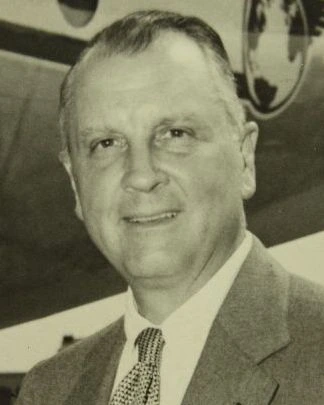
Life and work in aviation
Juan Trippe (1899–1981) was an American entrepreneur and Pan American leader prominent in international passenger transport. His career involved flying boats, jets and the Boeing 747 order. He represented the airline: route choices and operational requirements influenced new aircraft. Manufacturers designed them, while the carrier shaped demand and operating conditions.
Creation of a route network
Tripp has been involved in the development of Pan American since the 1920s. The international flight required not only the aircraft, but also agreements on airfields, maintenance and admission. The carrier connected different countries to a regular network. This was an organizational task of a large scale: the ground conditions of each point affected the reliability of the entire route and the ability to carry passengers on schedule.
The Age of Flying Boats
Prior to the widespread use of major land airports, Pan American used flying boats known as Clipper. They allowed to perform long sea routes from water areas. The aircraft depended on the conditions of unrest and the infrastructure of the shore. The organization of transportation included maintenance of the car, landing of passengers and communication between points of the line, not just a beautiful ocean flight.
Reactive transport
In the postwar decades, Pan American switched to jetliners. The Boeing 707 changed the speed of long-haul flights, and the Boeing 747 order expanded the scale of passenger traffic. Tripp formulated the airline's needs and discussed them with the manufacturer. The aircraft itself was created by Boeing engineers, so the customer's contribution should be distinguished from the personal authorship of the design.
Role of the carrier in the industry
Tripp completed active leadership well before Pan American ceased operations. The history of the company is not equal to the biography of one person. His contribution is related to the international network and requirements for transport aircraft. Through this career, you can see how the airline affects the development of technology: the distance, the number of passengers and the flight economy determine the direction of the manufacturer.
How an aviation company is formed
Aviation production combines the design, manufacture, testing and supply of equipment. The entrepreneur can determine the direction and collect the team, but does not perform all the calculations personally. Power plant, devices and materials often come from individual organizations. Therefore, the history of the company is a network of interrelated works. The name of the founder helps to trace the beginning of the enterprise, and the exact indication of engineers and programs shows how the idea turned into a real serial product.
For the carrier, the aircraft is part of the route and operation economy. Capacity, fuel consumption and maintenance conditions affect the choice of type. The contracting authority may set requirements that guide the manufacturer's work. The order does not make the head of the airline a designer. The difference in roles is especially noticeable when creating large liners: the technical program and the organization of future flights are developing in parallel and must be agreed before the regular transportation of passengers begins.
Serial production requires repeated quality of parts, documentation and training of people. An experienced aircraft tests a technical idea, but a successful first flight does not automatically ensure the production of hundreds of machines. Need suppliers, workshop equipment and the ability to maintain the product after delivery. These challenges explain the importance of industry organizers. Their contribution may be to create a sustainable system through which many specialists work on the overall result for a long time.
Businesses change names, merge and continue to operate after the departure of the founders. The late aircraft may retain a well-known brand, but belong to a different engineering era. The biography should be built on specific dates of human participation. This preserves the distinction between personal contribution and corporate heritage. Through such a story, it is clearer why the development of aviation depends simultaneously on technical solutions, the organization of production and the real needs of passengers, carriers and other operators.
Major achievements
- The Pan American International Network
- Organized long-distance routes of flying boats
- Participated in the transition to 707 and order 747
Aircraft and flying machines
- Boeing 314 Clipper
- Boeing 707
- Boeing 747
Organisations and events
Pan American
- Development of international lines
- Transition to jet transportation
Questions about this biography
Why is Juan Tripp in the history of aviation?
He developed the Pan American international network. Organized long-distance routes of flying boats. Participated in the transition to 707 and the order 747.
With what field of aviation is this biography connected?
Juan Tripp (1899–1981) was an American entrepreneur and Pan American executive who played a prominent role in the development of international passenger transportation.
What aircraft are involved in this work?
Related to the biography: Boeing 314 Clipper, Boeing 707, Boeing 747. Their role and period are described in the main sections.
What events help to understand the professional path?
Main historical episodes: Development of international lines; Transition to jet transportation.
What organizations are mentioned in the biography?
The professional path is related to organizations and communities: Pan American.
Was Tripp the designer of the Boeing 747?
Oh, no. He represented the airline. The aircraft was created by the Boeing engineering team.
What is the technical context of this story?
Aviation production combines the design, manufacture, testing and supply of equipment. The entrepreneur can determine the direction and collect the team, but does not perform all the calculations personally. Power plant, devices and materials often come from individual organizations. Therefore, the history of the company is a network of interrelated works. The name of the founder helps to trace the beginning of the enterprise, and the exact indication of engineers and programs shows how the idea turned into a real serial product.