
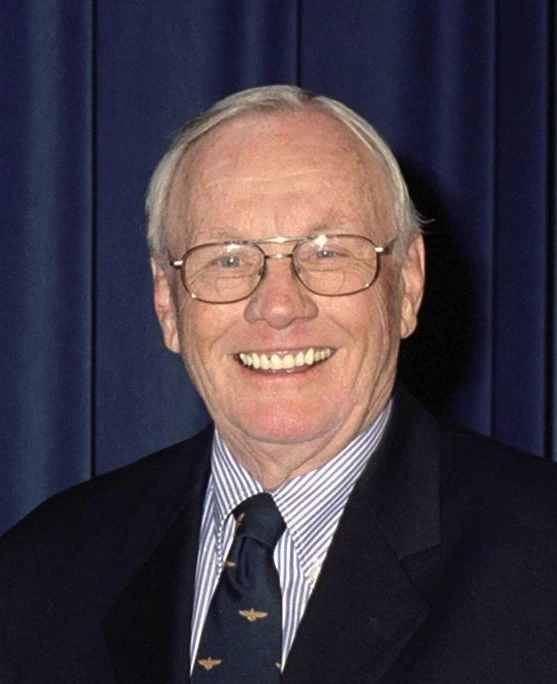
Life and work in aviation
Neil Armstrong was born on August 5, 1930, near Wapaconeta, Ohio. He studied aviation engineering at Purdue University and served as a naval aviator. He later received a master's degree from the University of Southern California. Flying practice combined in his career with technical education.
In 1955, Armstrong joined NACA. He then worked at a research base in Edwards, testing high-speed aircraft. Among the vehicles involved in his work was the X-15 missile. The tester had to execute the program and give the engineers information about the behavior of the device, and not just to achieve high speed.
In 1962, Armstrong was included in the second group of NASA astronauts. In March 1966, he commanded Gemini 8, where he and David Scott participated in the first successful docking of two spacecraft in orbit. Space flight required a combination of piloting and working with complex systems.
In July 1969, Armstrong commanded Apollo 11. After the landing of the lunar module, he was the first to reach the surface of the moon. He later did administrative work for NASA and taught aviation engineering at the University of Cincinnati. He died on August 25, 2012. His biography links naval aviation, test programs and manned space exploration.
Test aircraft to space
Before being selected as an astronaut, Armstrong worked in research aviation. His experience combined engineering training and piloting of experimental vehicles, including the X-15. This helps to understand why the tester's skills were valued in the space program: it was necessary to work with techniques whose behavior was still being studied.
The research flight is different from the usual passenger transportation. The crew performs a specific task, observes the behavior of systems and transmits data to engineers. The pilot's decision must take into account the purpose of the experiment and the limitations of the machine at the same time. This approach connects the aviation part of Armstrong’s career with subsequent work in space.
Gemini 8 and working with an emergency situation
In March 1966, Armstrong commanded Gemini 8 with David Scott. The mission performed the first docking of two spacecraft in orbit. A later control problem required the program to stop and return to Earth; this episode is important for understanding the crew's experience.
Docking requires matching the motion of two objects, rather than simply approaching an apparent target. It is necessary to manage relative position and speed. Therefore, its successful implementation was a step towards more complex space operations, and the actions after the failure showed the importance of preparing for a change in the original plan.
Apollo 11: Commander and Team
In the Apollo 11 mission, Armstrong was in command; Buzz Aldrin worked with him in the lunar module, and Michael Collins remained in the command module in the orbit of the moon. The first step of one person was the most recognizable moment, but the flight depended on the interrelated tasks of the entire crew.
A space mission requires connecting launch, navigation, landing, exit, and return. Each stage is based on training and ground support. Viewing achievement through teamwork does not diminish Armstrong's role; it makes his responsibilities and the value of decisions more understandable.
Engineering heritage after flights
After space missions, Armstrong continued to work in the aviation and engineering environment, including teaching. His biography does not end with a lunar output: the experience of the pilot and engineer remained important for the development of professional knowledge and discussion of technology.
To get acquainted with it it is useful to compare the X-15, Gemini and Apollo. These devices performed different tasks, but required accurate work with systems and an understanding of the limits of the design. Through this sequence, you can see the professional path, which is often lost behind one famous photo.
Major achievements
- Gemini 8 command and first orbital docking in 1966
- Humans first reached the surface of the moon in 1969.
- Test flights on the X-15 research aircraft
Aircraft and flying machines
- North American X-15
- Gemini 8
- Apollo 11
Organisations and events
NACA, NASA, Purdue University
- March 1966 - Gemini 8
- July 1969 - Apollo 11
Questions about this biography
What research aircraft did he fly?
This includes the North American X-15.
When was he chosen as an astronaut?
In 1962.
Who flew with him on Gemini 8?
David Scott.
What mission did he command when he landed on the moon?
Apollo 11.
What connects him to Purdue University?
He was educated in aviation engineering.
What aviation experience did Armstrong have?
He was a naval aviator and research pilot, involved in the engineering and flight tasks of experimental programs. This training preceded the selection for astronauts.
Was he the only one to do Apollo 11?
Oh, no. The crew also consisted of Buzz Aldrin and Michael Collins, and the mission was supported by ground teams. Armstrong's first move was part of an overall flight and return program.