
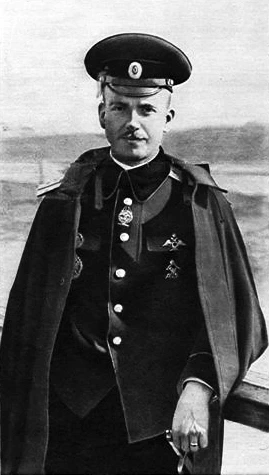
Life and work in aviation
Pyotr Nikolayevich Nesterov (1887–1914) was a Russian military pilot and aerobatics pioneer. On 9 September 1913 in the Gregorian calendar, he performed a complete loop in Kyiv in a Nieuport. The manoeuvre demonstrated controlled motion in the vertical plane. He combined flying with an interest in aircraft design and the theory of manoeuvres, gaining a distinct place in early piloting history.
Training of a military pilot
Nesterov came into aviation from military service and received flight training in the early 1910s. The early pilot should have known the behavior of the light vehicle, its engine and the limitations of the design. For the research maneuver, this was especially important: overload and the work of the controls affected safety. His interest in aerobatics involved an attempt to understand the capabilities of the car, and not only to perform a spectacular movement in front of the public.
Hinge in vertical plane
In September 1913, Nesterov performed a closed loop on Nieuport. There are two dates on the calendar: August 27 according to the old style and September 9 according to the new one. It's one event, not two different flights. The maneuver showed the ability to go through a full vertical circle with the control of the aircraft. Its importance is determined by the capabilities of the technology of the time, when many modes have not yet been practically explored.
The maneuver requires calculation.
The loop differs from the usual straight-line flight by changing the trajectory and load. The pilot must take into account the speed, capabilities of the engine and the state of the apparatus. The history of Nesterov is important as a stage in the development of aerobatic thinking: the aircraft was considered as a controlled system capable of performing more complex movements. At the same time, the historical result is not an instruction for repetition on any machine - modern devices have their own limitations and procedures.
Short career and long-term memory
Nesterov died in 1914 at the beginning of the First World War. His aviation heritage is associated primarily with the study of maneuvering flight and the loop that retained his name. In the biography, it is useful to distinguish between this aerobatic contribution and military episodes. For the development of aviation, the transition from simple air retention to an understanding of spatial control, which later became part of sports, training and professional piloting, is especially significant.
How aviation experience becomes a profession
Pilot training combines theoretical knowledge and practical management. Training aircraft are chosen not only for simplicity, but also for the ability to form the necessary skills. The student must understand the actions in the cabin, notice the change in conditions and follow the established procedures. The first independent flights are a stage of training, and not the final confirmation of readiness for any type of machine. Further transition requires additional preparation for new systems and tasks.
Crew work is different than single piloting. The responsibilities are distributed so that people can control each other’s actions and maintain the overall picture of the flight. The commander is responsible for decisions within his role, but does not replace the rest of the specialists. In historical aviation, a separate task was often performed by a navigator. The development of devices changed the organization of work, but the need for coordination of actions remained on more modern technology.
The instructor should not only manage the aircraft well, but also explain the sequence of actions. It is important to notice the cause of the error, and not only its external result. Preparation includes the repetition of tasks in the prescribed conditions and a gradual complication. Through this work, personal experience becomes available to other people. Therefore, the contribution of an aviation specialist can be in the training of dozens of pilots, even if his name is not associated with the loudest record of the era.
Military, sports and civil aviation use different programs and tasks. Qualifying in one area does not automatically allow admission to another. The description of the biography should take into account the specific period of service, the type of aircraft and the nature of the work. This helps to understand a person’s real skills: piloting, instructor practice, command, or testing. Historical experience serves as a material for studying the profession, but does not replace the modern requirements for training and admission.
Major achievements
- Performed the famous closed loop on Nieuport in 1913
- Developed ideas about controlled maneuver flight
- Became one of the pioneers of aerobatics
Aircraft and flying machines
- Nieuport IV
Organisations and events
Russian military aviation
- Nesterov Loop September 9, 1913
- Flight service of the early 1910s
Questions about this biography
Why is Peter Nesterov included in the history of aviation?
He performed the famous closed loop at Nieuport in 1913. He developed ideas about controlled maneuver flight. He became one of the pioneers of aerobatics.
With what field of aviation is this biography connected?
Peter Nikolaevich Nesterov (1887-1914) - Russian military pilot, one of the pioneers of aerobatics.
What aircraft are involved in this work?
Related to biography: Nieuport IV. Their role and period are described in the main sections.
What events help to understand the professional path?
Main historical episodes: Nesterov's Loop on September 9, 1913; Early 1910s Flight Service.
What organizations are mentioned in the biography?
The professional path is connected with organizations and communities: Russian military aviation.
August 27 and September 9 - different loops?
Oh, no. This is one historical date in the Julian and Gregorian calendars. In the modern calendar, the event is usually celebrated on September 9.
What is the technical context of this story?
Pilot training combines theoretical knowledge and practical management. Training aircraft are chosen not only for simplicity, but also for the ability to form the necessary skills. The student must understand the actions in the cabin, notice the change in conditions and follow the established procedures. The first independent flights are a stage of training, and not the final confirmation of readiness for any type of machine. Further transition requires additional preparation for new systems and tasks.