
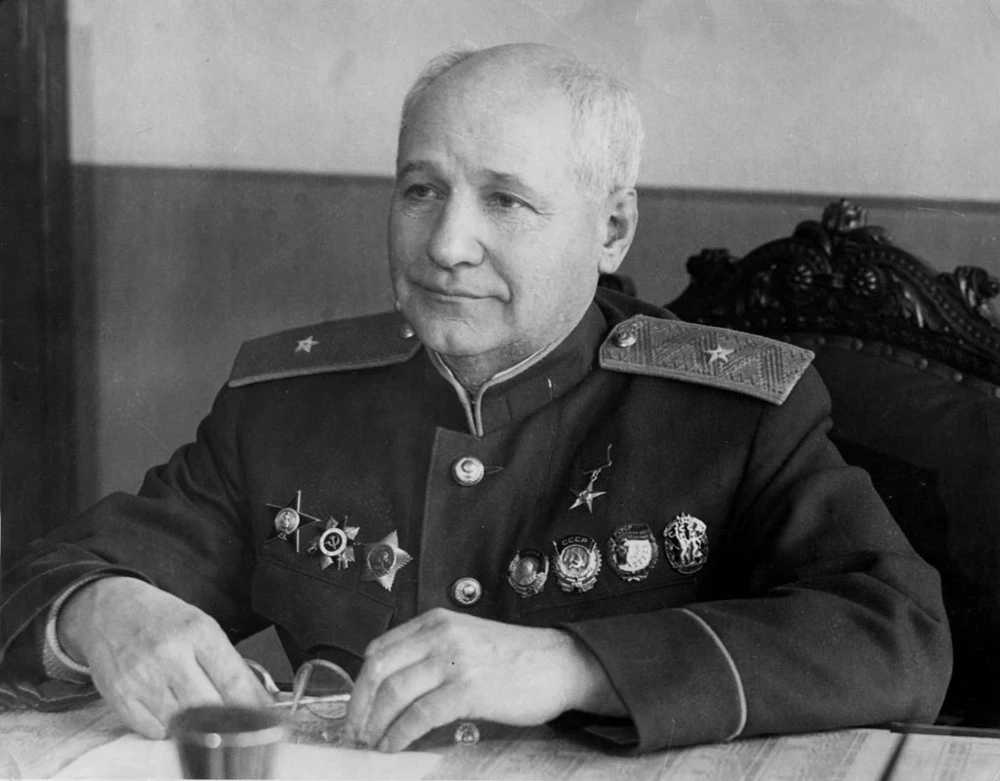
Life and work in aviation
Andrei Nikolaevich Tupolev (1888–1972) was a Soviet aircraft designer and one of the organizers of TsAGI. His school went from the first domestic all-metal aircraft to jet passenger airliners. Under his leadership, cars were created for long-distance flights, heavy aviation and regular transportation. The biography of Tupolev is important not only by the list of types: it shows how a large design team was formed and how the results of aerodynamic studies turned into serial equipment.
Metal plane and scientific school
Tupolev studied with Nikolai Zhukovsky and participated in the creation of the Central Aerohydrodynamic Institute in 1918. In the 1920s, his team developed metal aircraft. The ANT-2, which first flew in 1924, became an important early work in this direction. The transition to metal required the development of materials, compounds and strength calculations, rather than simply replacing wooden parts with parts of the same shape.
Long-haul flights to ANT-25
The record ANT-25 was built for a very long flight. On it, the crews of Chkalov and Gromov flew over the North Pole to the United States in 1937. The designer was responsible for the creation of the machine, and pilots and navigators - for the execution of the route. Such results confirmed the joint work on aerodynamics, fuel reserve, engine reliability and flight organization in a complex geographical environment.
From Tu-2 to passenger Tu-104
Military and post-war projects of the team solved different tasks. The Tu-2 was a front-line bomber aircraft, and the Tu-104 became one of the first jet passenger aircraft in regular operation. Transferring the accumulated experience to the civil sphere required changes: the passenger car needed the comfort of the cabin, suitable maintenance procedures and work in the schedule, and not only in high flight characteristics.
Family and work after the founder
During Tupolev's lifetime, Tu-114 and Tu-154 appeared, but the development of their variants and other aircraft continued for the next generations of specialists. You cannot automatically ascribe any late type with the letters "Tu" to the founder. His real legacy is specific projects and an engineering school. Among the employees of this environment were Petlyakov, Sukhoi and Myasishchev, who subsequently headed their own areas of aviation design.
How the wing, stability and design are related
The aircraft must simultaneously create lift, overcome resistance and maintain control. A good wing does not solve all problems by itself. Suitable controls are required, and the structure and distribution of the mass is strong enough. Therefore, the history of the aviation project is useful to consider as the coordination of several functions. Changing one element affects the rest: a heavier vehicle requires different flight conditions, and a new engine can change the layout and behavior of the machine.
The glider helps to explore the flight without its own power plant. It uses altitude stock and movement relative to air; duration depends on design and atmospheric conditions. Early experiments allowed us to study the stability and actions of the pilot before the advent of a suitable engine. At the same time, a small model does not automatically confirm the behavior of a full-size machine. To go to the apparatus with a person, separate strength calculations, manufacturing and practical verification under the appropriate load are needed.
The material is selected taking into account the mass, strength, manufacture and maintenance. Wood, metal alloys and composites have different joining properties and technologies. The new design may be promising, but its advantages need to be confirmed by tests. The name of the material is not a guarantee of safety or economy. Important are the power kit layout, the quality of the parts and how the body perceives real loads during operation, including repeated takeoffs and landings.
The design result consists of calculations, manufacture, ground inspection and flight observations. The engineering school passes on ways to solve problems to the next generation, not just the appearance of the aircraft. When studying the biography, it is useful to associate projects with their purpose: the training machine, transport and experimental glider require different compromises. So it is clearer why two apparently similar designs can have a completely different operational role and history of development.
Major achievements
- Participated in the organization TsAGI
- Developed domestic all-metal aircraft
- He led the team that created the ANT-25, Tu-2 and Tu-2 passenger liners.
Aircraft and flying machines
- ANT-2
- ANT-25
- Tu-2
- Tu-104
- Tu-114
- Tu-154
Organisations and events
TsAGI , Tupolev Design Bureau
- Creation of TsAGI in 1918
- Flight of ANT-2 in 1924
- Polar flights of 1937
Questions about this biography
Why is Andrei Tupolev included in the history of aviation?
Participated in the organization of TsAGI. Developed domestic all-metal aircraft. He led the team that created the ANT-25, Tu-2 and Tu passenger liners.
With what field of aviation is this biography connected?
Andrei Nikolaevich Tupolev (1888–1972) was a Soviet aircraft designer and one of the organizers of TsAGI.
What aircraft are involved in this work?
Related to the biography: ANT-2, ANT-25, Tu-2, Tu-104, Tu-114, Tu-154. Their role and period are described in the main sections.
What events help to understand the professional path?
Main historical episodes: Creation of TsAGI in 1918; Flight ANT-2 in 1924; Polar flights in 1937.
What organizations are mentioned in the biography?
The professional path is connected with organizations and communities: TsAGI, Tupolev Design Bureau.
Any Tu aircraft designed personally by Andrei Tupolev?
Oh, no. The designation is related to the design school. Later projects, modernizations and serial work were carried out by large teams, including after the death of the founder.
What is the technical context of this story?
The aircraft must simultaneously create lift, overcome resistance and maintain control. A good wing does not solve all problems by itself. Suitable controls are required, and the structure and distribution of the mass is strong enough. Therefore, the history of the aviation project is useful to consider as the coordination of several functions. Changing one element affects the rest: a heavier vehicle requires different flight conditions, and a new engine can change the layout and behavior of the machine.