
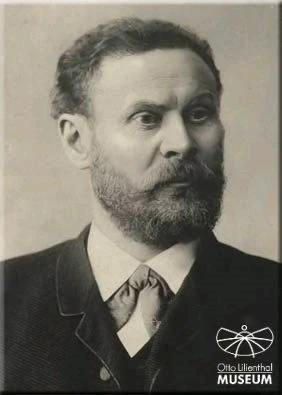
Life and work in aviation
Otto Lilienthal was born on May 23, 1848 in Anklam. He studied mechanical engineering in Berlin and studied bird flight with his brother Gustave for many years. Observations gradually turned into experiments with the shape of the wing and the measurement of aerodynamic forces.
In 1889, Lilienthal published a book linking bird flight with the possibility of human flight. He sought to obtain data that can be used in the design of the device, and not only to reproduce the external movement of the wings. His research became known outside of Germany.
From 1891, Lilienthal flew full-size gliders. He tested various designs, including the standard Normalsegelapparat. The control was carried out by moving the pilot's body. Practical experience has shown the possibilities of planning, but also revealed the limitations of such a control system.
Flight photos and published data have inspired other researchers. The Wright brothers used Lilienthal's aerodynamic data as a starting point, later obtaining their own data. After the accident on August 9, 1896, Lilienthal died the next day in Berlin. Its importance is associated with a combination of scientific measurements and reproducible experiments in the air.
Study of birds and lift
Lilienthal studied the flight of birds and the behavior of artificial wings. His work connected observation with measurement: it was not enough to see that the bird was flying, it was necessary to understand what properties of the wing allow you to get useful power. The published results became part of the knowledge that the following researchers relied on.
For aviation, the transition from a beautiful idea to comparable data is especially important. When the shape of the wing is examined consistently, it is possible to compare options and build new machines with clearer bases. Such data are not the final truth for all conditions, but create a starting point for further experimentation.
Why We Need to Plan Flights Again
The glider allowed to study the flight without a propulsion system. Runoff and a suitable slope made it possible to move to movement in the air, and the pilot directly observed the behavior of the apparatus. Repeating the experiments helped to distinguish a workable solution from a single successful case.
Planning and motor flight solve different problems. The airframe does not have an engine that constantly supports thrust, so its route and altitude reserve are limited. It is this distinction that helps to understand Lilienthal's place: his achievements set the stage for practical aviation, but do not coincide with Wright's motor flights.
Management and limits of early design
Lilienthal used body movement to change the glider's position. The pilot was part of the control system, and the possibilities of this method depended on the size and behavior of the device. When reading history, it is important to present this layout, and not mentally transfer the controls of a modern aircraft to it.
The 1896 accident is a reminder of the risks of research aviation. The historical reason should not be simplified to one household explanation. For engineering understanding, it is more useful to see the combination of design, control and atmospheric conditions that the experimenter encountered.
Contact with the Wright brothers
Lilienthal’s work and photographs showed other inventors that a person is able to perform repeated flights on a heavier-than-air vehicle. The Wrights began their own research using prior knowledge and then verified and refined the data. Continuation of this line does not mean a complete copy of the design.
Lilienthal’s history shows the cumulative nature of aviation progress. One researcher obtains and publishes the results, another discovers the limits of their applicability and offers new solutions. Therefore, his contribution is associated with both personal flights and the dissemination of knowledge necessary for the next stage of aviation.
Major achievements
- Practical planning flights in 1891-1896
- Investigation of aerodynamic properties of the wing
- Development of standard glider Normalsegelapparat
Aircraft and flying machines
- Normalsegelapparat
- Lilienthal's gliders
Organisations and events
German Society for the Promotion of Aeronautics
- 1889 - publication of a book on the flight of birds
- 1891 - the beginning of successful planning flights
Questions about this biography
Where was Lilienthal born?
In Anklam.
In what years did he test the gliders?
1891-1896.
How did he operate the machine?
Moving the pilot's body.
What was the name of his standard glider?
Normalsegelapparat.
Who used his data in earlier studies?
Including the Wright brothers.
Lilienthal's flights were motorized?
His most famous practical experiments are planning flights. They need to be distinguished from subsequent motor flights of vehicles with an engine that creates constant thrust.
Why were his works read by other inventors?
He published the results of the wing study and showed repeated flights on gliders. These data and observations helped the following researchers set their own goals.