
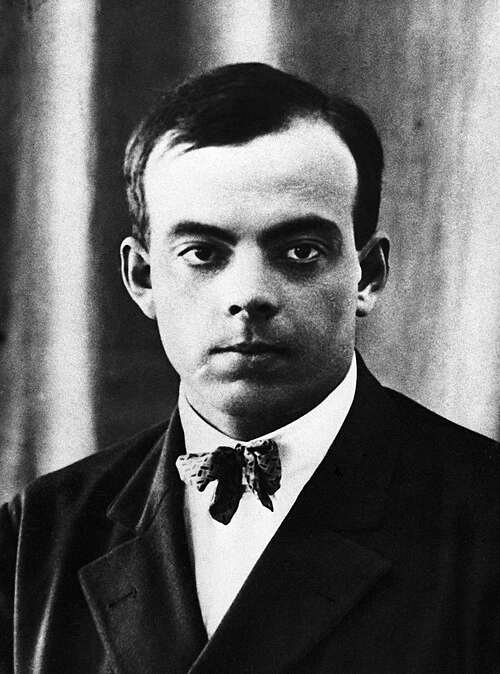
Life and work in aviation
Antoine de Saint-Exupéry (1900–1944) was a French pilot and writer whose professional life involved airmail routes and aerial reconnaissance. His books convey aviation before modern navigation aids. His aviation biography includes Aéropostale routes, organising remote-area flights and piloting. Literary fame complements rather than replaces his actual flying career.
Postal Aviation
After flight training, Saint-Exupéry worked on postal air lines. The transportation of correspondence required repeated routes and coordination of the work of several crews. Unlike a single record, the meaning of such a flight was to deliver cargo on schedule. Weather conditions, the condition of the aircraft and the suitability of intermediate sites determined the ability to perform a specific flight.
Remote airfields
His work included Cap Juby and South American lines. In remote locations, the pilot depended on a small team and limited equipment. The organization of the airfield involved maintenance, communication and assistance to the crews of neighboring areas. This experience explains why St. Exupery's books describe aviation through responsibility to others and the continuity of a common route.
Military Intelligence
During World War II, Saint-Exupéry performed reconnaissance flights. On his final flight in July 1944, he went to the Lockheed F-5, a P-38 reconnaissance variant, and did not return. The discovery of fragments of the plane later clarified the place of its fall. The cause of death can not be definitively established only on the basis of popular late stories.
The Pilot's Literary Legacy
“Night Flight” and “Planet of People” are associated with the author’s professional aviation experience. They help to present the environment of early transport and the moral responsibility of the crew. The artistic text is different from the technical report, so the scenes should be read as literature. Biography allows you to compare books with real routes, aircraft and official tasks known from historical documents.
What turns a plane into a transport system?
The transport aircraft is assessed according to the task of transportation: the weight of the cargo, the number of people, the distance and the conditions of the airfield. The maximum distance from the directory does not mean the ability to take a full load on the same distance. Fuel and payload take up part of the permissible mass. Therefore, the history of the project is associated with compromises. A car for a local line, postal route and intercontinental flight is designed for different requirements, even if all three carry people or things.
A regular line requires repeatability. The aircraft should be serviced between flights, and crews should receive training and up-to-date information. The state of the weather and equipment affects the decision to make a specific departure. For early carriers, the organization of remote stops was especially difficult. The delivery of fuel and spare parts could be as important as the vehicle’s range itself, since without ground support, the next stage of the journey became impossible.
The layout of the cargo cabin, entrances and loading devices determines the suitability of the aircraft for a real task. Useful not just a large internal volume, but the ability to place and secure the desired cargo. The passenger car adds requirements to the conditions of stay of people and the work of the crew. Designers agree on these issues with strength, mass and operation. The carrier, pilot and manufacturer therefore affect the final result in different ways.
The transport program lives longer than a single first flight. Modifications appear in it, equipment changes and conditions of use are specified. The founder of the school may not be involved in later versions, but his organization retains design experience. Studying the biography, it is useful to distinguish the initial project from the subsequent family. This makes it possible to trace the development of transportation without erroneously attributing all subsequent machines to one well-known name.
Major achievements
- Worked on postal air lines
- Participated in organizing remote routes
- Described the profession of a pilot in literature
Aircraft and flying machines
- Latécoère
- Lockheed F-5
Organisations and events
Aéropostale , French intelligence aviation
- Development of postal lines
- Last reconnaissance flight in July 1944
Questions about this biography
Why is Antoine de Saint-Exupéry in the history of aviation?
He worked on postal air lines. Participated in the organization of remote routes. He described the profession of a pilot in literature.
With what field of aviation is this biography connected?
Antoine de Saint-Exupéry (1900-1944) was a French pilot and writer whose professional life was associated with postal routes and aerial reconnaissance.
What aircraft are involved in this work?
The biography is related to: Latécojére, Lockheed F-5. Their role and period are described in the main sections.
What events help to understand the professional path?
Major historical episodes: Development of postal lines; Last reconnaissance flight in July 1944.
What organizations are mentioned in the biography?
The professional path is associated with organizations and communities: Aéropostale, French Intelligence Aviation.
Do you know the final cause of his death?
The place of the crash is established, but popular versions of the cause of death should not be given as an indisputable fact.
What is the technical context of this story?
The transport aircraft is assessed according to the task of transportation: the weight of the cargo, the number of people, the distance and the conditions of the airfield. The maximum distance from the directory does not mean the ability to take a full load on the same distance. Fuel and payload take up part of the permissible mass. Therefore, the history of the project is associated with compromises. A car for a local line, postal route and intercontinental flight is designed for different requirements, even if all three carry people or things.