
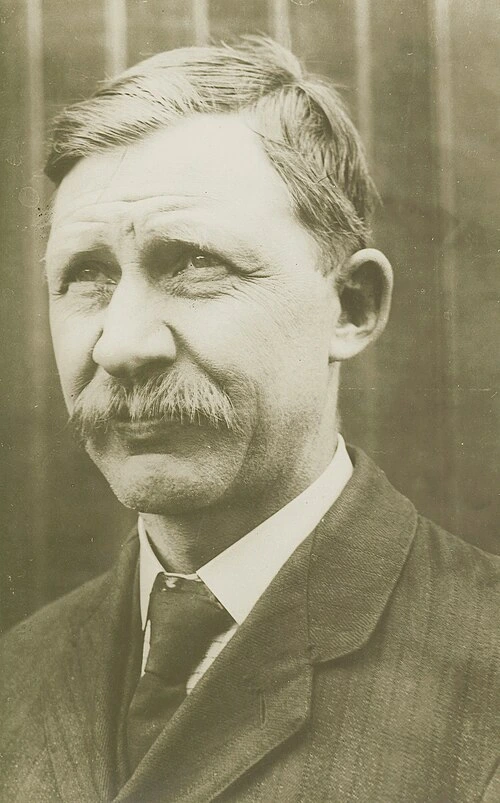
Life and work in aviation
Charles Edward Taylor (1868–1956) was the mechanic and machinist who built the engine for the 1903 Wright Flyer. Working in the brothers’ bicycle shop, he became essential to their aviation project. Controlled powered flight needed precise metalwork, assembly and a working powerplant as well as pilots and wing researchers. Taylor holds a special place in aircraft maintenance history.
Wright Brothers Workshop
In 1901, Taylor began working for the Wrights in Dayton. Practical skills in material handling and machine maintenance have proved useful in the transition from bicycles to experimental vehicles. The early aviation project did not have the usual modern separation of services plant. In a small workshop, it was necessary to simultaneously solve the problems of manufacturing, fitting and repairing parts, maintaining the continuity of work on the new machine.
Engine for Flyer
When the brothers needed a light enough engine for the plane, Taylor made it in the workshop. The unit was to provide the required power without unduly increasing the mass of the apparatus. The engine worked in conjunction with the propellers and gears developed for the Flyer. Therefore, Taylor’s contribution should be described precisely: he built the engine, not created the plane alone and did not pilot the first flight on December 17, 1903.
Work of a mechanic outside the workshop
Taylor accompanied the Wrights' aviation activities, provided technical support, and participated in other early projects. In 1911, he worked as a mechanic on Calbraith Rogers' transcontinental flight to Vin Fiz. The long-distance route with numerous landings showed how much the flight depends on repair and maintenance. For early aircraft, the technical team was as much a part of the expedition as the pilot himself.
Why remember the name of the technique
Taylor was later involved in restoring the material history of the first flights, including work on the reproduction of the Flyer engine. His biography helps to expand the usual list of aviation heroes: the skill of a mechanic is expressed not in a height record, but in a serviceable machine and manufacturing accuracy. In the historical description, it is important to maintain this separate professional role, so as not to reduce a complex technical result to one famous name.
Engine, thrust and flight mode
The engine shall provide enough thrust for the selected task at an acceptable mass and fuel consumption. The maximum power does not describe the entire power plant. Reliability, cooling, launch, resource and interaction with the aircraft are important. In early aviation, separately, the task was to get an engine that can generally be lifted into the air along with the design and the person. The development of materials and production gradually expanded the available opportunities.
A piston engine typically transmits power to an air propeller, and a turbojet plant creates thrust through a stream of gases. These schemes are not interchangeable without changing the project. The choice is influenced by the speed, height and purpose of the machine. A screw plane can be convenient for one transport task, a jet one for another. The comparison requires taking into account the entire operating mode, and not declaring one technology the best for any routes and dimensions of the device.
As you approach the speed of sound, the behavior of the airflow changes. The design of the high-speed aircraft affects the wing, air intakes, stability and control. A more powerful engine does not solve these issues alone. Calculations and tests of the design under the expected conditions are needed. The result of the experimental machine also does not mean that the same mode is suitable for normal serial operation, with passengers and regular maintenance.
The history of the engine should be distinguished from the history of the aircraft on which it was used. The power plant could be created by other teams, and the pilot checked its behavior in the car. Accurate indication of these roles helps to understand the contribution of each specialist. For the serial program, deliveries, technical documentation and service preparation are important: without them, even a promising engine remains a separate experimental product, and not a ready basis for regular flights.
Major achievements
- The Wright Flyer engine of 1903
- Provides technical work for Wright's early aviation projects
- Participated as a mechanic on the flight of Vin Fiz in 1911
Aircraft and flying machines
- Wright Flyer
- Wright Model EX Vin Fiz
Organisations and events
Wright Cycle Company
- First flight of the Flyer on December 17, 1903
- The 1911 Vin Fiz Transcontinental Flight
Questions about this biography
Why did Charles Edward Taylor enter the history of aviation?
He produced the 1903 Wright Flyer engine. He provided the technical work of the Wrights' early aviation projects. He participated as a mechanic in the flight of Vin Fiz in 1911.
With what field of aviation is this biography connected?
Charles Edward Taylor (1868–1956) was a mechanic and engineer who manufactured the engine for the 1903 Wright Flyer.
What aircraft are involved in this work?
Related: Wright Flyer, Wright Model EX Vin Fiz. Their role and period are described in the main sections.
What events help to understand the professional path?
Main historical episodes: First flight of the Flyer on December 17, 1903; 1911 Vin Fiz transcontinental flight.
What organizations are mentioned in the biography?
The professional path is connected with organizations and communities: Wright Cycle Company.
Taylor piloted the first Flyer?
Oh, no. The first flight on December 17, 1903 was performed by Orville Wright. Taylor manufactured the engine and participated in the technical support of the project, which was an independent and necessary contribution.
What is the technical context of this story?
The engine shall provide enough thrust for the selected task at an acceptable mass and fuel consumption. The maximum power does not describe the entire power plant. Reliability, cooling, launch, resource and interaction with the aircraft are important. In early aviation, separately, the task was to get an engine that can generally be lifted into the air along with the design and the person. The development of materials and production gradually expanded the available opportunities.