
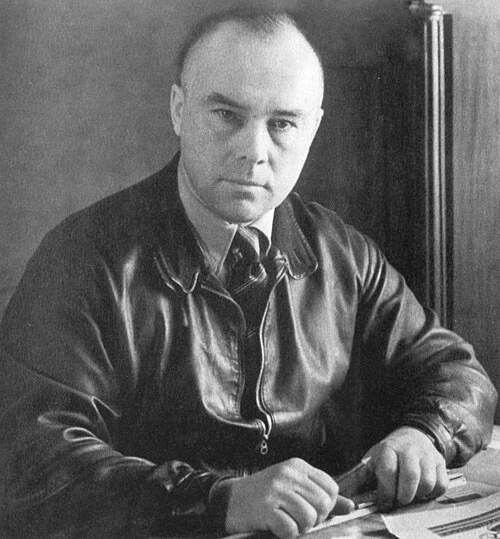
Life and work in aviation
Nikolai Nikolayevich Polikarpov (1892-1944) was a Soviet aircraft designer, known for the I-15 and I-16 fighters and the U-2 training biplane, later designated Po-2. His work covered different levels of aviation: from initial training to high speeds for his time. He became one of the key specialists of the domestic aircraft industry of the interwar period. Polykarpov's biography shows that a small training machine can have no less public significance than a faster and more famous fighter.
Engineer in the Emerging Industry
Polikarpov received a technical education and worked in the aviation industry before the formation of his own bureau. His early projects were involved in the creation of a domestic production base. The R-1 became an important aircraft of the 1920s, and further work covered training vehicles and fighters. For this period, the ability to adapt the design to available materials, plant equipment and the level of training of technical specialists is especially important.
U-2 and mass training
The U-2, which first flew in 1928, was created as a training biplane. Later, the machine was used for communication, sanitary tasks and other works; after the death of the designer, it was renamed Po-2. Its capabilities were determined by purpose: low speed could be useful when learning and working from small sites. The long history of the type is explained by a combination of understandable design and a variety of practical tasks.
I-15 and I-16: different wing schemes
The I-15 was a biplane, and the I-16 was a monoplane with a retractable chassis. These solutions reflect the transition of aviation to higher speed and reduced resistance. At the same time, the change in the scheme affected piloting, maintenance and production. Comparison of Polikarpov aircraft allows you to see the development of the industry without a simplified division into “old bad” and “new good” devices: each solution met certain conditions of its time.
School and the real scale of contribution
Polykarpov died in 1944, but his school planes continued to be used. In the history of his projects there were both serial successes and unfinished work. The most important thing is to evaluate specific technical tasks and results, and not just the nickname “the king of fighters”. Through the U-2, I-15 and I-16, training of pilots, the development of design and the capabilities of plants are traced - three sides of aviation that required constant coordination.
How aviation experience becomes a profession
Pilot training combines theoretical knowledge and practical management. Training aircraft are chosen not only for simplicity, but also for the ability to form the necessary skills. The student must understand the actions in the cabin, notice the change in conditions and follow the established procedures. The first independent flights are a stage of training, and not the final confirmation of readiness for any type of machine. Further transition requires additional preparation for new systems and tasks.
Crew work is different than single piloting. The responsibilities are distributed so that people can control each other’s actions and maintain the overall picture of the flight. The commander is responsible for decisions within his role, but does not replace the rest of the specialists. In historical aviation, a separate task was often performed by a navigator. The development of devices changed the organization of work, but the need for coordination of actions remained on more modern technology.
The instructor should not only manage the aircraft well, but also explain the sequence of actions. It is important to notice the cause of the error, and not only its external result. Preparation includes the repetition of tasks in the prescribed conditions and a gradual complication. Through this work, personal experience becomes available to other people. Therefore, the contribution of an aviation specialist can be in the training of dozens of pilots, even if his name is not associated with the loudest record of the era.
Military, sports and civil aviation use different programs and tasks. Qualifying in one area does not automatically allow admission to another. The description of the biography should take into account the specific period of service, the type of aircraft and the nature of the work. This helps to understand a person’s real skills: piloting, instructor practice, command, or testing. Historical experience serves as a material for studying the profession, but does not replace the modern requirements for training and admission.
Major achievements
- Created training U-2, later Po-2
- He led the development of the I-15 and I-16 fighters.
- Participated in the formation of the domestic aviation industry
Aircraft and flying machines
- R-1
- U-2 / Po-2
- I-15
- I-16
Organisations and events
Design team Polikarpov
- The first flight of the U-2 in 1928
- Development of the I-16 in the 1930s
- Renaming the U-2 to the Po-2 in 1944
Questions about this biography
Why is Nikolai Polikarpov included in the history of aviation?
Created the training U-2, later Po-2. He led the development of the I-15 and I-16 fighters. Participated in the formation of the domestic aviation industry.
With what field of aviation is this biography connected?
Nikolai Nikolayevich Polikarpov (1892-1944) was a Soviet aircraft designer, known for the I-15 and I-16 fighters and the U-2 training biplane, later designated Po-2.
What aircraft are involved in this work?
Related to the biography: P-1, U-2 / Po-2, I-15, I-16. Their role and period are described in the main sections.
What events help to understand the professional path?
Major historical episodes: First flight of the U-2 in 1928; Development of the I-16 in the 1930s; Renaming the U-2 to the Po-2 in 1944.
What organizations are mentioned in the biography?
The professional path is connected with organizations and communities: Design team Polikarpov.
U-2 and Po-2 - different aircraft?
The designation Po-2 appeared after the death of Polikarpov in 1944 in memory of the designer. The main story of the type begins with a training U-2 and includes numerous applications.
What is the technical context of this story?
Pilot training combines theoretical knowledge and practical management. Training aircraft are chosen not only for simplicity, but also for the ability to form the necessary skills. The student must understand the actions in the cabin, notice the change in conditions and follow the established procedures. The first independent flights are a stage of training, and not the final confirmation of readiness for any type of machine. Further transition requires additional preparation for new systems and tasks.