
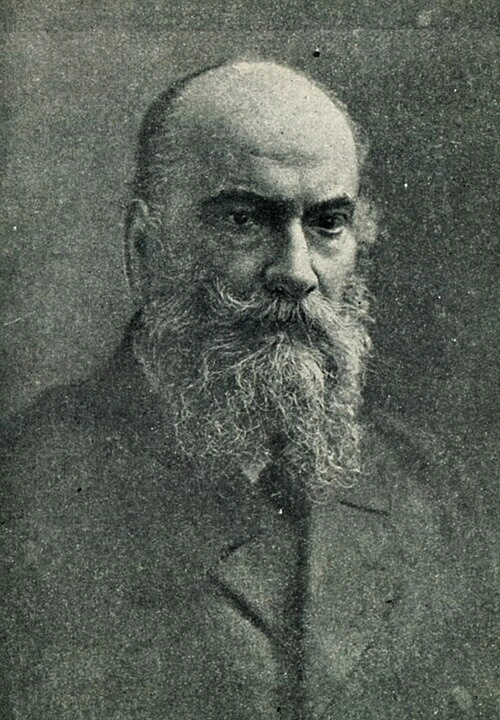
Life and work in aviation
Nikolai Egorovich Zhukovsky (1847-1921) was a Russian scientist, one of the founders of modern aerodynamics and the organizer of the Central Aerohydrodynamic Institute. He studied fluid and gas motion, wing and propeller behavior, and taught and formed a scientific school. His contribution differs from the work of the designer of an individual aircraft: Zhukovsky created knowledge and a research environment that allows you to calculate and check many different devices. Among his students and staff were Tupolev, Chaplygin and Yuryev.
Mechanics as the language of flight description
Zhukovsky worked with the problems of mechanics and hydrodynamics, gradually linking them with the new aviation. It is important for the aircraft to understand the interaction of the surface with the flow, and not be limited to observing the finished machine. The scientific approach makes it possible to compare options even before the manufacture of a full-fledged device. The experiment remains necessary: the theoretical description is checked by measurements and specified when the real conditions differ from the accepted model.
Wing Lifting Power
The names of Zhukovsky and Martin Kutta are associated with a fundamental connection between the circulation of the flow and the lifting force. Its importance lies in the ability to describe the work of the wing quantitatively. Such a theory operates under certain assumptions and does not replace the entire calculation of a modern aircraft. For historical biography, the transition itself is important: the shape of the wing becomes the subject of scientific analysis, and the engineer receives a tool to explain the observed result.
Laboratories and TsAGI
In 1918, Zhukovsky became one of the organizers of TsAGI. The institute combined research, experiment and practical design. The wind tunnel made it possible to study models in a controlled flow and compare options under similar conditions. Such infrastructure made aviation less dependent on a single risky departure. The flight test retained its significance, but it could be preceded by a consistent scientific verification of individual decisions.
Students and Long-Term Heritage
Zhukovsky taught at the Moscow University and Technical School, creating an environment for future researchers and designers. His contribution is preserved in the methods of calculation, laboratory work and continuity of the school. It would be wrong to call him the author of all the students' planes: he prepared the scientific basis and people who solved their own problems. This separate role of the scientist makes him one of the central figures of aviation history.
How the wing, stability and design are related
The aircraft must simultaneously create lift, overcome resistance and maintain control. A good wing does not solve all problems by itself. Suitable controls are required, and the structure and distribution of the mass is strong enough. Therefore, the history of the aviation project is useful to consider as the coordination of several functions. Changing one element affects the rest: a heavier vehicle requires different flight conditions, and a new engine can change the layout and behavior of the machine.
The glider helps to explore the flight without its own power plant. It uses altitude stock and movement relative to air; duration depends on design and atmospheric conditions. Early experiments allowed us to study the stability and actions of the pilot before the advent of a suitable engine. At the same time, a small model does not automatically confirm the behavior of a full-size machine. To go to the apparatus with a person, separate strength calculations, manufacturing and practical verification under the appropriate load are needed.
The material is selected taking into account the mass, strength, manufacture and maintenance. Wood, metal alloys and composites have different joining properties and technologies. The new design may be promising, but its advantages need to be confirmed by tests. The name of the material is not a guarantee of safety or economy. Important are the power kit layout, the quality of the parts and how the body perceives real loads during operation, including repeated takeoffs and landings.
The design result consists of calculations, manufacture, ground inspection and flight observations. The engineering school passes on ways to solve problems to the next generation, not just the appearance of the aircraft. When studying the biography, it is useful to associate projects with their purpose: the training machine, transport and experimental glider require different compromises. So it is clearer why two apparently similar designs can have a completely different operational role and history of development.
Major achievements
- Developed the theory of wing and propeller
- Participated in the organization TsAGI in 1918
- Formed a scientific school of aerodynamics and aviation mechanics
Aircraft and flying machines
- Experimental models of wing and propeller
Organisations and events
TsAGI , Moscow University , Moscow Technical School
- Development of aerodynamic laboratories
- TsAGI foundation in 1918
Questions about this biography
Why is Nikolai Zhukovsky included in the history of aviation?
He developed the theory of wing and propeller. Participated in the organization of TsAGI in 1918. He formed a scientific school of aerodynamics and aviation mechanics.
With what field of aviation is this biography connected?
Nikolai Egorovich Zhukovsky (1847-1921) was a Russian scientist, one of the founders of modern aerodynamics and the organizer of the Central Aerohydrodynamic Institute.
What aircraft are involved in this work?
Related to the biography: Experimental models of wing and propeller. Their role and period are described in the main sections.
What events help to understand the professional path?
Main historical episodes: Development of aerodynamic laboratories; TsAGI Foundation in 1918.
What organizations are mentioned in the biography?
The professional path is connected with organizations and communities: TsAGI, Moscow University, Moscow Technical School.
Zhukovsky was the designer of one famous aircraft?
His main role is as a scientist, teacher and organizer of research. The methods developed and the scientific school helped many designers to create different aircraft.
What is the technical context of this story?
The aircraft must simultaneously create lift, overcome resistance and maintain control. A good wing does not solve all problems by itself. Suitable controls are required, and the structure and distribution of the mass is strong enough. Therefore, the history of the aviation project is useful to consider as the coordination of several functions. Changing one element affects the rest: a heavier vehicle requires different flight conditions, and a new engine can change the layout and behavior of the machine.