
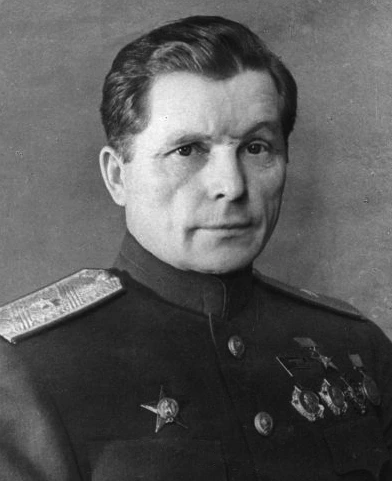
Life and work in aviation
Sergey Vladimirovich Ilyushin (1894–1977) was a Soviet aircraft designer who established an engineering school for combat, passenger and transport aircraft. His career encompassed the Il-2, long-range bombers and the Il-12, Il-14, Il-18 and Il-62 airliners. He valued mission suitability, practical operation and sustainable production. His bureau shows how experience in one aviation field informed another.
The way from aviation service to design
Ilyushin gained flight and engineering experience, then developed his own design projects. In 1933, he headed the Central Design Bureau, from which his school grew. The aircraft here was considered as a system: the power plant, glider, equipment and production capabilities had to be coordinated. It was not enough for the designer to offer a successful form - it was necessary to bring the device to testing and real operation.
Il-2 and frontline aviation requirements
Il-2 was created as an armored attack aircraft. The protection of important parts and people was a constructive task, and the increase in output required the technological work of factories. The machine has changed in application experience; its history includes different options, including a two-seater. The Il-2 should be seen as the result of a collective of designers, manufacturers, testers and crews, and not as an immutable blueprint once completely finished by one person.
Passenger Il-12, Il-14 and Il-18
In civil aviation school Ilyushin worked on the transportation of passengers on regular routes. The piston Il-12 and Il-14 were replaced by more productive machines; the Il-18 received turboprop engines. The range, capacity and operating conditions differed. The overall objective was to create an aircraft that could be maintained and used on a daily basis. It is the operational side that distinguishes a successful liner from an exceptionally spectacular experienced device.
Long Range and Bureau Continuity
Il-62 became a long-haul jet aircraft that expanded the capabilities of passenger aviation. The development of the Il-76 transport is already connected with the work of Heinrich Novozhilov and the next generation of the team. Such continuity does not diminish Ilyushin’s contribution: he created an engineering environment in which new projects could develop. In his biography, it is useful to separate his personal period of leadership from the entire further history of Il aircraft.
What turns a plane into a transport system?
The transport aircraft is assessed according to the task of transportation: the weight of the cargo, the number of people, the distance and the conditions of the airfield. The maximum distance from the directory does not mean the ability to take a full load on the same distance. Fuel and payload take up part of the permissible mass. Therefore, the history of the project is associated with compromises. A car for a local line, postal route and intercontinental flight is designed for different requirements, even if all three carry people or things.
A regular line requires repeatability. The aircraft should be serviced between flights, and crews should receive training and up-to-date information. The state of the weather and equipment affects the decision to make a specific departure. For early carriers, the organization of remote stops was especially difficult. The delivery of fuel and spare parts could be as important as the vehicle’s range itself, since without ground support, the next stage of the journey became impossible.
The layout of the cargo cabin, entrances and loading devices determines the suitability of the aircraft for a real task. Useful not just a large internal volume, but the ability to place and secure the desired cargo. The passenger car adds requirements to the conditions of stay of people and the work of the crew. Designers agree on these issues with strength, mass and operation. The carrier, pilot and manufacturer therefore affect the final result in different ways.
The transport program lives longer than a single first flight. Modifications appear in it, equipment changes and conditions of use are specified. The founder of the school may not be involved in later versions, but his organization retains design experience. Studying the biography, it is useful to distinguish the initial project from the subsequent family. This makes it possible to trace the development of transportation without erroneously attributing all subsequent machines to one well-known name.
Major achievements
- Formed a design school of aircraft "IL"
- Directed the creation of the Il-2 attack aircraft
- Developed passenger aircraft from Il-12 to Il-62
Aircraft and flying machines
- Il-2
- Il-4
- Il-12
- Il-14
- Il-18
- Il-62
Organisations and events
Ilyushin Design Bureau
- Establishment of the Central Bank in 1933
- Serial development of Il-2
- Transition to turboprop and jet passenger aircraft
Questions about this biography
Why is Sergei Ilyushin included in the history of aviation?
He formed the Il Aircraft Design School. He led the creation of the Il-2 attack aircraft. He developed passenger aircraft from Il-12 to Il-62.
With what field of aviation is this biography connected?
Sergey Vladimirovich Ilyushin (1894-1977) was a Soviet aircraft designer who created an engineering school for combat, passenger and transport aircraft.
What aircraft are involved in this work?
Related to the biography: Il-2, Il-4, Il-12, Il-14, Il-18, Il-62. Their role and period are described in the main sections.
What events help to understand the professional path?
Main historical episodes: The creation of the Central Design Bureau in 1933; Serial development of the Il-2; Transition to turboprop and jet passenger aircraft.
What organizations are mentioned in the biography?
The professional path is connected with organizations and communities: OKB Ilyushin.
Does the Il-18 and Il-62 use the same engines?
Oh, no. The Il-18 is a turboprop passenger aircraft and the Il-62 is a long-haul jetliner. Their power plants and purpose are different.
What is the technical context of this story?
The transport aircraft is assessed according to the task of transportation: the weight of the cargo, the number of people, the distance and the conditions of the airfield. The maximum distance from the directory does not mean the ability to take a full load on the same distance. Fuel and payload take up part of the permissible mass. Therefore, the history of the project is associated with compromises. A car for a local line, postal route and intercontinental flight is designed for different requirements, even if all three carry people or things.