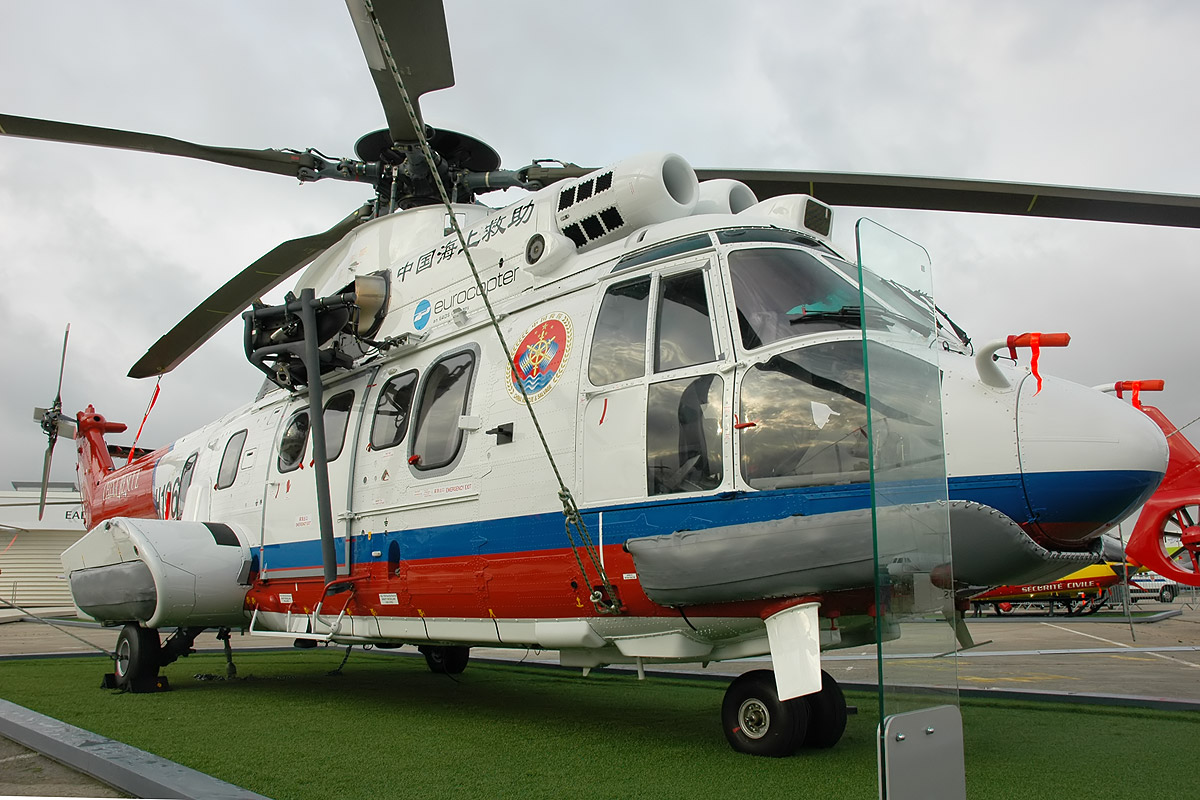
In the catalog of private aviation H225 comes with a caveat: its scale and operational logic are different from light corporate models. This is more of a talk about a special transportation program than a short transfer of one passenger.
When reading materials about H225, it is important to distinguish between the civil version, specific modification and equipment. The conditions of sea voyages, search and rescue or VIP transportation are not comparable without this detail.
Airbus has singled out hard weather, icing protection and four-axis autopilot for the H225. For the crew, this is part of a large system of assistance for sea and rescue flights, and for the passenger - an occasion to evaluate the entire route and the operator, not only the helicopter.
02 / Manufacturer data
Specifications and uses
H225 belongs to the heavy class and continues the Super Puma line. Its scale is justified where a large group of passengers, special equipment or work away from the base is needed.
Engines
2 × Safran Makila 2A1
Maximum takeoff weight
11 000 kg
Crew and passengers
2 + up to 19
Cruising Speed
262 km/h
Range
841 km
Up to 1,119 km with additional fuel
Endurance
Up to 4 h 05 min
With additional fuel up to 5 h 36 min
Autopilot
Four-Hose
Appointment
Maritime and special transport
Airbus, 2022 civil line catalogue and H225 materials. The range with additional fuel cannot be combined with full load without calculating the mass.
Why H225 is a separate category
In terms of cabin scale and ground requirements, the H225 differs markedly from compact private helicopters. It appears where the transportation of many people or a special team is important, not just the speed of the transfer.
Infrastructure is part of the solution: the site, hangar, fuel, technical support and replacement crew must match the size of the program.
Flying in difficult conditions
Airbus provides four-axis autopilot and equipment options for difficult weather, including icing protection. The presence of specific systems is checked according to the configuration and tolerances of the board.
Standard and extended range are published for different fuel scenarios. When reading numbers, it is important to ask how many people and luggage remain in each of them.